Yearly Archives: 2013

Movie Review: Frances Ha

At a very brief glance, “Frances Ha” is nothing more than a walking indie film trope. “Frances Ha” has everything that indie filmmakers love: ukeleles, Paris, children of divorce.”

I’m one to talk, as I consume movies like this a little too much. However, what seperates “Frances Ha” from the rest is its ambition and, despite its aimless characters, it actually has a good amount to say. Unfortunately, a lot of those things are left unsaid.

Dramedy is not the right word for “Frances Ha.” Tragicomedy would be a better way to put it, despite the fact that not many big, tragic events occur during its short running time. “Frances Ha” is filled with a lot of sad characters who are stuck in ruts. Yet, Noah Baumbach manages to find little bits of humor in all of the depression that always work so well. He is not just showing how these people live, but also prodding at them a little bit.


Director Noah Baumbach has clearly found his muse in Greta Gerwig, who co-wrote the film with Baumbach and stars as Frances. The two first collaborated on “Greenberg,” but “Frances Ha” works a little better. Baumbach is better at portraying ennui in his hometown of New York than in Los Angeles.

Unlike Greenberg and many other of Baumbach’s characters, Frances is not a complete loner. Her friendship with Sophie (Mickey Sumner) can best be described as co-dependent. Or in their own words, they’re like “a lesbian couple that doesn’t have sex anymore.” Their career goals couldn’t be more different: Frances wants to be a dancer and model, and Sophie hopes to one day run the publishing industry. These are the kind of goals the people in their 20s that live in Brooklyn have.

“Frances Ha” is mainly about how the friendship between Frances and Sophie deteriorates as Sophie moves on but Frances doesn’t. Frances becomes a drifter, going from apartment to apartment and couch to couch. Most notably, she stays with Lev (Adam Driver) and Benji (Michael Zegen), two aspiring artists who are kept afloat because of their rich parents.

“Frances Ha” explores an idea also explored in the very similar “Girls” that the spoiled seem to be the only ones who have the time to pursue artistic dreams. Frances is the rare poor artist. Yet, nobody seems to appreciate their opportunities when they come about. Benji gets a chance to send in a skit to “Saturday Night Live,” yet he doesn’t even seem to care if he gets it because he thinks the show isn’t as good as it used to be. Shockingly, this is something that people actually say.

As Sophie, relative newcomer Sumner makes a big impression. She can portray straight-laced heartbreak even when she seems absolutely calm. Meanwhile, Gerwig once again proves herself to be one of the most underrated actresses working today. One of my biggest problems with the film was that it’s opinion on Frances wasn’t always very clear. Gerwig knows when to make her likable and hatable. Sometimes, she can do both at the exact same time.

Unlike Baumbach’s past works, “Frances Ha” actually comes with a sense of relative closure. I have always had mixed feelings about Baumbach’s work, yet I always find myself excited about whatever new film he has planned. Ever since I saw “The Graduate,” I’ve been attracted to characters who don’t know what they want to do with their life. It’s the opposite of the uber-confidence that is usually considered to be the norm. It’s always refreshing to see someone admit that they have no idea what they’re doing. Deep down, we all feel the exact same way.

Movies with aimless characters only work if they have a point. “Frances Ha” works because it has a point. However, I still don’t quite know how Baumbach and Gerwig actually feel about Frances. There is no one there to really call her out ever. There is no Greek Chorus to tell the audience how to feel, which is good in one way, but bad in other ways. The film cycles through a lot of different characters in its short yet ambitious running time, but it often doesn’t take a second to let us know who they are and what their stance is. Frances spends a long time back home in Sacramento, but never once do they seem worried that their 27-year-old daughter is basically broke.

Yet, the flaws of the film still don’t hold it back too far. This is the first time Baumbach has shed more hope than cynicism into one of his films. Not to mention, it has the best soundtrack of any film so far this year and some really whip smart dialogue. At one point, Frances mentions that Walden Pond, where Henry David Thoreau lived and wrote in seclusion, was actually only five minutes away from his mother’s house. “Frances Ha” wants to be the voice of all twenty-somethings who aren’t nearly as independent as they think they are. You’ll probably connect to it, as long as you’ve ever lived in the vicinity of Brooklyn.

Movie Review: The Heat

Most buddy cop comedies are about to mismatched cops who can’t follow the rules. But what if the movie itself, can’t even follow the rules? “The Heat” proves that the results are dangerously and potentially hilarious.
While “The Heat” is a buddy cop comedy, I’d say it’s more like “Superbad” than “21 Jump Street.” However, the buddy aspect is more important than the procedural part. Ashburn (Sandra Bullock) and Mullins (Melissa McCarthy) only follow the buddy cop formula slightly. Sure, the movie teams up a brash cop with an uptight one, yet neither of them really play by the rules. Ashburn is something of a detective prodigy, but she’s maligned by most of the people she works with. You know someone is lonely when they have to steal their neighbor’s cat for company. 
Mullins, meanwhile, is equally good at sniffing out criminals, she’s just a little worse at keeping them from escaping. She may be is insanely over-the-top, but this is a role that McCarthy was meant to play. She gives it just the right amount of heart and never seems irritating.

Bullock and McCarthy have a dynamic, almost natural chemistry together that I certainly did not expect. If the two of them didn’t work well together, the script would have felt flat. It is clear that the two of them are not just partners, but growing friends.
Let’s back up for a moment. This is a comedy first and foremost. And on that, it delivers in every way possible. A large part of comedy is about debasement, and both lead actresses of “The Heat” are more than willing to get down and dirty for laughs. The bad thing about most action comedies is that they often put all of the jokes in the first half and then get weighed down by serious plot in the second half. “The Heat” never loses its comedy momentum, and it brilliantly adds comedy to some of its most tense scenes. I challenge everyone to make a stabbing scene as funny as one that happens in “The Heat.”
“The Heat” is an example of perfect harmony between the three parts of the Holy Trinity of any movie: Director, Writer, and Actors. The writer lays out the blue print, the director brings the blue print to life as he or she sees it, and the actors bring meaning and humor to the words. With “The Heat,” TV writer Katie Dippold (“Parks and Rec”) makes a seamless transition to the big screen. After this movie, she will be one of Hollywood’s most sought after screenwriters. She brings over her expertise from TV by bringing life to an entire ensemble, as opposed to just two characters. 

Her style works perfectly with director Paul Feig’s. Feig always enjoys letting the camera run so he can capture an honest moment. While many scenes go well beyond their natural breaking point, they rarely feel unnecessarily long. The more a scene builds, the more we learn about the characters. Dippold’s strong ear for dialogue perfectly aligns with Feig’s ability to capture “real” moments. I hope to see more movies from this creative team in the very near future.
Just like any good script, “The Heat” is all about the buildup and the payoffs. Mullins never curses throughout the movie, only saying “what the F” whenever she can. So you can guarantee that when she finally does drop a real f-bomb, it’s going to be worth the wait. Even with all the humor (a lot of it deriving from improper use of knives), “The Heat” leads to a surprisingly moving conclusion. 
“The Heat” amounts to a whole lot of riffing. However, what keeps it from being nothing more than a two hour gag reel is that it is stringed together by a pretty decent plot. While I didn’t care that much about who had the drugs and whatever, every character is well developed enough that the stakes do matter. 
As the years go by, Paul Feig gets better and better as a director. Like his contemporary Judd Apatow, he is striving to create a comedy family. A large part of “The Heat” is about Mullins’ big, loud Boston family and family values overall. Like any good family, “The Heat” is warm and inviting even in the midst of its insanity. This is a great comedy because it is dark, but never quite filled with contempt.

Movie Review: The Kings of Summer

Stay out of my territory.
In the opening of “The Kings of Summer,” Joe (Nick Robinson) stand in the shower with a hairdo reminiscent of Ferris Bueller. Yet, while he is at a similar age, Joe is nothing like Bueller, he can’t fit in with anybody.

“The Kings of Summer” is a lovable film that some annoying critic will probably call “The king of summer movies!” it’s a childhood fantasy rooted in reality. It’s like “Moonrise Kingdom” except here you don’t have to pay as much attention to what color clothing everyone is wearing.


“The Kings of Summer” takes place in a small Ohio town that’s a little too picturesque to be a small Ohio town. Most high school movies take place over the course of one day, usually on either the very first or the very last day of school. “The Kings of Summer” instead takes place during the entire summer between freshman and sophomore year. Here, the humiliation of high school you try to forget about lasts more than one day. And there’s no getting out of it anytime soon.

Joe can’t take it anymore, and he is especially affected by his sad, lonely father Frank (Nick Offerman, who brings three dimensional misery to the role), He takes his best friend Patrick (Gabriel Basso) and mysterious weirdo Biaggio (Moises Arias) to build a house and start a new life in the middle of the woods. Their new isolated home could best be described as an Island of Misfit Toys. All three kids deserve much praise. Robinson carries the entire movie. But the biggest standout is Arias, who I believe will become a big star after this. As the characters preconceived notions about Biaggio start to dissipate, so do the audience’s. Perhaps part of what is cool about Biaggio is how little is explained about him. For example, he is shown speaking Spanish to his father, who speaks back to him in English. That could mean any number of things.

For a film with such a small budget, “The Kings of Summer” sure does make good use of it. It portrays the forest with the kind of pristine beauty you’d usually only find from Terrence Malick. Director Jordan Vogt-Roberts is as obsessed with the forest as he is with telling this story the whole way through. The small character-driven moments are of equal importance. Perhaps one of the most important moments in the film is when Frank argues with a Chinese food delivery man about the size of the Wontons that he’s given him. It takes a lot to say so much about a person by what they think about a bowl of soup. Not to mention when he finally eats that giant wonton, the sadness and desperation just creepily make it seem like the infamous octopus scene from “Oldboy.”

“The Kings of Summer” is certainly one of the most consistently surprising films I have seen in theaters in a long time. For instance, there’s a predator in the woods that’s hinted at throughout, but it doesn’t end up doing what you thought it would do.

Besides “Ferris Bueller,” “The Kings of Summer” had me thinking of another great coming-of-age film from the 80s: “Stand By Me,” in that there is so much one can learn about themselves when separated from the rest of civilization. “The Kings of Summer” is a fairly real look at the teenage years of one’s life. It doesn’t rap everything up in a pretty bow. In the end, everyone seems happy, but not everyone gets what they want.

Movie Review: This is the End

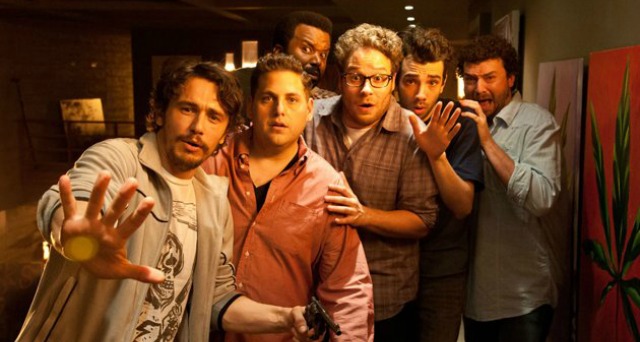
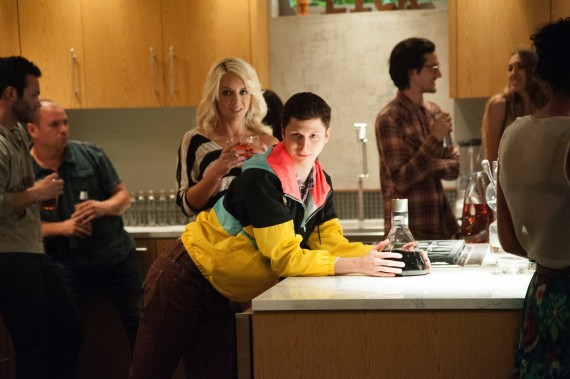
Movies can teach us a lot about ourselves. For example, “This is the End” taught me that I will actually enjoy the site of Michael Cera being impaled. As long as it is preceded by him slapping Rihanna’s ass and trying to give drugs to McLovin. Maybe what I’m trying to say here is that I am a terrible person. Or maybe it is that celebrity is whatever you make of it. I don’t know, I’m not a celebrity.

Much has been said in the press about “This is the End,” but nothing could prepare for this one shocking twist: the star of the movie is actually Jay Baruchel. While his leading role in “Undeclared” might not have helped, perhaps this will finally give him the recognition he deserves as an actor. 

“This is the End” is a Hollywood satire where all of the actors play themselves. That would seem incredibly self-congratulatory, if it wasn’t for the fact that the actors don’t try and make themselves look like saints. The film begins as Seth Rogen walks through an airport to meet his best friend Jay Baruchel. Seth is accosted by a man with a camera (who I assume is from TMZ). The man asks Seth why he plays himself in every movie he’s in. Rogen co-wrote the film, and is clearly aware of what people think of him, as does everyone else involved.
In the film, Seth and Jay’s relationship is based off of them drifting apart. Seth has new friends now, and Jay wonders whether or not he is still in the picture. This is the same separation anxiety that made up “Superbad,” another film that was co-written by Rogen and his best friend Evan Goldberg. Every film they write together also serves to show how their friendship grows and changes. In a film that contains a lot of false perceptions, the truest part of it is this friendship.

Seth and Jay’s first stop is James Franco’s house. Here, Franco is as weird and artsy as everyone thinks he is. However, he’s more obsessed with Seth Rogen than he is with himself. It’s equal parts creepy and hilarious. Franco is both earnest and funny all while being a huge dicknose. Who knew someone could show such range while playing themselves?

While Rogen and Goldberg are pro writers, “This is the End” is their first stab at directing. The two blend together as directors as well as they do as writers, which is why it always seems like a singular vision. The two of them strongly embrace buildup. The apocalypse doesn’t happen for a little while, which provides plenty of time to understand Jay and Seth’s friendship as well as both of their relationships to everyone else around them. It is in this time period where the film truly gets its heart. Action films, comedies, and well, most films in general could learn a lot Rogen and Goldberg: it’s good to know the characters before you let the bodies hit the floor.

“This is the End” is a great Inside Hollywood comedy because it never goes meta. It’s less about the wink and more about the inviting nod. For every joke about “Flyboys,” there is also an extended riff about Danny McBride’s use of James Franco’s bathtub. In fact, by making a bunch of celebrities face the apocalypse, the film shows that they aren’t that special after all. What also keeps “This is the End” from becoming too much of an in-joke is how carefully crafted all of these fictitious personas are. Clearly Michael Cera doesn’t treat Rihanna like that. I’ll have to get back to you on James Franco’s weird taste in art.

At a time when Hollywood is creepily obsessed with the end of the world (see: “Oblivion,” “After Earth”*), it is refreshing to see a film that doesn’t take ridiculous apocalyptic scenarios so seriously. Yet, Rogen and Goldberg still manage to lay out all of the rules of this new world with so much detail. And the vision is so inspired. Just take the demons: they look exactly like the beasts from “Ghostbusters,” but with one major exception (you’ll understand when you see it).

“This is the End” clocks in at just under two hours and the length feels neither too long nor too short. In terms of its characters, it gets nearly as much done in that running time as any season of any TV show. Plain and simple: this is high concept comedy at its absolute best.

*Actually, don’t see “Oblivion” or “After Earth”

Fun With Trailers: If Taken Was Made In the 80s

In 2008, “Taken” came out and suddenly turned Liam Nesson into one of Hollywood’s biggest badasses. He became something of an Irish Chuck Norris with less annoying politics.

Anyway, I normally try and avoid most trailers, as nowadays they seem to spoil everything, from the best jokes to the best explosions. But I am always a sucker for a good trailer mashup. And that is exactly what we have here. Below is “The Taking,” a trailer for “Taken” that re-imagines it as a 1980s action film. I did not grow up in the 80s (just to be clear), yet it imitates everything I know of that decade to a T. It feels like it could have been placed amongst the fake trailers in “Grindhouse.” It even looks like it was shot on film.

Analog This: Season Four of Arrested Development (So Far)

SPOILER ALERT: I have not finished the fourth season yet, but there may be some light spoilers ahead. Read with caution.

Seven years ago.

That’s when the original series finale of “Arrested Development” aired. That’s also how long I waited for TV’s greatest comedy to come back on the air.

“Arrested Development” holds a special place in my heart. The first three seasons have been like a Comedy Bible to me. It taught me to embrace details as well as the slow buildup to a laugh. I’ve rewatched and deconstructed every episode so many times, yet I always find something new to marvel at. In the universe of “Arrested Development,” no comedy stone is left unturned.

For years, I was constantly teased with the idea that there could be an “Arrested Development” movie. Any mention of the movie itself (without any promise of it actually happening) became something of a recurring joke worthy of the “Arrested Development” universe. That is, until the day that it was announced that a fourth season that would lead up to an eventual movie would be released.

Suddenly, “Arrested Development” was on the level of hype and public scrutiny that no cancelled cult TV series would normally face.  Essentially, season four would have to be the greatest event in television history, because that’s what every hyperbolic blogger labeled it as. However, it is rare that anything that is labeled as “the greatest ever” before it is actually released will actually be the greatest ever. Narrowing it down to film and television, most of the greatest works came out of nowhere with very little hype behind it. Or, as was the case with the first three seasons of “Arrested Development,” it could take years for the public to ever come around to it (despite multiple Emmy wins).

Continued After the Jump


There is no denying that season four of “Arrested Development” is among the greatest events in television history. First off, in an age where everyone is creating a Kickstarter to bring back their favorite cancelled shows, “Arrested Development” was able to return on strong word of mouth alone. The fact that the new season premiered on Netflix is something of a middle finger to all of the networks that wouldn’t give it a chance.* My theory for the original cancellation of “Arrested Development” was that it was too ahead of its time. The circumstances that it premiered in did not support the needs necessary for watching it. It is a show that is meant to be paused, rewound, and fast forwarded. Unfortunately, it hit the air before the proliferation of the DVR. While I have my problems with the binge watching that is caused by releasing an entire season of a show at once, “Arrested Development” was meant for Netflix. It set the stage for the existence of other shows that are jam-packed with jokes, such as “30 Rock,” “Community,” and “Archer”.
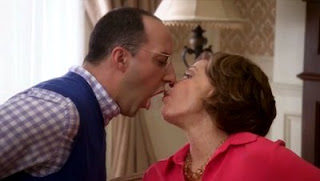
During the buildup to season four, I tried my best to resist calling this “the greatest television event of all time.” After all, that is a big label to give something that the world hasn’t yet seen. While this new season is far from perfect, to call it’s existence important would be an understatement.

Before I delve into the details of the new season, I must clarify that I am not yet finished with it. I mean that in two senses. I say that both because I have not watched every episode yet, and that I will not be finished with this season until I have rewatched it and picked up on every hidden detail that I can possibly find. With “Arrested Development,” that is a job that never really ends. I begin here not because this seems like a perfect place to start, but because I couldn’t wait much longer.  It’s been seven years, and while there are always new things to say about “Arrested Development,” finally there are new episodes to write about.

The fourth season is even more confusing and convoluted than any season before it, which is both a good and bad thing. This makes sense, as the Bluths are currently worse off than they’ve ever been. This season brings us to the present day, after a mysterious “Dark Period” has left the family in shambles. Even Michael Bluth (Jason Bateman), who was always the most sane one in the family, can’t quite keep it together.

Perhaps because of a bigger production budget, the Bluths are able to leave their beloved Newport Beach. George Michael (Michael Cera) heads off to college, as his father follows a little too closely behind (leading to one of the most overt incest moments in the show’s history). Meanwhile, Lindsay (Portia de Rossi) tries to find herself in India, George Senior (Jeffrey Tambor) and Oscar (Jeffrey Tambor) become unlikely business partners on the Mexican border, and Gob (Will Arnett) still just wants everyone to be his friend.
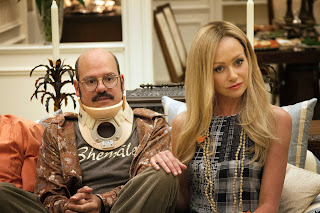
While structure is crucial to any story, only in “Arrested Development” is it such an integral part to the show’s uniqueness. The first three seasons of the show were described by Jason Bateman as “‘The Royal Tenenbaums’ shot like ‘COPS’.” It was a great spin to the dysfunctional family comedy, and a response to the rising popularity in reality television. Ten years have passed since the pilot premiered, and since then, reality shows make up a majority of the TV landscape. Since then, the Internet has changed how content is viewed. It is a bold move for a show to tinker with its format, but this is a show that defines bold creativity. While Ron Howard’s flawless narration remains intact, each episode now focuses on one character and then ties them back into everyone else’s lives. The concept of past and present is now all over the place. This season feels like somebody with very short attention span jumping back and forth between several YouTube videos.

This new experiment is not necessarily a bad thing, but it was something I had difficulty coping with for a while. While one could make an argument that any one of the Bluths are the best character of the show, the Bluths work best when they are all together. Tobias’ (David Cross) innuendos are nothing without Michael’s deadpan reactions to them (“There has got to be a better way to say that”). Nobody should be safe from Lucille’s (Jessica Walter) insults (“well joke’s on her because she doesn’t know how little I care for Gob”). This show is powered by human dysfunction.

While dysfunction makes the show funny, some sense of order is needed. In an interview, Hurwitz said that he only likes to watch something where he understands the direction it is headed in. In a way, he is praising formula. While formula often goes hand-in-hand with unoriginality, “Arrested Development” created a winning one that never got old. It has veered away from that original formula in many ways. The show is no longer constrained to 30 minutes broken up by commercials. Some of the new episodes run over 30 minutes, and some run under 30 minutes. Some feel a bit too long, and some feel like they could have used more. Hurwitz and crew could have tightened things up a bit and hurt nothing.

I hope that none of this gives the impression that I dislike the new season. Perhaps I’m just lamenting something that I will never get back. Somewhere around episode three (“Indian Takers”), the season began to turn. The farcical, heightened reality of “Arrested Development” had returned. The show had settled back into itself and eased up on the exposition. Then, when it felt comfortable, it took an even more meta turn than it did in season two with the “Scandalmakers” plot line. Ron Howard, the show’s offscreen narrator, became a character onscreen, and Michael finds himself the producer of a movie about his own family. Before it can be made, he must get the life rights from each of his family members. This is a little wink to the supposed purpose of the fourth season: once we’re completely caught up on the Bluths, perhaps “Arrested” fans will finally get the movie they were waiting for.

Some shows can’t recover when they go meta (many believe that the downfall of “The Simpsons” began after it went meta). However, “Arrested Development” has proven over and over again that it can constantly go over the edge and then climb back up. The behind-the-scenes stuff ultimately feels more fun than exclusive and it just makes absolute sense for this story. During its early run, “Arrested” provided some of the best satire on the Iraq War and the Bush Administration. While this season has offered some sharp commentary on the financial crisis and immigration, “The Daily Show” is always there to cover that front. Nobody else has made a portrait of the modern movie industry as funny as “Arrested Development” has.

One of the main things that threw me off most when starting the new season of “Arrested Development” was that the return felt surreal to me. This would be the first time in seven years that I would see a new episode of “Arrested Development.” Seven years. The last time I saw a new episode, it was the last four that ever aired, and they were crammed together on one Friday night in a time slot that nobody watched. As ridiculous as it sounds, I would now get to watch the Bluths say words that I had never heard them say before.

When laughs seemed scarce, I tried hard to remember what it was like seeing an episode of “Arrested Development” for the first time. I remembered that one viewing barely scratched the surface. In that regard, “Arrested Development” is like Freud’s Iceberg of comedy. Watching “Arrested Development” is an art form all its own. Viewing it requires one to multitask. What is happening in the background is just as important as what is happening in the foreground. A billboard can be just as funny or important as a line of dialogue.

Overall, “Arrested Development” requires patience. Things might not make sense the first or even the second time around, but the reward for sticking around is worth it. Just as there is always money in the banana stand, there is always something new lying beneath the surface of any given episode. I look forward to honing my ability to observe the Bluths, and seeing what else season four has to offer.

*While it is fun to blame Fox for the show’s cancellation, they deserve some credit here. They really did try with the show. They could have cancelled it after one season but they knew how good it was and tried for three seasons to find it the audience that it deserved.

The Purge Giveaway. Can you #SurviveTheNight?

Have you ever been sitting here, reading this blog, and wondered to yourself, “Ian is a genius and all, but what am I getting out of this?” Well, now you can finally get something for you loyalty.

The friendly people at Universal Pictures have provided me with “The Purge” App, for their upcoming feature “The Purge” (which, in my honest opinion, looks awesome), coming out on Friday, June 7. You can play this app, or not, but I have also been bestowed the power of giving one reader a “Purge” prize pack. This prize pack includes free t-shirts. You heard me right. Free t-shirts. How often in your life do you get the chance for free t-shirts? From a real movie studio?

Here’s a link for the App:

https://archive.partnershub.com/embeds/16/the-purge/widget/the-purge/

Let me know if you’re interested. Keep on Reel Dealin’ on.

Movie Review: Star Trek Into Darkness

With all of the angry insistance of “you HAVE to see this!” that goes around in popular culture nowadays, it is always nice to see something that is more inviting than exclusive. So far, J.J. Abrams’ “Star Trek” has been great for old fans* while it also creates new ones.

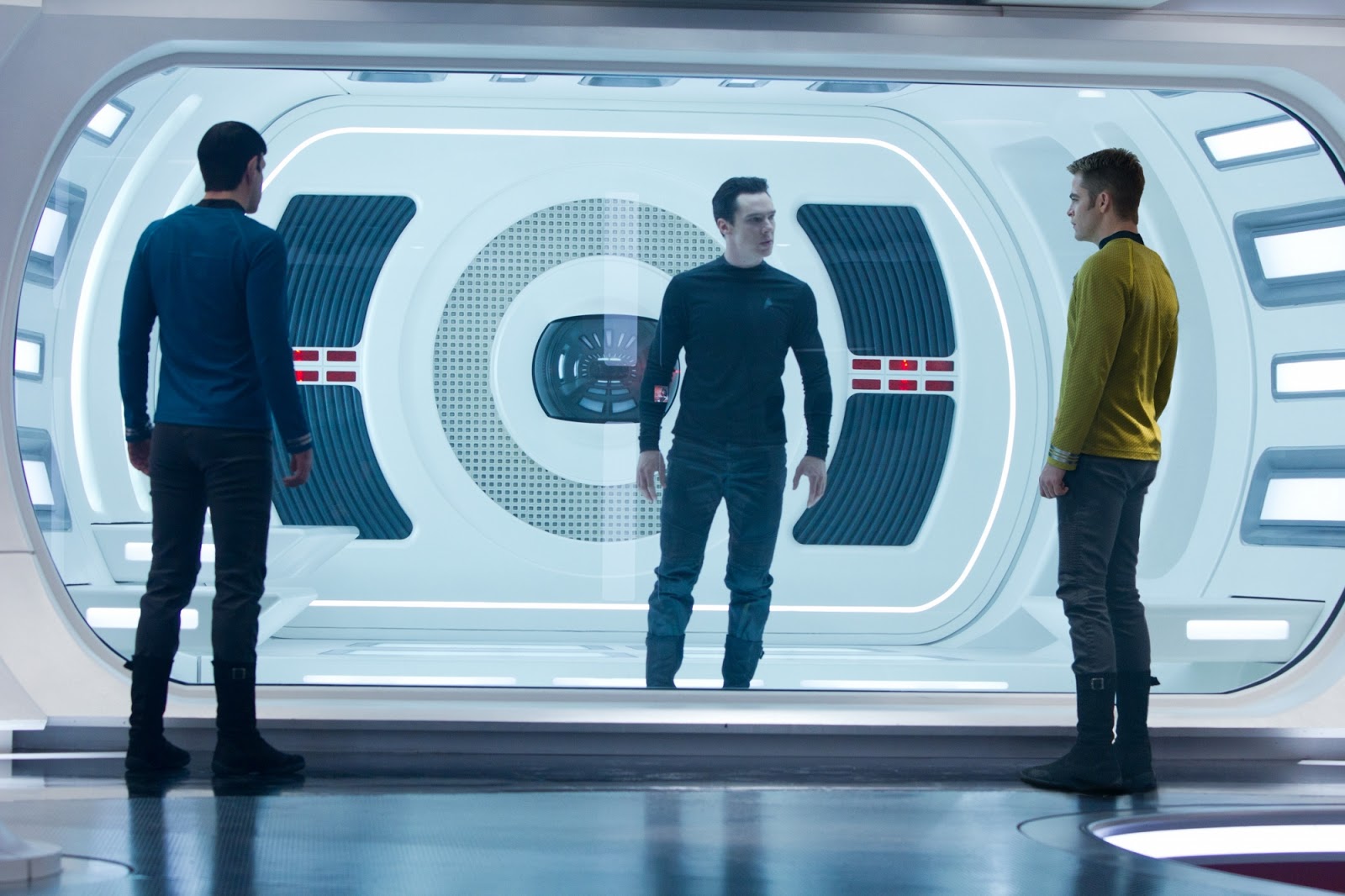
Laying out the entire plot of “Star Trek Into Darkness” here would be of no use, as there are too many details that I am afraid I will give away. The opening scenes involve a chase by some indigenous people through a colorful forest that leads into the center of an active volcano. Now, movies don’t tend to kill of their main characters before the opening credits, especially if that character is Spock (Zachary Quinto), but I was surprised to find out that that was not a simulation as I thought it would be.


Something that worked for me about “Into Darkness” is that it doesn’t get bogged down in cinematic tropes. While there are love interests here, there is no real central love story. The lack of romance allows the film to focus on the most important element in all of “Star Trek”: the strange friendship between Spock and Kirk (Chris Pine).

However, this story is of course not without external conflict. In “Into Darkness,” the Enterprise battles against the genetically superior Khan, who is played by brilliant casting choice Benedict Cumberbatch.** Cumberbatch plays Khan with a level of terrifying restraint. Cumberbatch embraces the idea that the best villains don’t speak much because when they actually do, everyone listens. However, a little more screen time for him wouldn’t have hurt anyone.

While I do not know much about the original Khan, I can say that this Khan is a somewhat complex villain. At least that’s what would happen if you were a genetic creation by man and never really governed by much free will. Khan isn’t quite Kirk’s doppelganger, but both of them do have a crew to watch over, and only one of them really considers that crew a “family.” Surprisingly, it’s not who you think it is.

“Into Darkness” does a much better job expanding the friendly rivalry between Kirk and Spock. “Into Darkness” is a very deep look at the constant yin and yang that forms between emotion and logic. Boiled down, this is what “Star Trek” is all about, and “Into Darkness” very wisely made it a focal point.

Overall, it is hard to find a lot to say about “Into Darkness.” It was a pretty great way to kick off blockbuster season. However, I don’t have any strong opinions about it. “Into Darkness” held my attention for two hours and I followed it on every twist and turn it took. But I guess the best way to end this review is by praising the director himself. “Star Trek Into Darkness” is a blend of many broad sci-fi ideas from space travel to the idea of restoring life to something that is dead. “Into Darkness” tackles all of them with a wonder and excitement. It is never scared of breaking, dare I say it Mr. Spock, logic.***

*NOTE: I have never watched the old “Star Trek” and therefore cannot be held accountable for knowing any major changes made in the films.

**I somehow spelled that right the first time.

***Thank you! Thank you, good night!

Movie Review: Iron Man 3

Marvel’s attempt to recreate its interconnected universe on film has officially paid off.

“Iron Man 3″ is a lot more organized than its predecessor, and a lot less cheesy than its predecessor. If anything, “Iron Man 3″ is cheesy on purpose. While the director/writer team of Jon Favreau and Justin Theroux that made up “Iron Man 2″ is certainly a talented one, Shane Black brings back everything that was great about the original “Iron Man,” plus everything that makes his take on the action genre so unique.

“Iron Man 3″ begins with a confession and then a flashback to 1999. During that time, Tony Stark (Robert Downey Jr.) is still the same womanizing, partying genius, except with a better heart. The key information here is that brilliant scientist Maya Hansen (Rebecca Hall) and her boss Aldrich Killian (Guy Pearce) work on a special experiment that could eventually help humans grow body parts back. It is a nice touch for the third “Iron Man” movie, as this series explores people using technology to exceed their life expectancy.


For further proof of that, look no further than Tony Stark. In “Iron Man 2,” he was dying. In “Iron Man 3,” he comes back with post-New York anxiety. Not the Woody Allen kind, but rather the kind you get from fighting aliens that nearly destroy an entire city. Tony distracts himself with work and a serious relationship with Pepper Potts (Gwyneth Paltrow), but mainly work. This still doesn’t stop him from waking up with PTSD nightmares.

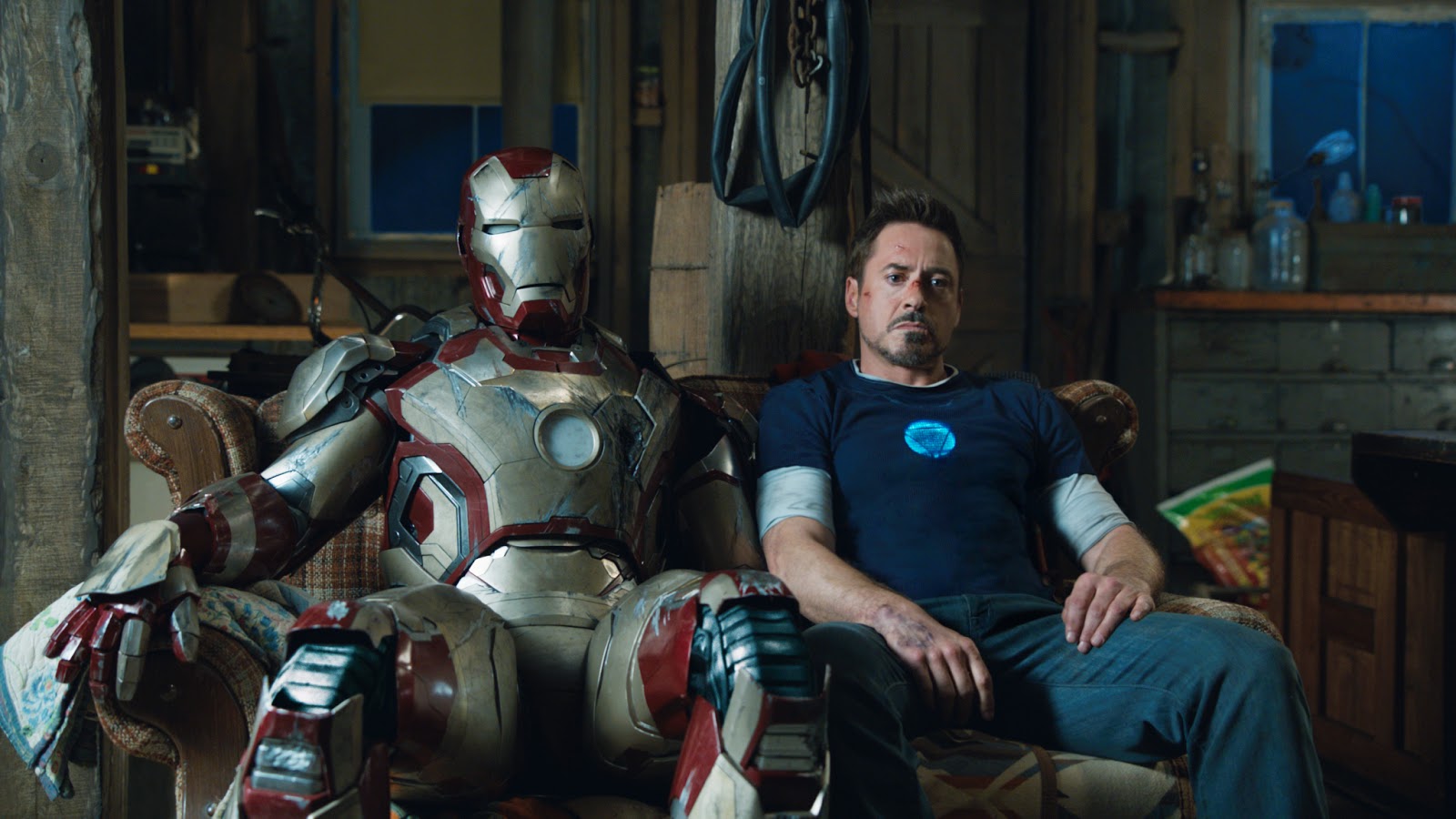
The “Iron Man” series is typically a lot more lighthearted than other films adapted from comic books. Yet, it still manages to be a serious character study of Tony Stark, who is basically the living embodiment of an adrenaline rush. “Iron Man 3″ portrayed a man bound to the machine that also haunts him.

Tony’s state of trauma can’t last too long: like any hero, he must get back to work. His latest challenge is a terrorist named The Mandarin (Ben Kingsley), who looks like Bin Laden but talks like a member of Blue Collar Comedy. The Mandarin is vaguely threatening yet threatening enough that Tony extends an open invitation for The Mandarin to come attack him at his own home. Needless to say, this doesn’t turn out too pretty.

The action and CGI in this film are phenomenal, yet the best part of “Iron Man 3″ is when Shane Black strips Tony of his super powers and in effect, his identity. Technology can sometimes be used as a crutch, so it’s a treat to see Tony use nothing but his wits to fight his enemies. It is a reminder of why Tony Stark is a great hero in the first place: he is a genius. The power of the iron man suit seems to be transferrable  However, Tony Stark is one of a kind.

The reason that “Iron Man 3″ is so entertaining is because it’s a serious story that never takes itself too seriously. Shane Black plays action movie cliches for comic relief all while creating a very solid action film. No stone is left unturned here, if an item is brought up earlier in the script, you can bet it’ll come back later on.

“Iron Man 3″ is also the rare action film that doesn’t think its audience is dumb. Most of the time, the audience gets to find out plot details at the same time that the characters do. Therefore, the audience is not smarter than the characters, and the characters are not smarter than the audience. Both plot and character details unfold slowly. Though not quite on their level, it reminded me of some of the best action genre made in the 1980s, and not just because it also took place on Christmas.

“Iron Man 3″ is not perfect. Many loyal (beyond the movies) “Iron Man” fans were unhappy with a certain plot twist. As somebody who can only be credited as seeing the movies, I can understand why, but it was certainly an interesting experiment. My one quibble about the film is that it is at first bogged down by “Avengers” references. Once it learns to balance those with new plot points, it really takes off.

This may be the final “Iron Man” film. If so, it closed out well because it improved so much from its predecessor and revived the intrigue behind the Iron Man and Tony Stark. Tony Stark is more a Hollywood than New York hero, as he is a man driven mainly by the ego propelled by his talent. “Iron Man 3″ is also all about characters putting on different masks, labeling things, and overall trying to put on a good performance for the rest of the world. Yes, the name Iron Patriot means a lot. In terms of performance, there could have been no better Tony Stark than Robert Downey Jr., who’s fast-talking performance so perfectly matched the wit of what was written down on the page. Basically, Robert he created an alter ego just as compelling as the hero he must play.

The 3D Experience: Definitely worth seeing in theaters, but you could do without the 3D.

Sidenote: During the 1999 flashback, Jon Favreau’s hairstyle and outfit is nearly identical to that of John Travolta in “Pulp Fiction.” Intentional?

Movie Review: Oblivion

According to “Oblivion,” as well as most other dystopian sci-fi films, the future is filled with white rooms and white furniture. This feels less like an ode to Minimalism and more like a director and crew that were too bored to hash out all the details. That’s what “Oblivion” is: the possibility of an original sci-fi property wrapped up in a generic shell.

“Oblivion” begins with a voiceover describing the end of the world. Tom Cruise, who once again plays a man named Jack, delivers a bland monologue, which works much better when it is explained in a scene later on. Jack, along with Victoria (Andrea Riseborough) are part of a “mop-up crew” who stay in a swanky apartment (as described above) and are assigned to patrol what remains of Earth. Writer-Director Joseph Kosinski decided to hit Earth with a whole array of disasters: aliens invade, the moon is destroyed, and earthquakes and tsunamis tear the world asunder. The best thing that can be said about “Oblivion” is how striking and well thought out the world looks. While the set design is stale, the world is well detailed. The creative minds behind this film certainly spend a lot of time thinking about the end of the world.

However, if the film’s poster reminded you a lot of “I Am Legend,” that’s because the two films are a little too close for comfort. “Oblivion” feels like a mash up of a lot of sci-fi films, both great and mediocre. The film’s main villain (or at least I think it is, more on that soon) evokes a much less frightening version of HAL from “2001: A Space Odyssey.” Also, the film’s use of paintings and old texts for blatant symbolism felt like “The Book Of Eli,” another post-apocalyptic film with a lot of problems. “Oblivion” is derivative of films that were derivative of other films.
While people like to give Tom Cruise flack, there’s a reason the man became so big in the first place: he is an incredibly talented actor who can take on Spielberg blockbusters and Cameron Crowe romances. At his best, Cruise can feel like an everyman even though he is clearly a movie star. At his worst, he is distant and unemotional. The latter describes his performance in “Oblivion.” While he is supposed to be a cold, highly trained killer here, he didn’t even make sense as that. For somebody with such a haunted and confused past, it clearly didn’t seem to bother him at all.

The biggest problem that “Oblivion” faces is a script filled with stilted dialogue and underdeveloped characters. Just look at the Morgan Freeman. He comes in, almost saves the movie, and then disappears again for an hour. They say that a movie is as good as its villain. Jack and the resistance spend most of “Oblivion” fighting a bunch of orbs that shoot things out of them. And that’s about it. There are no confrontations or motivations to create intrigue or raise the stakes. A better villain probably would have made “Oblivion” more entertaining.

The film’s villain problem highlights the real issue of “Oblivion”: it’s just plain boring. The action sequences have absolutely no life in them. With all of the money spent on this film, couldn’t there have been a little more life injected into them? Every battle feels like it was won with no difficulty at all. The director seems to enjoy taking every convenience possible whenever a storyline can’t work out (for example: Jack’s bike breaking down).

“Oblivion” is set to a score that sounds like the “Inception” soundtrack mixed with the music from those Carnival Cruise commercials. This is just a small example of the film’s inability to both find the right tone and faithfully pay tribute to the much better films than it rips off. I really wanted to like “Oblivion,” because every original sci-fi film that Hollywood produces is a mini blessing in disguise. Maybe it sold because it wasn’t so original after all. What “Oblivion” lacks is spirit. You could get a lot more entertainment out of watching a group of five-year-olds reenact their favorite scenes from “Minority Report.”

Note: There are multiple story lines that I didn’t get into. That is partly because I don’t want to spoil anything, and partly because I had barely any idea what was going on at all during this film.

If You Don’t Want to See the Watered Down Version, See the Original: Moon, Source Code, Minority Report, 2001: A Space Odyssey, Inception, Cloud Atlas, Looper