
Category Archives: Adaptations

Movie Review: The Hunger Games

Before I start this review, let’s get something out of the way: I have not read “The Hunger Games” or any of the other books in the series. I cannot compare the film adaptation to the original book. Therefore, I will be reviewing “The Hunger Games” as a movie, not an adaptation.

I will admit that I ignored “The Hunger Games” for most of its popularity because I associated it with the tweenage wasteland of “Twilight.” “The Hunger Games” does not deserve to be put into that category because the story is much more mature, the characters are more complex, and if the movie is any indication, Suzanne Collins is a much better writer than Stephanie Meyer is. The difference is that Collins seems to write about teenagers from the perspective of an adult, and Meyer with the prose of a fifth grader.


Plot description is probably irrelevant for all fans of the novel, but hopefully people unfamiliar with the books will go see it, too. “The Hunger Games” takes place during an unknown time in the future in the nation of Panem, which was once the United States. After a rebellion (which hopefully will be explained in the next film), Panem has been divided into districts. Our main focus is in the rural District 12 which, like the rest of Panem, is in ruins. Each district seems to be closed off to protect the people from each other. Apparently in the future, people are no longer to be trusted.

In District 12 lives Katniss Everdeen (Jennifer Lawrence), who for the rest of this review will be known as Catnip. Teenage Catnip cares for her younger sister Primrose (Willow Shields) and her mother (Paula Malcomson). Her mother is never given a name, but it seems like something we really should know.

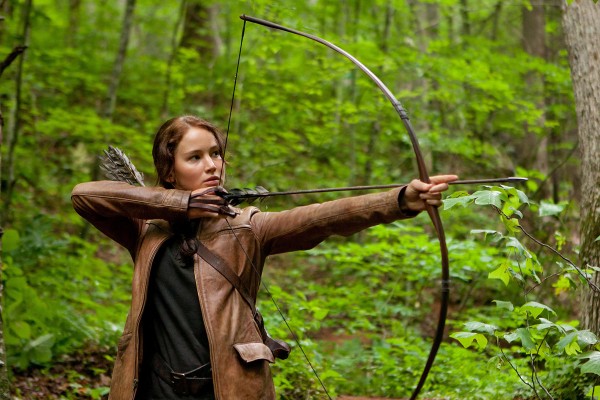
Catnip is young but mature beyond her years, assuming the role of both hunter and gatherer for her family. Her skill with a bow and arrow will come into play later on. On a related note, it’s kind of awesome when a dystopian movie uses primitive weapons.

To punish the people for the rebellion, each year the government hosts The Hunger Games, in which a boy and girl from every district is chosen for an arena battle to the death. The names are chosen at random in a lottery-type system. Prim, eligible for the first time to compete, is chosen to represent District 12. Not wanting her younger sister to have to face death, Catnip offers herself up in Prim’s place. And with that, “The Hunger Games” shows that it is not one of those “Chosen One” narratives a la “Star Wars” and “The Matrix.” In this world, no one is that special.

Catnip makes quite an impression on everyone with her brave sacrifice. Chosen alongside her is Peeta (Josh Hutcherson), who will be referred to as Pita for the remainder of this review. In his first interview before the Hunger Games begins, Pita declares his love for Catnip on national television. Awkward.
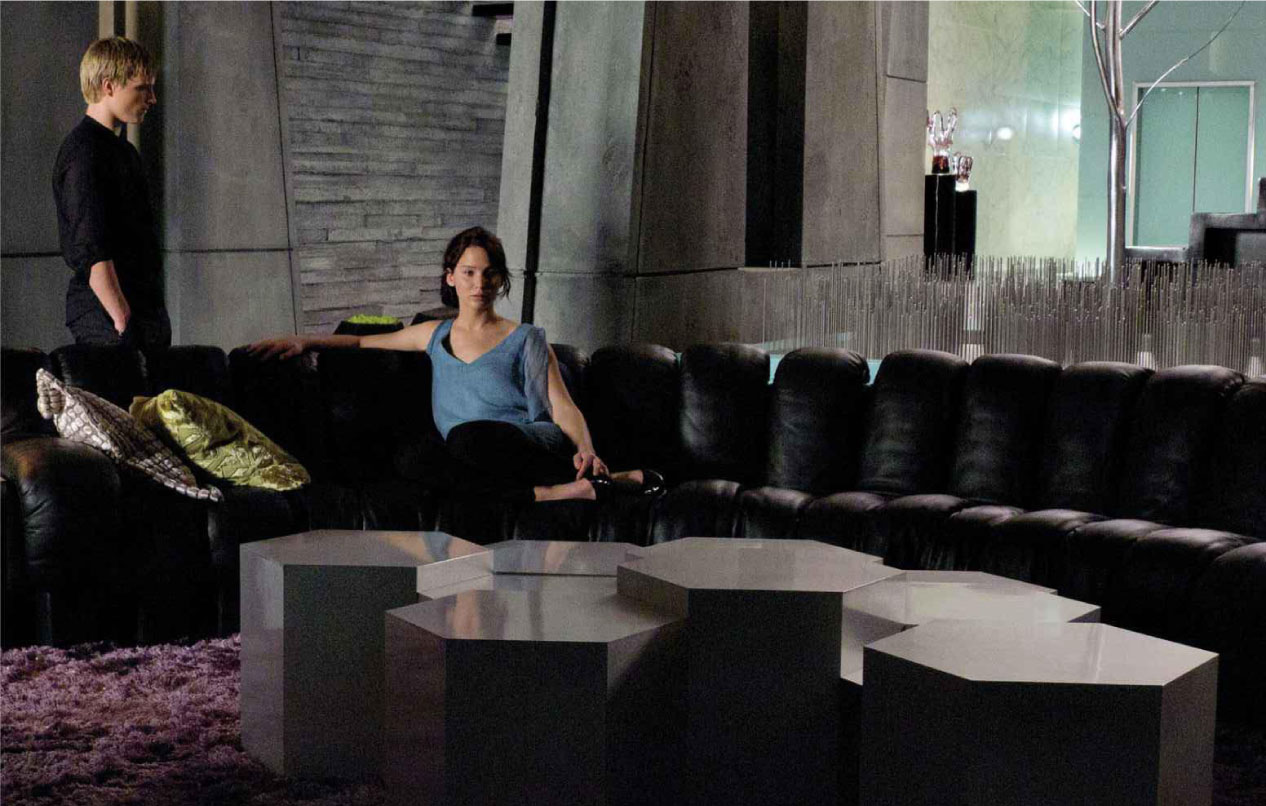
“The Hunger Games” is as much about media hype as it is about the actual Hunger Games. This is what elevated the story for me the most. I have always assumed that one day, someone would make a reality show about people killing each other, and that is essentially what the Hunger Games is. The Games serve to both unite and distract the Districts. They are all united in watching the games together, yet they all root against each other. As Roger Ebert wrote in his review, “Reality TV is the opiate of the masses.”

This story, essentially, is about a world in which the most important thing is getting other people to like you. Catnip learns this during her publicity tour, but I liked her from the start. Lawrence plays her with the same brashness, wisdom, and self-assurance that originally made me notice her in “Winter’s Bone” in 2009. This character is not trying to break any female stereotypes, she just shows the kind of strength and bravery worth admiring in any human being. Think of her as a teenage version of Ripley from “Alien.” Like Ripley, she assumes a mother-like role for just about everyone she can.

One of my biggest problems with many action movies is that they will let the hero win everything, but never give them much struggle. However, Catnip is one of those plausible heroes I have seen on screen in sometime. She has to overcome a lot in order to win. And while everyone else around her is an actor, she is a reactor. Everyone else is trying to simply hunt or be hunted, while Catnip uses the tools provided by the world around her in order to win. She is not only strong, but also smart. I will continue to follow this series, and even read the books, because of her.

“The Hunger Games” is a well above average summer blockbuster playing in March. We all know the hero will survive until the end, yet there is still doubt and suspense every time Catnip is in peril. That is what good filmmaking is all about. Thank you for that, director Gary Ross, who also wrote “Big.” These two movies are not related in anyway, but I just felt the need to point this fact out.

Ross brings this world to life. The outside is bleak and mechanical like any dystopia, yet everything inside is bright, colorful, and fast-paced. Caesar Flickerman (Stanley Tucci), who acts like the Jeopardy host from “Slumdog Millionaire,” looks like he blue himself.

Bringing a popular novel from page to screen is never easy, and some things are certainly lost in translation. Even as someone who has never read the book, I could tell that much had to be taken out. So much of the movie is setup, yet much more could have been done to introduce the world. I would like to know more about the other districts, as well as District 12. An adaptation should be inviting of new followers, and not exclusive to those familiar with the original.

Apparently in the novel, Catnip was gaunt and starving. Lawrence is a great choice for Catnip, but she does not appear as either. Also, the Hunger Games at times seemed rigged, and it would have been really interesting to delve more into the people who were orchestrating the games. Everyone else fighting besides Catnip had absolutely no personality. Maybe it will be revealed in the next chapter, but who exactly is the villain of the Hunger Games.

But now, let’s get back to Pita. In order to make a love story engaging and emotional, both lovers should be equally interesting. To be honest, Pita might as well have not been there. Nothing about his skills, nor his backstory, are fully elaborated. In the end, it is possible that the two are not even in love, as Catnip has another love interest at home. I smell a love triangle!

See the image in full here.

But I digress (briefly). “The Hunger Games” seems to be leading to the point that their is a difference between relationships and personalities formed by the public, and those that are actually real. However, it would have made more sense had their love not seemed so force. I am not calling this deliberate, this is definitely a flaw.

Unfortunately, the movie loses some steam towards the end. Seriously, those giant dogs looked like something out of “Ghostbusters.”

However, I hate to slip into such negative territory with this movie. Here, I believe the positives overpower the negatives. The second the games begin, we are immediately drawn in the scary and unpredictable idea of death at any moment. I can’t remember the last time I went to a movie and heard such a mixed emotional response from the audience. At some points, there was genuine laughter, and at other points, sniffling. I am not sure if this movie provided everything about the “Hunger Games” universe that it was supposed to, but I can’t wait for the installment to find out more.
Movie Review: War Horse

The Magic Hour.

Many have remarked that the ending shots of “War Horse” evoke the feelings and beauty captured in the landscape of classic Hollywood films, from “Gone with the Wind” to just about any John Ford western. And rightfully so, as this feels like a movie straight out of another era, the kind that isn’t made so often nowadays. It has the power to move any viewer, but it might just bring the biggest film admirer to tears.

Based on a play which was based on a book (I have not seen or read either), the cinematic version of “War Horse” could not have been brought to life by anyone except for Steven Spielberg. It might seem predictable from start to finish, but there is simply no other way to tell this story.

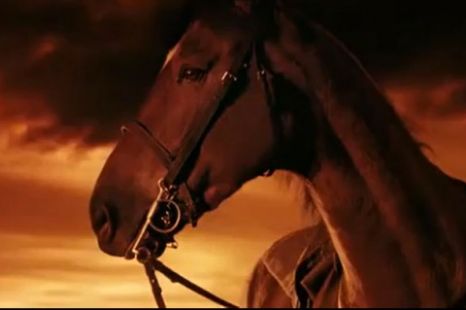
“War Horse” gets off to a slow start, but even the most impatient moviegoer will want to stick it through. In rural Devon, England just before the outbreak of the first World War, a farmer (Peter Mullan) buys a horse for a price more than it appears to be worth. While his wife disapproves, his son Albert (Jeremy Irvine) is infatuated with the horse, but not in an “Equus” kind of way. The horse, whom Albert names Joey, is small but distinctively beautiful, marked by four white socks on his legs and a large white spot on his face. At first, Joey can barely carry a plough but by the end of the movie’s lengthy first hour, he has plowed an entire field. Joey may be smaller than the others, but he is fast and persistent.

Then comes The Great War and like most men in the area, Joey is enlisted into battle. He comes into the care of Captain Nicholls (Tom Hiddleston, or F. Scott Fitzgerald in “Midnight in Paris”). After losing Nicholls in battle, Joey ends up in the care of the British, the Germans, and at one point, a young French girl. Albert enlists in the war, in hopes of being reunited with his beloved horse.

When it comes to depicting the horrors of war, no one does it better than Spielberg. It is stark realism to the highest, most detailed degree. If “Raiders of the Lost Ark” evoked a young boy playing with action figures in his backyard (as a critic once said), then “War Horse” evokes that young boy who is all grown up, knows history too well, and has sat through every action and adventure movie there is.

There have been few notable movies made about World War I, and the scenes in “War Horse” which take place in No Man’s Land and the trenches could definitely give “Paths of Glory” a run for its money. It looks exactly like the post apocalyptic hell that it should be depicted as. When it comes to unflinching historical accuracy, no one beats Spielberg.

Even when Spielberg fails (and he has before), he never loses his uncanny eye for what elements truly complete a movie. In “War Horse,” every little thing ends up having some sort of payoff. He knows what the viewers wants, but he also knows they shouldn’t have to be cheated in order to get it.

Despite having a lot of plain human characters, “War Horse” makes an indelible impact. It is Joey the horse who truly makes it special. If there was an Oscar for animals, he would surely win it. Having Joey as the main character of this movie is something of a small relief, as it is nice to have a totally silent lead character sometimes, and I don’t mean like Ryan Gosling in “Drive” kind of silent. Since horses can’t speak, they use the purest form of acting: the emotions generated by their facial expressions and body language. You can tell when the horse is in physical pain but the more time you spend with Joey, the more you can see emotions that go below the surface. From Joey it is apparent that every living creature feels the effect of war and loss. Think of it as a minor “Consider the Lobster” effect.

“War Horse” is many things. It is an underdog story, a tragedy, and a love story in one. It displays Spielberg’s great gift of always being able to shine the beacon of hope into the darkest of times. Spielberg gets to end “War Horse” with the big happy reunion he so often likes to conclude with. But here, it doesn’t feel like schmaltz as it did at the conclusion of “War of the Worlds.” It felt much deeper than that, and totally in place.

As many before me have pointed out, shades of “The Searchers,” no doubt a huge influence on Spielberg’s career, can be seen here. As Ethan Edwards stood outside the open doors of the house, feeling isolated and overwhelmed by the burdens of both the atrocities he’s seen and the bigotry he feels, is an outsider not just to normal society but even to his own family. As Joey stands just outside the open gate of the loving family’s estate, he probably can’t help but feel the same way. He is loved and many strangers go to great lengths to save him but he is still an animal who has seen more than any can imagine, and in an instant could be traded from one owner to the next. Even if Albert raised him, he will never have one true master. “War Horse” in a sense, is a western, and Joey is its outlaw.

“War Horse” is also the best looking movie to come out this year. From the red sunset to a shot in which an entire army emerges from a field of tall grass, “War Horse” is like looking at a constantly morphing painting. Despite the horrors of war, the beauty of the natural world does not cease to exist.

“War Horse” is especially different because of the unique perspective it is told from. It shows that when war breaks out, everybody feels the consequences. It takes a series of contrived coincidences and two and a half very speedy hours to arrive at this point, but when a movie is able to suspend you from disbelief during its entire running time and keep you in that state, it has ultimately done exactly what its supposed to do. I cannot justify the poignance I felt once the movie ended, but the fact that this emotional state stuck with me long after the ending credits rolled shows the subtle and outstanding power of this movie. Just as Joey is not some dumb horse, just as “War Horse” is not some war movie.

Movie Review: Fantastic Mr. Fox

Who thought that Wes Anderson, who’s still early on in a career of mastering the human frontier, could suddenly switch to the world of animated animals so perfectly? “Fantastic Mr. Fox,” for lack of a better word, is fantastic.

“Fantastic Mr. Fox” is based off the book by the wildly imaginative Roald Dahl. Dahl’s source material often makes for classic cinema (mainly, the original “Willy Wonka & the Chocolate Factory”). The imaginative mind of Dahl is in good hands with the equally imaginative mind of Anderson.
For those not familiar with the book, the titular Mr. Fox (George Clooney) was a former chicken thief who retired his old profession after marrying Mrs. Fox (Meryl Streep) and having their child, Ash (Jason Schwartzman).
After going through what could be described as a mid-life crisis, Mr. Fox gets back into his old stealing habits and incites the wrath of the three wicked farmers Bogus, Bunce, and Bean. After they threaten his home and family, Mr. Fox prepares to fight back.
As pointed out, “Fantastic Mr. Fox” comes from the brilliant mind of Wes Anderson. Anderson is well known for directing films such as “Rushmore,” “The Royal Tenenbaums,” and “The Life Aquatic.” For a film that follows around the lives of foxes, rats, and badgers, it is still completely Andersonesque. He accounts for every tiny detail. The cozy tree the foxes inhabit is alive with color, their furniture and their walls adorned with the most intricate decorations. You might also marvel at how a computer in the background is covered with post it notes, or how the walls of the deepest parts of the earth have fossils imprinted into them.
Anderson also leaves his mark with the music, which is a mixture of original score and rock music. What other director would use a Rolling Stones song in a family movie? The original score often perfectly matches the pleasant, agrarian landscape and during more suspenseful moments, takes on a spaghetti western feel.
The characters themselves also feel ripped out of previous Anderson films. Mr. Fox’s mischievous behavior over family values can feel something like those of Royal Tenenbaum, and his struggle to find a real identity for himself can at times, make him seem like Max Fisher.
What’s most important about Anderson’s direction is that every frame seems filled with absolute love. Rather than record the voices and sound in a studio, Anderson instead decided to record out in a farm in Connecticut. This no doubt gives the film a much more natural feeling, rather than just feeling like another artificial studio product churned out in too short an amount of time.
Perhaps that’s what makes this better than the typical, how real it feels; even the animals feel human. Also, the film manages to be so adult in both theme and humor despite being a children’s film. The fact that the word “existentialism” is mentioned in it might give you an indication of it.
In this light, Anderson’s adaptation of “Fantastic Mr. Fox” manages to turn this fairytale into an allegory of the human existence. At one point, Mr. Fox realizes that his days as a thief proved him to be a wild beast, and that he must settle down. The fact that he goes back to his old ways shows the wild, untamed beast that is the basis of our existence. Here, is the key to existentialism.
But I don’t want to get into philosophy. After all, this is meant to be a fun story for the family, and at that it succeeds admirably.
For some reason, as I watched this film, I couldn’t stop thinking of the other children’s film made by a mature filmmaker this year: “Where the Wild Things Are.” Both were experiments of whether their directors could reach to new audiences. “Fantastic Mr. Fox” wins in this experiment not just because its well filmed, not just because it has depth, but for one small reason alone: it’s an amazingly fun time at the movies.

Movie Review: Where The Wild Things Are

Like many children in America, I remember being read only two books growing up: “The Cat in the Hat,” and “Where the Wild Things Are.” The former got a movie adaptation that few would ever like to mention again, while the latter, after so many years, finally made it to the big screen.

“Where the Wild Things Are” is a movie adaptation I’ve been waiting for for quite some time. The idea of how someone could take 10 sentences and turn it into a feature length film fascinated me. The end result is something of a mixed bag; an intense labor of love that just isn’t given all the love it truly needs.
In order to make the story fit a feature length, director/writer Spike Jonze and co-writer Dave Eggers added a backstory. Young Max (Max Records) feels isolated from the rest of the world. He doesn’t have friends, he has an indifferent older sister, and divorced parents.
Just like in the book, Max’s frustrations mount to him donning the trademark wolf suit, biting his mother, and then sailing off to the land of the Wild Things. There, he meets the tough but lonely Carol (James Gandolfini), the bullied Alexander (Paul Dano), and the free-spirited KW (Lauren Ambrose).
Like in the book, Max becomes their king. Here though, he learns that it ain’t easy being in charge.
“Where the Wild Things Are” was brought to the big screen by one of Hollywood’s most wildly imaginative directors, Spike Jonze. This is his third film, following “Being John Malkovich” and “Adaptation.” His version of “Where the Wild Things Are” proves to be not only Maurice Sendack’s vision, but also his own. He turns the island of the Wild Things into a land of not only dense forests but also desolate, empty deserts. And there’s a giant dog.
Like “Being John Malkovich,” “Where the Wild Things Are” takes place entirely inside one person’s imagination. In this case, it’s in Max’s head. Unlike the book, Jonze doesn’t seem to distinguish between Max’s fantasy and reality. Perhaps this is his way of saying Max hasn’t entered the realm of early maturity yet, and the only thing that will accompany him is his dreams.
Before I dish out some complaints of the film, there are a few things here that must be praised. Mainly, it’s Lance Accord’s camerawork. His cinematography ranks alongside “The Assassination of Jesse James” and “Children of Men” as the best of the decade. Some of the best shots come during the “magic hour” of the day when the sun isn’t quite set, but still beams down in golden rays. The desert is used perfectly as a metaphor for Max’s isolation from humanity.
But maybe most profound is the way the Wild Things themselves are depicted. Instead of choosing CGI, Jonze went with old fashioned puppetry. While on set, Records was never talking to a green screen, but rather living, breathing creatures. Then, there’s the way they are introduced. While most directors might make a big deal out of it and create a slow, painful introduction (i.e. Peter Jackson’s “King Kong”), Jonze shows us the Wild Things just seconds after Max arrives.
When I left the film, I felt conflicted. I knew there was something missing from the film, but I just didn’t know what. While it’s understandably hard to turn 10 sentences into an entire film, the approach seemed a little backwards. In a way, almost nothing seems to happen in the film. While the Wild Things certainly are given a human face, some of the conflict felt a little forced. At one point, Carol asks Max if he knows the feeling when your teeth spread apart as you get older. Lines like this sound more like Andy Rooney observations than actual thematic discussion.
Maybe “Where the Wild Things Are” could also be a victim of bad timing. The film about the child who creates a fantasy world to escape their horrible reality has become quite commonplace. It was done best most recently with “Pan’s Labyrinth.” In a way, I wish Jonze laid the plot out a little more like that film. “Pan’s” felt more like a story with actual challenges facing Ofelia in her own fantasy.
In the end, I still do appreciate everything Jonze did to make this movie. I call it a labor of love because I know Jonze truly did all he could to get his vision on the screen. It’s a labor of love like Copolla’s “Apocalypse Now,” Ridley Scott’s “Blade Runner,” or Tarantino’s “Inglourious Basterds” in which the style is so flawlessly executed that most might lose the meaning of exactly what was going through the director’s head. Could this version of “Where the Wild Things Are” be so personal to Jones that it might just be lost on us?
Max was a hero to me in my youth and his character continues to interest me. Jonze makes him out to be not just an outsider, but also something of a misguided rebel. Could he be a boy with no love in his life who deserves it like Jim Stark? Or just someone as emotionally immature as Holden Caufield?
But let’s not over-analyze. The simple message of this film is the power of a little bit of love. It’s a message so simple yet so brilliant that only 10 sentences are needed to fully illustrate its power.

Today’s Sign of the Apocalypse: Rewarding Bad Behavior

If you know me, you know I often like to use this blog as a forum to gripe about the dumbing down of popular American culture. Every now and then, I see a sign that maybe I’m wrong (“Inglourious Basterds”). But most of the time, my complaint goes unchallenged. Don’t believe me? Then just look at this little bit of news from today.

“L.A. Candy,” a novel released earlier this year by “The Hills” star Lauren Conrad, will be made into a movie. The rights for the book were bought by Temple Hill Entertainment, the studio also responsible for bringing “Twilight” to the big screen.
While it might be hypocritical for me to constantly bash “Twilight,” given that I haven’t seen a second of it, there’s absolutely no hypocrisy in me slamming this horrendous idea.
One day at work this summer, I spotted a copy of “L.A. Candy” sitting on the table. For fun my fellow workers and I decided to read it. After reading a few pages out loud, my boss remarked, “my entire college degree just evaporated.” I don’t have a college degree yet, but my mind certainly melted quite a bit. The content of “L.A. Candy” doesn’t in the least bit sound like it was written by an actual writer. Every page sounded like a bunch of text messages between two 13-year-old girls about a Jonas Brothers concert. Yes, the words “OMG” and “LOL” are used frequently.
Why is it that we continue to throw so much money at stars of a show like “The Hills?” And on that note, why must we reward trash with what will likely be an even trashier film adaptation? Whatever, I’m just going to sit here and wait for the releases of the adaptations of “Fantastic Mr. Fox,” “Where the Wild Things Are,” “The Road,” and “Rum Diary,” and pretend this never happened.
Note: What director would be the perfect match to adapt “L.A. Candy?” My choice: Brett Ratner. Or maybe David Lynch. A few severed ears and deformed fetuses might just be enough to scare Conrad away from Hollywood forever.