Category Archives: Movie Review

Movie Review: Exit Through the Gift Shop

There can be a point in a certain film where it stops being a film and starts a living, breathing creature. Some call this meta. Some may think it doesn’t even deserve a name. Whatever meta may be can be the only way to ever truly describe the riveting maybe real or maybe fake documentary, “Exit Through the Gift Shop.”

“Exit Through the Gift Shop” that tells multiple stories and is, believe or not, multiple films rapped within one. The main focus of “Exit Through the Gift Shop” is on Thierry Guetta, an eccentric French-American man who is obsessed with filming everything he sees. Thierry’s annoying filmmaking begins to find a purpose once he gets sucked into the world of street art, meeting such famed street artists as Shepard Fairey.
One day, Thierry is asked to become the personal filmmaker to the most famous, most elusive modern street artist: Banksy. Banksy also directed “Exit Through the Gift Shop.” Discuss.
The interesting thing about describing “Exit Through the Gift Shop” is that it may sound like I’m describing a narrative film rather than a documentary. That’s because “Exit Through the Gift Shop” does a better job than most modern documentaries at taking its parts and constructing a coherent whole.
“Exit Through the Gift Shop” proves that Inception can be a real thing: once an idea is planted in someone’s head, it can never be eradicated. Once the idea that this movie might be a hoax comes to mind, it makes almost too much sense. “Exit Through the Gift Shop” is either the best documentary or the funniest comedy of the year, or both.
However, Guetta seems almost too strange to have ever been invented. At first, he is likably ambitious. After a little twist, he begins something more of a psycho who has absolutely no clue what he’s doing. Nevertheless, it is fascinating to see this man somehow become an extreme success in the world of street art.
Thierry Guetta may be the film’s main star, but “Exit Through the Gift Shop” is always surrounded by the idea of Banksy. After all, this is a Banksy production. Even though he is nothing more than a man in a black hoodie with a muffled voice, he still feels so real and powerful. He also proves here that he is a multi-talented artist, not just mastering the world of street art, but also the world of filmmaking.
Real or not, “Exit Through the Gift Shop” does exactly what it’s meant to do: explore the world of street art. It gives us a look at how street artists function in a way that is so close and exclusive that the viewer begins to become enveloped in the world itself. Notice the film barely uses the term “graffiti.” Instead, all the artists say “street art.” “Exit Through the Gift Shop” will make you more open minded about what art can be.
What “Exit Through the Gift Shop” is really trying to answer (besides who its own director is) is this age old question: what is art? Nearly any object in the world can be taken and turned into art. What Banksy is really asking is this: maybe it isn’t. Could we be living in a world where the idea of artistic expression has been taken too far? That seems possible, especially in a world where people like Thierry Guetta can pick up a camera or a paint brush.
“Exit Through the Gift Shop” becomes meta in that it is a film about the making of the film. It is like a behind the scenes documentary that is way more informative than the average behind the scenes documentary you’d find on Showtime. It is not really about the stars, but about the art that the stars create. What Banksy has created a behind the scenes look not about himself, but about his art. In that art, maybe the real Banksy can be found.
I could be thinking to myself right now that it is a real shame that I didn’t see “Exit Through the Gift Shop” earlier on, for its brilliance deserves a spot on my list of the ten best films of 2010. However, I find it impossible to say that. “Exit Through the Gift Shop” doesn’t even deserve to be on a list of its own. Its unique, reality-bending view on art defies the entire idea of lists.

Movie Review: The King’s Speech

It must be hard to make a speech to an entire nation, but I imagine it’s even more difficult to have to do it with a speech impediment. “The King’s Speech” manages to bring history’s most insecure king’s struggle to life, one oblique angle at a time.


“The King’s Speech” does the extraordinary by making British royalty both sympathetic and not at all boring. I guess people are just more interesting when they’re facing total ruin from an evil foreign power.

For those who need to brush up on their history (like me), “The King’s Speech” is a biography on King George VI (Colin Firth). It begins in the days when he was still Duke of York, to his rise to the throne in the wake of World War II.


George’s path to power is blocked by his speech impediment, a problem which prevents him from speaking in public. So, his wife (Helena Bonham Carter) hires speech doctor Lionel Lougue (Geoffrey Rush) to help him get rid of his confining stutter. Throughout the years, Louge becomes both a doctor and a life coach to George.

That man playing the king is someone who has hopefully become a household name by now, because his acting ability is too good to ignore. Firth turns a character that might’ve been cold and unsympathetic into someone who is both warm and funny, a man who under his problems is radiating with personality and life.

Firth is also one of the most emotional actors working today, and Hollywood’s best crier. I still remember that first scene in “A Single Man” when he breaks down into silent rage. Nobody knew anything about this character, but still, we wanted to cry with him.


As an actor, Firth does best when given as little to say as possible. Even in a film about the importance of rhetoric, Firth’s silence is a dominating factor.

Not only is “The King’s Speech” wonderfully acted, it’s also wonderfully told. What could have been dated and stale historical nonfiction feels so alive and modern; the characters of the past feel as tangible and relatable as characters in the present would. The fantastic screenplay, written by David Seidler, brings fascinating historical depth and great moments of comic relief when needed.

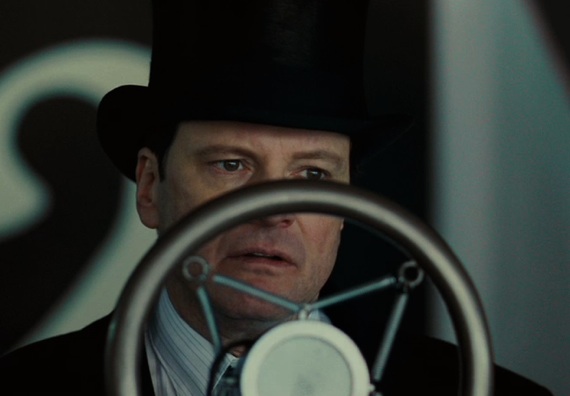
The man who deserves the biggest praise for the success of “The King’s Speech” is director Tom Hopper. The rookie British director directs like an old pro. It is both claustrophobic and emotionally shot. The best example of the superb directing would be that first scene. Everything from the way the camera is slightly tilted to how the frame is slightly blurred represent a nervous tension leading up to the opening speech. You could look at that, or the subtle imagery, like the way the microphone is placed in front of George’s mouth to look almost like a muzzle, or a cage. The best directed films are the ones you have to look at with the keenest eye, and find the greatest little details.

“The King’s Speech” is even better than the Oscar-begging period piece it appears to be. It will be raking in the Oscar nominations this year because it deserves it, and that is a rare find nowadays.

Movie Review: True Grit

“True Grit” begins like any other Coen Brothers movie: with a pretty image set to mysterious background narration. Is this going to be another typical Coen experience? Not exactly.

“True Grit,” the rare western that actually takes place during the days of the wild west, is told in a fittingly traditional fashion. This is quite a radical departure for a pair of directors known for constantly pushing the storytelling envelope. However, that is part of the reason this film feels so interesting. Despite being a remake of an adaptation of a book, it still manages to remain unique.
I may not be the best person to review this movie, as I haven’t seen the original version of “True Grit,” nor have I read the book. Maybe that won’t matter, as those who have seen the original film claims it has little to no resemblance to the latest version.
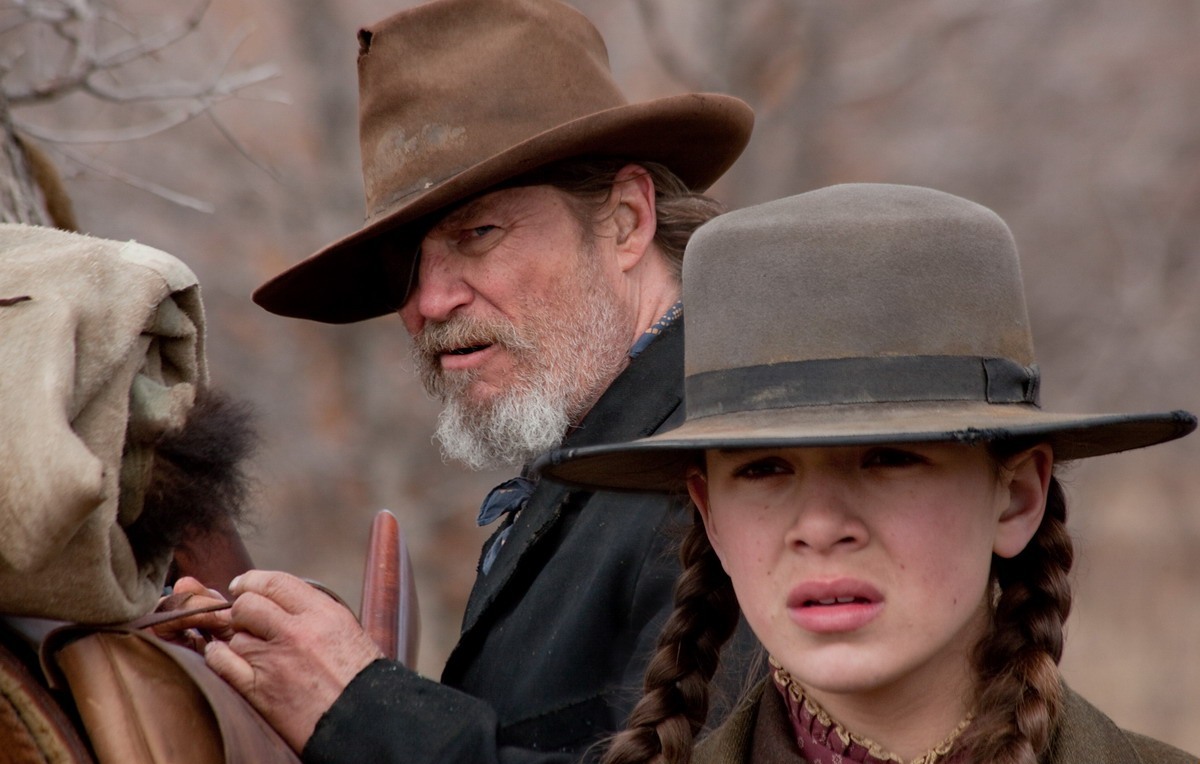
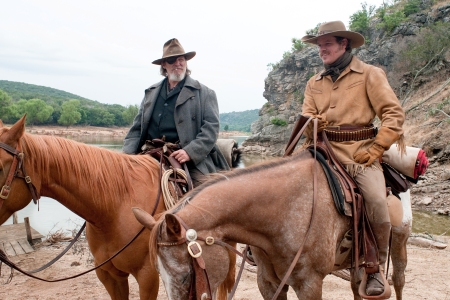
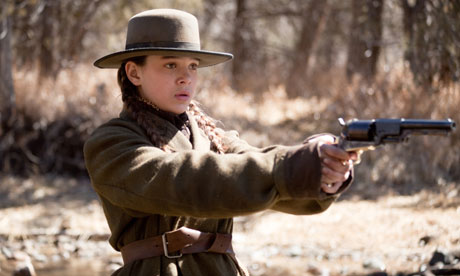
Regardless of the version, “True Grit” takes place in what looks like somewhere between Colorado and Montana in the late 1800s. Mattie Ross (Hailee Steinfeld) is a young girl looking to hunt down Tom Chaney (Josh Brolin), the man who ruthlessly killed her father. To pull this off, she hires Rooster Cogburn (Jeff Bridges), a one-eyed, former U.S. Marshall with a reputation for shooting things and chugging whiskey. Accompanying Cogburn for the kill is the often hot-headed, yet wise LaBoeuf (Matt Damon), who’s name shouldn’t be confused with the name of a certain actor from “Even Stevens.”

But, I digress. While Cogburn and LaBoeuf set off to find Chaney, they reluctantly let Mattie join. What follows is a long journey through the American West that leads to much danger and self-discovery.


It is very easy to go ahead and dismiss “True Grit,” as many others have been doing. Most say the Coen Brothers are capable of much better than this, and that is true. They are capable of making films that become cult classics, and others that go onto win Best Picture. “True Grit” will probably do neither. However, that doesn’t stop it from being a solid, highly entertaining movie.

While “True Grit” wasn’t as amazing a collaboration between the Coen Brothers and Jeff Bridges can be, it reminded me how much I missed the western genre. The genre hasn’t necessarily died, it has just gone in a new direction, often telling tales that take place in the modern day (i.e. “No Country for Old Men,” “The Three Burials of Melquiades Estrada”). There hasn’t been a truly great “old” western since “Unforgiven” in 1992. Perhaps the success could spur a much needed rebirth in the genre.


What I found interesting about “True Grit,” something one would rarely see in a western outside of the 1960s, was some subtle commentary, or at least cognizance, of racism. There definitely wasn’t supposed to be a big point made out of it, but it’s good to see every once in a while the acknowledgment of Native Americans, and how poorly they were treated.

Despite how different this film is from other Coen Brothers films, this is unmistakably their film. There is that distinct focus on the landscape, highlighted by Roger Deakins’s breathtaking cinematography. There is also that attention to the little details that distinguish them from all other filmmakers. This is one of the few westerns I’ve seen where the characters actually talk appropriately for the time period. Those accents may be impossible to understand, but a little historical accuracy never hurt anyone.

A great Coen movie is also about its characters. And that, “True Grit” has a lot of. Despite what the commercials will make you think, Rooster Cogburn isn’t quite the main character. The film is really about Mattie Ross. Without the right actress, Ross could’ve just come off as whiny and annoying. But in her debut, Steinfeld nailed it. In a way, she resembles the performance of Hit-Girl in this year’s “Kick-Ass”: she is smarter and more skilled than her superiors but in a way, overcompensating for her young age. In a world full of illiterate southerners, her knowledge outshines everyone around her. She is this film’s Marge Gunderson.


I’m sure though that the reason any devoted Coen Brothers fan saw this movie was for Jeff Bridges, seeing as the last time the directors and the actor collaborated, “The Big Lebowski” was created. “True Grit” lacks the wit and twisty intelligence “Lebowski” offers. Nonetheless, it proves that this is a collaboration that works. The directors have a certain vision in mind, and the actor follows it perfectly.

Bridges shows in “True Grit” that he is one of those actors that has gotten even better with age. In “True Grit,” he shows what kind of performance he is most capable of: the outsider who is aware of his isolation from society, but celebrates it while ignoring all of his possible flaws. In his transition from Dude to Rooster, he trades joints for rolled up tobacco, and has no problem doing so.

Really the only performance I had any problem with in “True Grit” was that of Damon. He is usually a fine actor; one who is always watchable. However, it seems like here he was barely trying to pull of an accent. That is a shame, because when he gets into his roles, he can be truly extraordinary (see “The Informant”).

I want to celebrate “True Grit” for what it is rather than what it isn’t: an extremely solid piece of entertainment that may not outshine the rest of these directors’ body of work, but certainly outshines many of its contemporaries. I am not going to forget “True Grit” for a few small things; like that little amazing scene when Mattie bravely crosses the river. It is also hard to forget the weird things, such as the man dressed in full bear costume, or the other man who communicates through farm animal sounds. Why were these things included in the film? Who knows. The best parts of any Coen Brothers film are the parts left unexplained.

Movie Review: The Fighter

When “The Fighter” was first released, the common reaction was likely, “are you kidding? Another boxing movie?” If a director has the chutzpah to make a movie about a topic that has been explored to death, he better make something good. Since it’s David O. Russell, the director of “Three Kings,” then it must be worth our while.


“The Fighter” is the kind of entertainment that has a huge mass audience potential, yet its slow pace is made for those with patience. The film begins as a psuedo-documentary and switches between that and narrative format throughout. This film tells the true story of Mickey Ward (Mark Wahlberg), a struggling boxer from a rough neighborhood in Lowell, Massachusetts. His future career as a boxer is compromised by both his love for a beautiful bartender (Amy Adams) and his dysfunctional family, which includes his abusive mother (Melissa Leo) and his washed up, crack addicted brother, who is a former boxer (Christian Bale).

“The Fighter” is what one might consider a slow burner, for better or worse. It begins slow and at first doesn’t seem to know quite which direction to take the story. It takes an extremely dramatic twist less than midway into the story for “The Fighter” to truly pick up steam. It goes from an average underdog story to something very different; something that is much more immediate and important than the typical Hollywood fable.


“The Fighter” also brings a new dimension to the now popular tough-and-from-Boston film. Coming off the heels of this year’s “The Town” as well as “The Departed,” “Gone Baby Gone,” and “Good Will Hunting” of past years, Boston has become less of a city and more of a theme in the eye of the filmmaker. Growing up in Boston means being tied down to societal and familial constraints. The only way to escape these constraints comes through pursuing one’s passion, whether that be solving math problems, robbing banks, or boxing.

While this is also one of the more realistic looks at crime and drug problems in the city, there is also a sense of warmth surrounding the characters unseen in most other Boston films. This can be seen mainly in that fantastic first scene, where Mickey and Dicky walk through the streets of Lowell and embrace everyone they see shows that in a way, everyone is looking to escape with Mickey. Everyone feels Mickey’s quest is their quest as well.


Looking past a few small flaws, “The Fighter” is an example of how a few good performances can severely impact the course of a film. Wahlberg is a fine choice for Mickey. In fact, this could even be a bit of a personal role for him given his past in Boston as well as his troubles with family and the law. However, he is nothing truly special. He lacks that hilarious, nasty, and committed attitude that made his performance in “The Departed” so unforgettable.

The true strength of the ensemble lies in a few supporting characters. The ladies of the film bring much needed emotional depth to their roles. Adams is proving herself a fine young actress capable of even bigger roles while Leo shows she is always more than capable of playing troubled, lower class mothers.


The real soul, the real strength of the film, lies totally in the performance of Christian Bale. It is weird to think he is even a supporting character, given how much of the story relies on him, and how he dominates every scene he is in and makes you forget the story is really about Mickey Ward. I could tell from the film’s very first shot that his performance was going to be something special. Like Natalie Portman in “Black Swan,” Bale acts with his entire body. With his googly eyes, shaky arms, and salamander-like body, he is the sad embodiment of drug addiction. Bale makes Dicky fast-talking, funny, and sad. He starts the story as someone we look at and pity, but by the end, he has truly earned his redemption.
What is most interesting about Bale’s style of method acting, most similar to De Niro in his glory days, is that he is always acting. A common habit for an actor when they are in a shot where they don’t talk is to just sit silently, and stare. Bale however, doesn’t end his drug-addled fidgeting. I could probably spend an entire review talking about Bale’s acting, but there is actually a whole movie here to still talk about. So let’s just say this: Bale has earned this year’s Best Supporting Actor statue.
What Bale’s performance shows is the potential energy and excitement surrounding the story that “The Fighter” is ultimately able to embody. “The Fighter” is the story of the unlikely coming true. Director David O. Russell, who also made the Gulf War parable “Three Kings” highly plausible (and still relevant), succeeds at this task admirably. Scenes like the one where the characters walk through the streets, as mentioned earlier, show the uplifting potential of such depressing material. Not to mention, the boxing scenes are shot in a televised style, capturing the excitement of watching a match live. It also creates a strange, yet effective, detachment from the actual violence happening onscreen.
“The Fighter” is a film that shows that what is ultimately most important is not what a film is about, but how it is about. There are only so many stories to be told so the same old stories might as well be told in new, innovative ways.
The struggle of the boxer has been captured so many times that it can’t possibly be interesting anymore. However, David O. Russell makes the right choice and takes a page out of the “Raging Bull” handbook of how to make a good sports film and barely focuses on the actual sport itself. The sport is less of a sport and more of a means for the characters to express themselves in some way, either to release energy, or overcome adversity. The title of “The Fighter” does not suggest someone fighting for a title, but rather someone fighting merely to stay alive.

Movie Review: Black Swan

There’s a good reason that I’ve shied away from dance recitals my entire life. To a boy growing up in the 2000s, they just seemed cold, dull, and snobbish. Well, anything can seem that way until you literally rip the curtains down and see what happens backstage.

Here comes “Black Swan.” This film doesn’t just rip open the big red curtains, it tears them down and cuts them into shreds. This is Darren Aronofsky’s second attempt to turn an eccentric sporting event into a dark art and in that, he is a success.
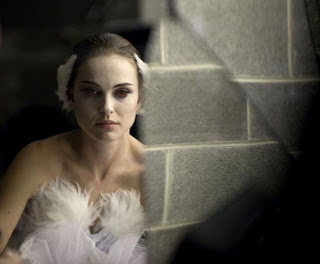
“Black Swan,” like another recently acclaimed movie, “127 Hours,” is a one man show. Actually, let’s make that a one woman show. To explain the true plot of “Black Swan” I would probably have to kill you, but it’s worth a shot. Nina Sayers (Natalie Portman) is a tightly wound, overly perfect ballerina looking to land the leading role in her company’s production of “Swan Lake.” Her struggles and desires soon turn into a creepy, deadly obsession and a major rivalry between a new dancer (Mila Kunis).
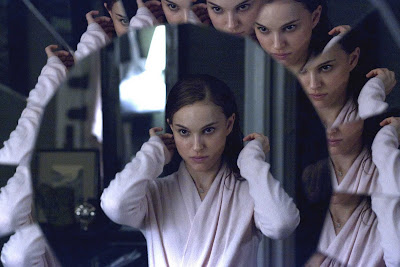
Mere plot summary does no justice in describing the story of “Black Swan.” Perhaps the best way to put it is that the whole film feels a little like a documentary filmmaker was sent to cover a production of “Swan Lake,” and accidentally released a demon backstage. Yes, this film contains the eerie combo of being both realist and surrealist psychological thriller. The handheld cameras make “Black Swan” the perfect documentary of the mind, putting the audience directly into Nina’s point of view. This helps make her delusional state of mind all the more believable.
Aronofsky’s talent for psychological thrillers stems from his films “Pi” and “Requiem for a Dream,” where he explored characters on downward spirals thanks to obsession. Next came “The Wrestler,” where he gave audiences a poignant and realistic look at the life of a professional wrestler trying to make a comeback. “Black Swan” can be seen as the culmination of Aronofsky’s current career, as it mixes elements from all of those films. What really distinguishes Aronofsky from all other directors working today is no matter how well known his films get, he never lets go of that home grown feeling.
Aronofsky makes ballet not only interesting but also quite morbid. The fascinating process of watching a ballerina break in her dancing shoes brought only foot binding to mind.
If the world was a perfect place, then Portman would become Aronofsky’s muse, and they would work together on every movie. Yet, it doesn’t seem like Portman truly needed help to achieve the best performance of her career; she had it in her all along. While some might act with their words or their facial expressions, Portman acts with her entire body. She makes her character constantly act like she is in a ballet: using every little movement of the legs or arms to describe joy or pain.
Most importantly, Portman invests so much emotional effort into Nina that we actually care about her trip into utter insanity. She acts uptight when she needs to, and loose when her character finally begins to relax. Even when Nina seems so on top of her game, there is always an underlying layer of fragility and weakness. She makes the repeatedly played “Swan Lake” score all the more haunting during her shocking transformation. She also leaves true intentions and events totally ambiguous.
That is part of the beauty of “Black Swan”: ambiguity. “Black Swan” may or may not contain so many hidden meanings. The film partly encompasses a story about how societal pressures and expectations can hold us back and keep us in a child-like state. It is about what happens when we let go of our insecurities and inhibitions and just dance. It also covers ground of deception, manipulation, and the essence of creating a work of art.
The essential part of a film is the feeling it leaves you with in the end. In a good film, you know the feeling. A great film leaves the viewer with so many emotions that one simply can’t be chosen. At the end of say, “Chinatown,” I felt like I had just watched a small puppy be beaten in front of me. More recently, the conclusion of “127 Hours” made me feel so overwhelmed and newly appreciative at the subtle greatness of living.
Once the credits rolled for “Black Swan,” it felt as if a mad scientist had rewired my brain and made every emotion indistinguishable. I walked out angry, I walked out enthralled. A strange, new possibility of alternate reality had just been so convincingly presented.
In the end, “Black Swan” towers above its contemporaries for making an old twist kind of story really unique. This is the rare psychological thriller that doesn’t try to be artsy; it just wants to tell a good story. Aronofsky doesn’t want “Black Swan” to be some giant cliche, as the film’s main goal is to penetrate the true nature of both storytelling, and in effect filmmaking, itself. In the same way Nina turns her life into the life of the Black Swan, so does Aronofsky in turning the story of his film into “Swan Lake.” When one is creating a work of art, one must become it.
If You Liked This Movie, You’ll Also Like: Pi, Requiem for a Dream, The Wrestler, Rosemary’s Baby, Carrie, District 9, American Beauty, Mulholland Dr., Eraserhead

Movie Review: 127 Hours

Once again, a Danny Boyle film begins with the simple act of running. This time, it is not one person running, or even anyone running for some sort of purpose. It is just people running. Running because they can. Rushing because they want to.

Why open the movie this way, when the hero isn’t even present? It’s because understanding the adrenaline rush all humans search for is the only way to make sense of the strange, infuriating, and painful journey the hero of “127 Hours” will endure.
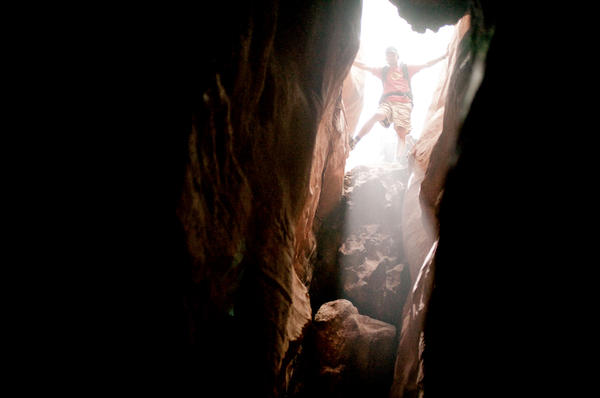
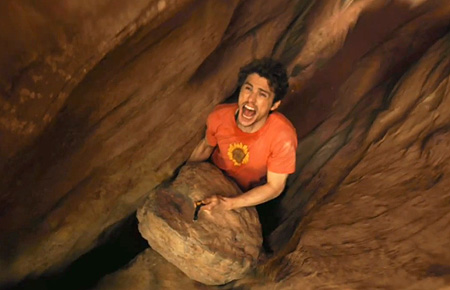
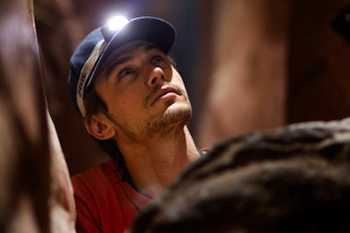
“127 Hours,” takes the idea of Realism to an almost unseen level. It is based on the true story of Aron Ralston (James Franco), a mountain climber with a reckless need for adventure. One day, Ralston leaves his comfy Los Angeles apartment for a trip into the American desert, and ends up at the bottom of a canyon with his arm stuck under a rock. And this all happens while he is completely alone.
“127 Hours” is basically a one man show. That doesn’t mean there are no other good performances, it just means that Franco’s performance is the only one that really matters. Had he failed in his role, “127 Hours” also would’ve failed. However, Franco is better than that. I’ve usually found Franco’s best performances to be in comedy, but with “127 Hours,” he proved he is just as good (if even better) in drama.
What is so perfect about Franco’s performance is that it doesn’t even feel like he’s acting; he’s reacting. He does exactly what anyone would actually do if stuck in Aron’s situation. What is eventually so haunting and memorable is how much he acts through facial expressions rather than words. It’s a rare talent to show such emotions as desperation and intensity without saying anything. Usually, it’s the filmmaker, not the actor, who is told to show, not tell. Franco proves that actors should begin to take on this burden as well.
Everyone else who worked on this film is as meticulous in their field as Franco is. Those quick, narrow cuts so perfectly serve the claustrophobia of the location. The cinematography also captures the dramatic American landscape so flawlessly.
Most of all, Boyle has impressed me more and more with each film he makes. Boyle could be accused of being one of the worst offenders of over filmmaking. “127 Hours” randomly contains shots ranging from the inside of a water bottle to the inside of a bone in someone’s arm. Usually, these would just be detours in a film. But in “127 Hours,” they are the tiny details that truly emphasize this man’s incredible quest for survival.
It is funny with all of the over filming how much at times “127 Hours” doesn’t even feel like a movie. At times, it doesn’t even feel like a pseudo-documentary. It feels just like a slice of reality.
Boyle’s most amazing talent is his ability to see that it’s not just about what’s being filmed, but how it’s being filmed. “127 Hours” might have been a preachy, cliche story in another’s director’s hands. With Boyle, it is a nail-biting adventure, even if the ending is already known. One of the best examples of this is during the rain scene. There is nothing interesting about a rain storm. However, there is a lot interesting about it if you slow it down and turn it into a frightening, unstoppable force of nature.
Boyle also has such a way of connecting with the locations he shoots in, inhabiting them as if he had lived there his whole life. He can connect places with a variety of emotions. The film nails suburban American sprawl in the first five minutes by connecting Los Angeles to various icons of consumerism. He makes this place seem as empty as he made the slums of Mumbai beautiful in “Slumdog Millionare” and the streets of Edinburgh exhilarating in “Trainspotting.”
Boyle has always been a highly stylized director, and “127 Hours” is certainly a highly stylized film. Boyle has the rare gift of turning style into substance. Not only does he make such an interesting adventure, he also makes such an interesting character. Aron reminds me of a modern day Christopher McCandless, but with more knowledge of how to survive in nature. Like McCandless, Aron is a people person who doesn’t act like one. He seems to only be able to connect to the world by foolishly isolating himself from the people he loves.
This could also be because he defines the McCandless mentality: one has to prove themselves worthy by doing it alone. Maybe it’s because men feel they have a special one-on-one connection with nature or they feel nature must be tamed. The lesson Hollywood seems to be teaching us is if you’re trying to go on a dangerous trek through nature alone: always leave a note.
In the end, “127 Hours” shows a new Boyle who is more emotionally effected by tragedy. It contains an ending that could’ve bordered on base sentimentality but is instead truly moving and deserving of a good tear or two. Aron Ralston, despite being selfish and aloof of reality, really deserves a hero’s welcome simply for his amazing will to survive and thrive.
One more note before I leave will be of the scene everyone is talking about. If you know the true story or have read the articles, you’ll know exactly what I’m talking about. Yes, it’s shocking, gruesome, and hard to watch. However, don’t let those few very negative reactions of one scene shape your entire opinion of the film. “127 Hours” is a film too big, and too meaningful, to be judged on one scene alone.

Movie Review: The Social Network

Every time any of us log into Facebook (which is most likely every .02 seconds), I don’t think any of us have ever thought of why Facebook even exists. Is it because someone wanted to find a way for people to better connect with friends and family? Or did some asshole just want his ex-girlfriend to notice him? These are both of the answers provided in “The Social Network.” Neither of these answers are necessarily right or wrong.

“The Social Network,” like any good movie trying to understand a mysterious reality, doesn’t strive to tell the whole truth but rather come as close to the truth as humanly possible.
This is all fitting, as most of the movie takes place in a context where one must swear the whole truth and nothing but the truth. In the almost present day, Facebook co-founder Mark Zuckerberg (Jesse Eisenberg) finds himself being sued by two former classmates, the Winklevoss twins (Josh Pence and Armie Hammer), for apparently stealing their idea. At the same time, he is also being sued by his disgruntled former CFO (and best friend) Eduardo Saverin (Andrew Garfield).
During the cases, the film provides a series of very important flashbacks. They track Facebook’s conception during Zuckerberg’s sophomore year at Harvard along with the site’s rise to popularity under the watch of Sean Parker (Justin Timberlake), and Zuckerberg’s fall into further pain and loneliness.
If I had known “The Social Network” would have been this good when I saw “Inception,” I would have saved my “generation defining” praise for a few months. “The Social Network” has no idea where this generation is headed, but it does understand where it is right now. All of the paranoia, angst, and frustration garnered from wondering what status your friend is going to post next and how that leaks out into the real world is shown in full form here.
“The Social Network” says a lot about this generation, a lot of things that should’ve been saved for a long time down the road. Yet, maybe these are the things we need to hear right now. If the internet is the future of civilization as one character puts it, than Facebook is likely the end of mankind.
What I thought was greatest about “The Social Network” is that it isn’t all its message. It takes a subject that probably would’ve been really dull and makes it so endlessly interesting and engaging. This could be partly from the brilliantly written dialogue by Aaron Sorkin, which is mainly a series of observations about life.
Along with Sorkin, much credit belongs to director David Fincher. This is a return to form for him, now that he’s done begging for an Oscar (that’s what happens when you make a film like “The Curious Case of Benjamin Button”). The film reminded me of some of the surrealist structure of “Fight Club” mixed with the more realistic style of “Zodiac.” In every location, there is a feeling of actually being there. Fincher fills the campus of Harvard with random people walking. And in a club scene, it’s so loud that it’s impossible to even hear what the characters are saying. Some directors strive so hard to make their characters the center of attention that they forget that there’s an actual world around them. Not Fincher though. The most interestingly shot scene of the year, a scene that involves a rowing race, is in this film.
“The Social Network” is graced with at least three of the year’s best performances. After his tenure as a pop singer ended, Timberlake showed he could do comedy. Now, he shows he can do drama. He is the film’s most engaging and enthusiastic character. Then, there’s Garfield (star of the upcoming “Spider-Man” film) who shows so much potential for a great future career. He is the film’s most emotional and possibly sympathetic character, even though it’s possible to not feel sympathy for him.
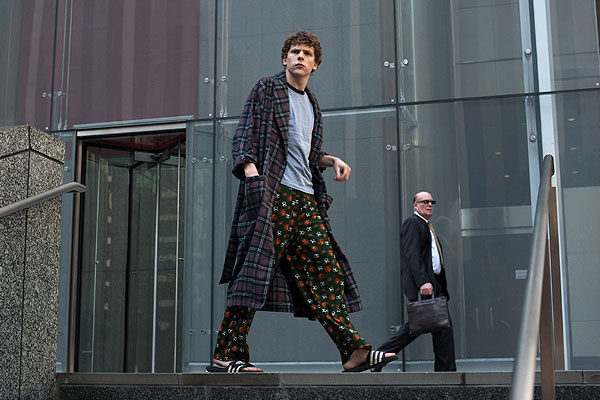
Then there’s Eisenberg, who took a great leap forward with his career in this performance. Recently, people were carrying the same complaints about him that they did with Michael Cera: that he plays the same awkward character in every movie. Yes, Zuckerberg is pretty awkward, but he’s even deeper than that. Zuckerberg is portrayed here as someone who is too socially inept to be a sociopath. He believes his genius computer hacking abilities should excuse all his other flaws, which usually includes wearing a hoodie and sandals to important business meetings.
It is both Eisenberg’s portrayal of the character and Sorkin’s writing of him that turns Zuckerberg into such an interesting and amusing character. He is not made out to be some sort of god for the way he revolutionized the world through his invention. He may be a genius, but he’s also a twisted and haunted genius.
A lot of people have had the audacity to compare “The Social Network” to “Citizen Kane.” “The Social Network” will probably never be as good a movie as “Citizen Kane,” but it might just be the answer to “Citizen Kane” that all film fanatics have been looking for for almost 70 years. It is “Kane” in spirit. “The Social Network” could be considered the modern day “Kane” because it is also about the difficulty to find the truth amongst modern forms of communication. While no one could break down the Charles Foster Kane behind the newspapers, few people can break down the Mark Zuckerberg behind the computer screen.
Like Kane (who is based on William Randolph Hearst), Zuckerberg is portrayed here as someone who surrounds himself with millions of “friends” but doesn’t truly have one. That final shot (which I won’t give away), is just about as powerful as the utterance of “Rosebud,” but without a single word spoken.
“Citizen Kane” tested the ability of a movie to lie to its audience. “The Social Network” does just about the same. While characters in the film can’t trust anything Zuckerberg says, there has also been doubt in reality that many details in the film are totally true. This helps turn “The Social Network” into the year’s most entertaining practice in self-reflexivity. Much of the movie may not be true, but the greatest movies are supposed to convince us that its lies are real, even if the film doesn’t know whether or not it’s actually lying to us.

Movie Review: The Town

Hollywood makes a lot of movies about cops and robbers and elaborate heists. There are few though that truly break down a good heist, and a good criminal mind as well. Luckily, “The Town” has come to theaters. It proves that an actor who once showed little promise in front of the camera knows exactly what he’s doing in the director’s chair.

“The Town” is the sophomore effort from Ben Affleck. His debut, “Gone Baby Gone,” was promising but flawed. “The Town” on the other hand is sleek and wildly entertaining. I can’t call it a masterpiece, but I can say it has pretty much anything a good heist movie should have.
“The Town” is the latest in a long line of recent movies exploring Boston’s criminal underworld. “The Town” refers to the Charlestown section of Boston, the bank robbery capitol of America.
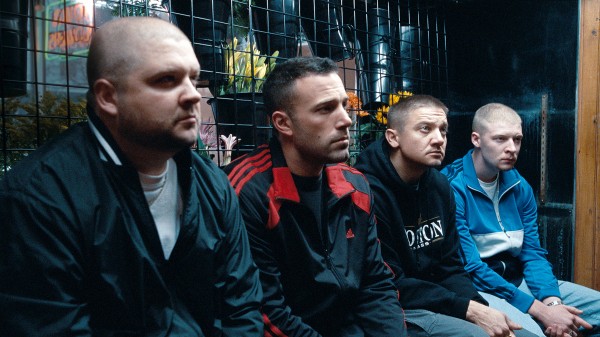
One of the most infamous Charlestown gangs is led by Doug MacRay (Affleck) and includes the hot-headed James Coughlin (Jeremy Renner) who have known nothing but crime their whole life. After one robbery, Doug falls in love with a witness, Claire (Rebecca Hall) and must find a way to balance his career with his new love. At the same time, FBI agent Adam Frawley (Jon Hamm) tries to bring Doug’s crew down.
I wouldn’t quite call “The Town” a love/hate letter to the city of Boston; it’s more of a long note of tough love. Despite the pretty corrupt and negative spin on the city, parts of “The Town” made me realize that only someone who has lived in and really loves this city could ever make this film. Between the screaming and random gun fire there is also the occasional beautiful image of someone walking barefoot on a rocky beach and stepping into the calm surf. Affleck also captures everything from the accents to the mannerisms like only a true Bostonian could.
With “The Town,” Affleck proved himself a skilled director for many reasons. Besides incorporating his own Bostonian knowledge, he also directs like a pro. The action sequences are some of the best I’ve seen all year. Some of the car chase scenes are as enthralling and suspenseful as anything you could ever see at the movies.
What’s most interesting about Affleck’s directing style is that he directs like an actor. There is a subtle, underlying humor throughout and a general sense of affection and understanding for every character no matter what side of the crime scene they’re on.
Unlike say, “The Departed” (which this film is clearly trying to emulate), “The Town” is told almost entirely from the perspective of the criminal, and not the cop. It’s an interesting spin, and it helps create an uneasiness of who to root for in the film. True, the feds may be trying to stop future crimes from happening, but haven’t we stuck with the main character for long enough that it’d be nice to see him get away?
Affleck has begun to show more promise as a director than an actor. However, that is not to say his acting skills haven’t improved. In the role he’s convincing as being both tough and tender, funny and at other times dead serious. He’s come a long way since “Gigli.”
Also continuing to impress are Hamm and Renner. Hamm proves he can play characters beyond the Don Draper mentality (not to insult his role on “Mad Men” in anyway). Meanwhile, Renner shows that his Oscar nomination for “The Hurt Locker” wasn’t for nothing. He has talent for playing men who constantly stick their middle finger out at society, and always want to be fighting someone.
During a time when studios are dumping their worst films into theaters, “The Town” feels like a classic piece of summer entertainment placed into the September doldrums. It’s no groundbreaking masterpiece, but it’s mixture of careful character observation, intricate plot detailing, and extremely well constructed action set pieces that’s hard to come by nowadays. Affleck has found his calling on the opposite end of the camera. I guess there was some true meaning in the film’s often repeated line: “See you on the other side.”
If You Liked this Movie, You’ll also Like: The Departed, Inside Man, Good Will Hunting, Dog Day Afternoon, Trainspotting

Movie Review: Straw Dogs

“This is where I live. This is me.”

“Straw Dogs” begins with a shot from above and descends deep down below to a group of children dancing in a graveyard. This is only the beginning of the film’s strange descent into hell on a deprived earth.
“Straw Dogs” is a thriller that could define the anger, alienation, and confusion of a generation in such an entertaining shell. It’s not the thrill-a-minute thriller we usually get. Rather it’s the wait patiently for the thrill kind of thriller.
“Straw Dogs” comes from the mind of Sam Peckinpah, director of some of the most brutal westerns ever made. It’s something of a modern day western set in the British countryside. The outlaw in this case is the constantly working American professor David Sumner (Dustin Hoffman). He decides to escape to a quaint English town with his troubled wife Amy (Susan George). Amy grows constantly more troubled as Dave continues to ignore her for his blackboard of equations.
The rest of the film is less of a plot and more of a series of unfortunate events unfolding. As they encounter more of the whiskey chugging, Christ loving locals, the more trouble they get into. As David and Amy’s marriage deteriorates, they fall into horrible events that involve rape and murder, and a final showdown with the townspeople.
“Straw Dogs” is one of those films that must be examined well below its surface to be truly appreciated. The film is well beyond some wild exploitation horror flick. Rather, it uses violence and sexual perversion to come to a larger point.
Peckinpah is a director who knows how to handle violence better than most others. I would say he was in the same range as Scorsese. When comparing “Straw Dogs” to his previous effort, “The Wild Bunch,” one can find the common, slow-motion violence. This effect is not use to amplify or enjoy the violence, but rather to allow each audience member to truly understand the fact that a life is ending right before their eyes. Yet despite the slow-mo emphasis of every bullet, most of the violence happens so quickly and out of nowhere that you could miss it.
What was even more controversial in “Straw Dogs” than the violence is that infamous rape scene. Beyond its graphic nature, what makes it really so controversial is that little smile Amy cracks during it. Could she be enjoying the act? Or is she just strangely enjoying the attention she hasn’t been getting from her own husband? Some will call it misogynistic, but I think a better word for it is flat out mysterious.
Mystery is one of the strongest elements of “Straw Dogs,” and something that continues to make it so fascinating to this day. The best parts of the movie are its many open-ended questions. The most interesting question lies in the film’s hero-villain complex. An obvious answer could be that the townspeople are the villains. But the even more interesting one is that it’s truly David. Even though he’s the protagonist, and in the end siege we seem to be rooting for him, he is no kind soul. He’s abusive and ignorant of the feelings of others. Not to mention he could be seen as self and, well, a little crazy deep down. This is also perhaps the film’s most disturbing element: this is a world where there is no clear hero to root for. Everyone might as well be the villain.
The hero-villain complex might not have worked out well here without the always amazing work from Dustin Hoffman. He begins the film with his typical, uptight Ben Braddock character and then transforms into something he’s never played before. Just as Hoffman doesn’t seem capable of playing a killer, David doesn’t seem capable of becoming one.
“Straw Dogs” is truly a product of the greatest era in American filmmaking. It comes from a time when directors still had control over what their projects would look like in the end. It was a time when boundaries were still looking to be broken down.
“Straw Dogs” contains a narrative structure commonplace at the time, though has been unfortunately abandoned today. Peckinpah is a filmmaker like Coppola and De Palma who doesn’t like to rush their stories. The siege, which seems like it could’ve been the film’s main plot, doesn’t occur until the film’s way end. Until that point, there is a lot of buildup. While some might find that time being introduced to characters grueling, it is absolutely necessary. Every little object we see, every person we meet, plays an essential role in that incredible finale. “Straw Dogs” is a film that embraces its tiny little details, and never abandons them.
“Straw Dogs” can be looked at as a bold thriller, and a time capsule. Without making a single political statement, the audience is exposed to a generation trying to escape reality while struggling to find and embrace identity. Its influence can be seen in everything from “Taxi Driver” to “Inglourious Basterds.”
When one thinks of a great film, they usually don’t pair it with slow pace and acts of horrible dehumanization. “Straw Dogs” proves that great films don’t have to conform to the audience’s idea of a great film in order to be truly great.
If You Liked this Movie, You’ll also Like: Five Easy Pieces, The Wild Bunch, Deliverance, Taxi Driver, Reservoir Dogs, Badlands, Inglourious Basters, Blood Simple, A Clockwork Orange, Carrie

Movie Review: Machete

One of the most controversial social issues of the day deserves to be Mexploited. Well, I guess there was no one else who could complete this task better than Robert Rodriguez, with the opening of his highly awaited “Machete.”

“Machete” first existed as the trailer that opened up 2007′s “Grindhouse.” It was a satirical, B-movie idea so perfect for a trailer, and even more promising for a full length feature. This can be seen pretty much as a passion project for Rodriguez. It combines everything he’s loved throughout his career: westerns, Mexicans, samurais, and Danny Trejo.
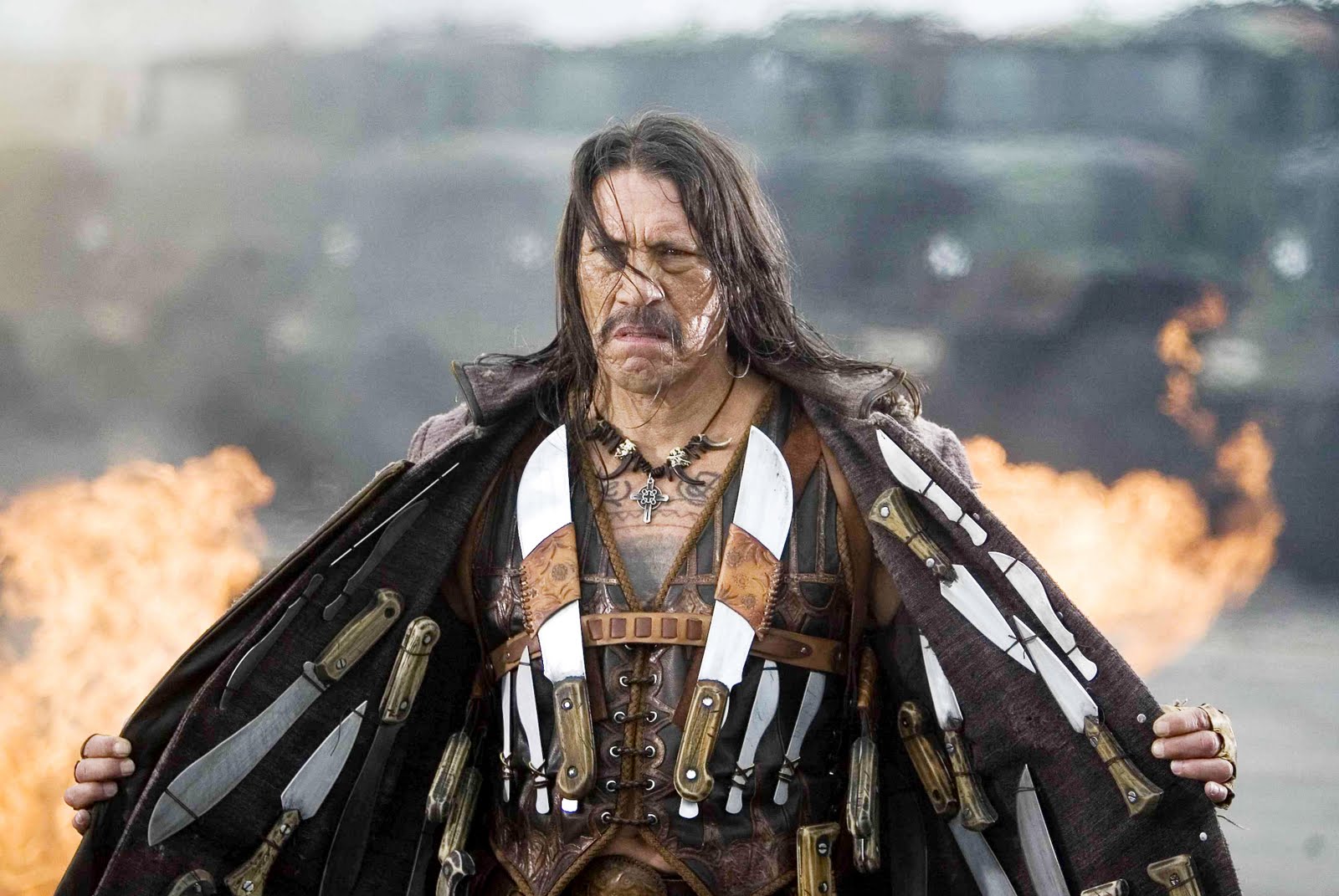
The titular Machete, played by Trejo, was once Mexico’s hardest yet most honest federal agent. After losing his wife to drug lord Torrez (Steven Seagal), Machete flees to America and works as a day laborer.
One day, Machete is chosen by a mysterious man named Booth (Jeff Fahey) to kill the xenophobic Texas state Senator McLaughlin, who’s attempting to launch a campaign to keep all Mexicans out of America.
After a setup and a few more unfortunate events, Machete joins forces with an underground network and a cop (Jessica Alba) for a very bloody culture war.
“Machete” is one of those movies that’s made for the kind of people who like to do nothing but watch movies. Look closely and you’ll spot the occasional Mexican standoff, or blood spurting out only like it would’ve in “Shogun Assassin.” The score defies genre, as it switches between horror and action at times.
Mostly though, “Machete” is Rodriguez’s second movie that embodies the grindhouse feeling. The grainy, cut up frames add a strange authentic value to every shot of the film. “Machete” is grindhouse in both look and feeling. It is constantly over-the-top and ridiculous on purpose. “Machete” is also the kind of movie that truly revels in shock value. Pretty much anything is turned into a weapon in this movie. That doesn’t exclude someone’s intestines. I won’t say more than that though. Good shock value should stay shocking through surprise.
I think Rodriguez should continue making films that aim low. Why? Because that’s the kind of filmmaker he is. He famously made his feature debut, “El Mariachi” with just $7,000. He has a unique talent of making trashy seem classy.
While he is certainly one of those filmmakers who draws so heavily on his influences, his substance still can’t match his style. The storyline of “Machete” lacked some of the fluidity of those of his best features, including “Planet Terror” and “Sin City.” “Machete” has three different bad guys, yet it is continually confusing who is truly the worst and who is really in charge. Rodriguez may be paying tribute to shoddy storytelling, but some of the plot holes here simply can’t be excused by that notion.
Something I wasn’t expecting from “Machete” was how heavy of a satire it was going to be. It likely wasn’t meant to be that way when the story was first thought up but once the immigration debate reignited, I guess it was impossible to ignore. The satire is relevant and most effective when it isn’t so overt. The political ads randomly placed throughout the film might be off pace, but they’re certainly hilarious. Though I wish the movie could’ve balanced trashiness with smart satire about race and social issues like last year’s “Black Dynamite” did. Both films were tributes to exploitation films of the past.
I will try not to spend too much time criticizing. After all, “Machete” does contain the first instance of Robert De Niro actually acting in years. Trejo is also about as entertaining an action star as Sylvester Stallone and Bruce Willis in their prime. At 66-years-old, some of the stunts he can pull off were truly impressive.
Also, when “Machete” isn’t trying so hard to have an actual plot, it has moments of genuine entertainment and hilarity. I just think it should’ve put less time into being relevant and more time into being a B-movie.
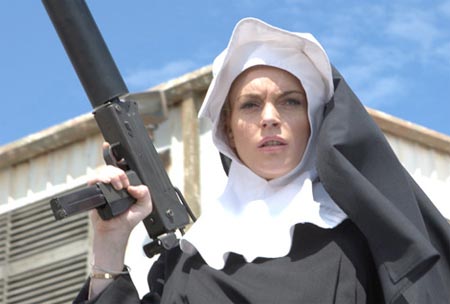
If anyone is to see “Machete,” it must be said that it is definitely one worth seeing in theaters with the biggest audience possible. Like the true grindhouse experience, “Machete” is more entertaining when seeing how the audience feels and reacts to everything going on on the screen. If everyone laughs at Cheech Marin as a gun wielding priest or Machete texting someone “You’ve just f**ked with the wrong Mexican,” than you’ll know you’ve picked the right showing.