Category Archives: Uncategorized

Tim Burton Gets His Hands on Alice in Wonderland

A few days ago, I wrote a review of the wonderful gem of a TV show called “Pushing Daisies.” I remarked how the show had the distinct feeling of a Tim Burton movie. Now, Burton’s first project since “Sweeney Todd” has been announced: his own version of “Alice in Wonderland.”

Usually, I would groan at the idea of a remake, but in the hands of Burton it will be more like a re-imagining than a remake.
Why do I have so much faith? Burton’s record as a filmmaker, mainly. He recently made his own version of “Charlie and the Chocolate Factory.” While it came nowhere near the 1971 classic and no one can touch Gene Wilder’s Willy Wonka, Burton’s new dark twist on the old tale was somewhat moving and well worth viewing.
Like “Charlie,” “Alice in Wonderland” is a fairy tale with very dark undertones (many which have apparently been turning up on “Lost” throughout the years). And who better to find something dark in something light than Burton?
The cast looks fantastic. Alice will be played by unkwown Mia Wasikowski. Burton will once again work with Johnny Depp, who will play the Mad Hatter. Some of Burton’s other collaborations with Depp include “Edward Scissorhands” and “Ed Wood.” The rest of the cast includes Anne Hathaway (White Queen), Burton’s wife Helena Boham Carter (Red Queen), Alan Rickman (The Caterpillar), and Christopher Lee (The Jabberwock).
According to IMDB, the film is slated to be released on March 5, 2010. How do you feel about this? Will this be something special, or just another remake? Me, I’m already counting down the days.

TV Review: Pushing Daisies

Pushing daisies is usually the euphemism used to describe someone who is dead. However, “Pushing Daisies” is not dead, it is budding with life.

Refreshing is barely the best word to describe “Pushing Daisies.” As I said before, “Pushing Daisies” is budding with life, creativity, and a ton of imagination to go around. It is one of the finest TV shows made in years.
“Pushing Daisies” can claim to be a part of many genres. It is mainly a comedy filled with murder mysteries, suspense, and moving romance. It’s a classic Hollywood film wrapped into hour-long installments.
“Pushing Daisies” is centered around the life of Ned (Lee Pace). As a child, he realized he had an extraordinary gift-he could bring dead things back to life. The rules are simple: touch a dead thing once; life. Touch it again; death. Keep a dead thing alive for more than a minute, then something else in proximity has to die. Ned realizes this after reviving his dog, and his mother, only to tragically bring her back to death.
Despite this strange gift, years later, Ned is just an ordinary guy. Holding onto the last memory of his mother, Ned opens a pie restaurant to show off his other hidden talent: pie making. From time to time, Ned aides a private investigator Emerson Cod (Chi McBride) in solving murdering mysteries by bringing victims back to life. One such case involves Ned’s childhood sweatheart, Charlotte “Chuck” Charles (Anna Friel). Deciding he loves her too much, Ned decides to keep her alive for more than a minute. This is much to the chagrin of Olive (Kristin Chenoweth), the pie restaurant co-worker who is absolutely smitten with Ned.
Each episode has a similar format: Normal day, murder mystery, Ned brings body back to life, Ned finds out information, the gang gets themselves trapped in an elaborate conspiracy, they solve it and life is back to normal. Many shows run dry because their premise gets tired, and by this vague description, it might sound like the premise of “Pushing Daisies” would get old after a while. It doesn’t, because each episode the mystery is brand new. Not one murder mystery is ever in any way similar to another.
One could not discuss this show without the word “imagination” constantly popping up. That’s for a good reason. It’s because “Pushing Daisies” has an imagination that most shows today lack. The kind of willingness to put anything on the screen and see what works. In the end, it pretty much all works.
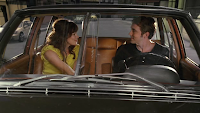
Each episodes is directed like a Tim Burton movie, especially “Edward Scissorhands.” Like a Burton movie, each screen is filled with vividly bright colors serving as an obvious contrast to what should be a very dark mood with even darker themes. In this case, the vivid colors are the bright, yellow daisies stretching in the fields farther than the eye can see.
Each mystery plot is brilliant and could even deserve their own, feature-length films. Like in a “Simpsons” episode, each plot begins very small. Suddenly, one event effects another and a chain of dominos fall to lead to some sort of conspiracy or some sort of all-too-obvious end. Many times, the surprise lies in the fact that the perpetrator seems so obvious that we feel stupid for not predicting it. Other times, more than one person seems guilty and it is almost impossible to guess what will happen next.
At that point, the plot totally has you under its spell. You can no longer predict, it unfolds itself for you. It asks you to open your imagination, yet let it guide you with its own.
Among the chaotic mysteries, the show is first and foremost a comedy. The show gets it biggest laughs mainly from Chenoweth, whose stereotypically dumb blonde attitude somehow increases the likability of her character. Equally hilarious are the wise cracks of McBride.
But maybe what’s so funny all and all is the concept behind the show itself, the idea of someone being able to live the dream of bringing anything back to life, but then having to kill it again after one minute. Funnier also are the many ways Ned uses the gift to his advantage. One such instance will remind you of “E.T.”
Among the comedy and mystery, “Pushing Daisies” also contains some romance. The biggest romance is between Ned and Chuck. They live together, and though it seems like everything should be perfect, but Ned cannot touch Chuck or she will have to die again. And this time, she her death would be permanent. It is those times, seeing Ned and Chuck close together yet so isolated, then at other times figuring out how to touch without actually touching, that are among the show’s most moving moments. It can bring a tear of joy, when they can come closer together, followed by a tear of sadness when you realize they just might not be able to make their relationship work.
It is a chilling aspect of “Pushing Daisies,” to realize that since Ned can neither touch his love nor his dog, he has little solace during tragedy. It adds on to a sort of disconnect with human beings he’s had throughout his entire life.
After two seasons “Pushing Daisies” was cancelled, ending it’s run just one week ago. Many said it was the Writers’ Strike that killed it. Wrong. It was its brilliance that killed it. “Pushing Daisies” was a bright flower just too bright for anyone to understand. It has the right to go up with “Arrested Development” and “Freaks and Geeks” as another great, misunderstood classic cancelled before its time. But hopefully, it will live on forever in the coveted hall of DVD cult fame. I don’t hope it will, I know it will.

The Triumphant Return of Triumph

Last night, Triumph the Insult Comic Dog made his debut on “The Tonight Show” with a video of his visit to Bonnaroo. It’s not quite in line with Triumph’s visit to the Star Wars premiere and Quebec, but it was still no doubt hilarious and even somewhat risqué for the 11:35 time slot that Carson and Leno once inhabited. Keep your ears open for a joke about Scooby Doo. Here is the video (in two parts) below:


Movie Review: Masculin/Feminin

They also could have called this “Brief Interviews With a Series of Various French Women about America, ‘Nam, and Socialism.” But, the film is not just about the women. It’s about the men as well. And the battle between the man, the woman, and the world is the central idea inside this peculiar French New Wave movie.
“Masculin/Feminin,” was filmed in the mid 1960s. As mentioned before, the film was an entry of the French New Wave movement. It takes place among hip bars, back allies, and areas outside of upper middle class homes. It centers around a group of young rebellious men and women of the Paris counterculture.
Like any New Wave film, “Masculin/Feminin” is really plotless. It’s connected literally by a string of sentences, thoughts, and ideas. Of the many characters who come in and out, the film mostly centers around the relationship between revolutionary Paul (Jean-Pierre Leaud) and Madeleine (Chantal Goya), a Beatles hipster pop singer. The film chronicles the years of their rocky relationship through their many interactions with others. And that’s pretty much it; a concept spread throughout 1 hour and 45 minutes.
“Masculin/Feminin” is directed by Jean-Luc Godard with a sense of utter confusion and curiosity. The French New Wave was really a response to the social and political changes of the time, and Godard embodies this fully. The character’s conversations are aimless, not really discussing plot-changing issues, but rather life. They discuss social issues. They discuss the importance of unions. They discuss the importance of coca cola. They listen to French pop. They talk about the Beatles. The film all in all reflects that Post WWII era, a time of a crisis in French pride and a collision of culture. The world of Europe was meeting the world of America.
The sentences, thoughts, and ideas that connect each strand of the story vary. Some involve characters reading lines of poetry. Others express short narratives and anecdotes. Mainly though, the conversations are caught by Paul asking women questions. As he asks, he’s almost always off screen. This makes it seem a little more objective, a little cold, and a little unfriendly. Maybe it’s the way the characters seem more and more isolated from each other under the confusion of culture.
Like in Francois Truffaut’s “The 400 Blows,” Godard dares to focus on the stories of those who are rarely heard. In fact, the characters themselves seem to spend their days trying to stray far away from the bourgeois lifestyles they were born into.
Technically, Godard breaks many conventional rules of cinema in this film. The characters directly address the screen (and are fully aware that they are in a film), there is a movie within a movie, and the soundtrack includes pop songs that come directly from the plot itself. Many seem to believe “The Graduate” was the first movie to use a pop soundtrack rather than a traditional one. However, I believe “Masculin/Feminin” broke that ground first.
“Masculin/Feminin” is not as strangely moving and emotional as “The 400 Blows;” the characters (as well as whatever plot there is) seem a little discombobulated. But despite its small flaws, “Masculin/Feminin” is a great film to admire in it’s pure audacity to disobey every rule of cinema. Ultimately, it’s the ability to sometimes disobey the rules that can really determine greatness.

The President Kills A Fly

This post isn’t really movie related, but it’s about a clip that made it on YouTube. And once you’re on YouTube, you’re fair game.

If you haven’t seen it already, the following clip is of President Obama doing an interview on CNBC. Mid-interview, he is attacked by a pesky fly. I’ll let you see the rest for yourself:

David Lynch: Director, Producer…Songwriter?

David Lynch has a new project on his hands, and it’s one you might not expect from the man.

Lynch, the director behind such strange psychological masterpieces about the lives of average Americans like “Eraserhead,” “Blue Velvet,” and “Mulholland Drive” hasn’t made a film since 2006′s somewhat mediocre “Inland Empire.” Now, he’s back. But this time instead of a movie, he has an album.
Unfortunately, Lynch does not sing on the album, but has written the lyrics for it. The album is called “Fox Bat Strategy: A Tribute to Dave Jaurequi.” The album is named after Dave Jaurequi, the album’s singer and guitarist who died in 2006.
Lynch has described the album as “modern 50s music.” When listening to Jaurequi sing, I am reminded somewhat of Lou Reed during his finest day.
Lynch is known for being able to take anything and put his quirky, authentic stamp on it; crafting movies that no one else would ever think of making. Can he do the same with music? “Fox Bat Strategy” comes out June 30. You can listen to a sample song below:

Movie Review: Revolutionary Road

American suburbia has been a subject of fascination for Hollywood for years. Why is that? Is it that the idea, besides being abundant, seems almost mythical at this point? Like it’s the kind of thing that it seems everyone has yet everyone doesn’t really have at the same time.

This is a fascinating idea. It is one that is continued to be explored, not necessarily in the most original way, in Sam Mendes’ “Revolutionary Road.”
“Revolutionary Road” comes from a novel written by Richard Yates. It is set to the backdrop of 1960s suburban Connecticut. Frank Wheeler (Leonardo DiCaprio) is a longshoreman looking for more in his life. April (Kate Winslet) is a struggling actress. At a young age, they meet at a Manhattan party and after some talking and dancing, they fall in love.
Flash forward to a few years later, Frank and April are now in their early 30s. They live in a typical, white box of a suburban home with two kids. Frank now has a desk job and April is a housewife.
And if you’ve ever seen any other movie about suburbia, you know the two are unhappy. There’s little love in their marriage, and they realize their suburban life style has turned into nothing but a dull cycle. Sounds very similar to Mendes’ great masterpiece about the suburban nightmare, “American Beauty.” However, this time, the wife has the sort of awakening that prompts her to rebel.
So, her idea of breaking free? Moving the family to Paris where she can work and Frank can find out who he really is. This dream almost seems like a reality, but a few barriers lay in the way.
As mentioned, the film contains eery similarities to “American Beauty,” which can be a good thing, or bad thing. Like “American Beauty,” it plays with the notion that society’s definition of happiness is actually misery. It is possible that the life we all want is not really the path we are destined for. It is those bold few that actually try to follow their real dreams that are really the bravest.
Unlike “American Beauty” though, “Revolutionary Road” lacks some of the deeper symbolic subtlety. Also, it is not as darkly witty, and the characters are nowhere near as fully developed. By the end of “American Beauty,” Lester felt like a real human being and Carolyn could be forgiven for all of her psychotic wrongdoings. In “Revolutionary Road,” the film seems almost entirely in favor of April while at times being unsympathetic to Frank. But maybe that’s because he was horribly tempted by the idea of money.
“Revolutionary Road” lacks subtlety. At times, the dialogue seems to blurt out all of the messages that the viewers should try to figure out on their own. The film ends up being more tell than show, which brings it down to cliches and artificiality. This lack of subtlety is something that unfortunately plagues a lot of the work of Sam Mendes.
“Revolutionary Road” is no doubt bolstered by its many fine young actors, who sometimes help shield the weaker parts of the screenplay. The film marks the first time in over a decade that DiCaprio and Winslet starred in a movie together. The last time of course was “Titanic.” They sizzle with a fine amount of chemistry that makes them seem both in love and absolutely anathema to each other at just the right moments. Their chemistry works best perhaps, in one scene when ironically they have absolutely no love or even like for each other. It is brilliant acting in both the part of DiCaprio and Winslet, but especially for Winslet.
Another great performance in the film comes from Michael Shannon, who plays a man just released from a mental institution. However, being institutionalized has only made him crazier. Or at least, crazy in the eyes of some. Like the movie tries to make you believe, perhaps insanity is the truest form of happiness.
The movie is not fully realized until maybe the last 20 minutes. The aforementioned scene where DiCaprio and Winslet sit at breakfast, engaging in what seems like normal conversation but is actually them totally out of love in each other, is both touching and heartbreaking. It shows that Frank and April have finally become the suburban stereotype that they so hate. This scene puts a new spin on the rest of the movie and makes it seem like everything that happened before was perhaps a very bad dream, or just a glimpse of what will happen when one tries to achieve an impossible fantasy. But then again, is this fantasy really impossible? The film never really seems to decide which way it’s going to go, and that kind of gives it a mirky and unsatisfying feeling.
The film then goes on a little too long. It misses the perfect place to end and then ends in a spot that seems a little strange and irrelevant. Why Mendes did this, I can’t see. In “American Beauty,” we truly saw why Lester and Caroyln wanted to escape their suburban nightmare. In “Revolutionary Road,” it seems at times that Frank and April are just complaining. But I don’t want to watch people complain for two hours. I want to see them actually do something about it.

Movie Review: The Hangover

As I sit down to start my review of “The Hangover,” I feel like one of the characters from the movie: I’ve got to piece together all of the insanity that just occurred. However, I thoroughly remember everything that just happened and won’t soon forget it.

“The Hangover” begins somewhat mysteriously. It starts with a group of guys stuck somewhere in the middle of the desert. One makes a phone call to a woman telling her that her fiance Doug (Justin Bartha) is missing. They’d find him, but they have no clue where he is or what they even did the night before.
Back track to two days earlier. Doug is about to get married. His friends decide to throw him a bachelor party. Those friends include Phil (Bradley Cooper), the one in the group who considers himself the cool guy; Alan (Zach Galifianakis), Doug’s creepy, aimless brother in law; and Stu (Ed Helms), a nerdy dentist who’s troubled by his controlling girlfriend (Rachael Harris).
The boys plan a road trip to Las Vegas. After a hard night of partying, they wake up hung over and realizing they remember nothing from the previous night. The only clues are a baby, a chicken, a stolen cop car, and a tiger. Stu’s tooth is missing and worse, so is Doug. With only a day before the wedding, Phil, Alan, and Stu strive to put together the puzzle pieces of what happened the night before and then hopefully find Doug. We never see what really happened that night until a surreal photo montage during the film’s credits, but it’s well worth the long wait.
“The Hangover” oddly resembles “Reservoir Dogs” in structure (there’s even a guy in the trunk scene!) more than most of the other films director Todd Phillips is known for (“Road Trip,” “Old School”). This, of course, is a good thing. It is rare for a movie to be both a dirty comedy and a put-the-pieces together mystery at the same time but “The Hangover” balances both of these very different genres with great results.
Part of what makes “The Hangover” work so well is the often over-the-top events that occur in it. But in these events, the characters act the way you’d expect anyone to act. How would you react when you wake up to go to the bathroom and realize you’re peeing next to a tiger? How would you react when a naked Asian gangster holding a crow bar jumps out of the trunk of your car?
The names of the main cast include actors who have yet to reach the achievement of becoming household names, but this movie might just make them all stars. Cooper achieved some level of fame as the villain in “Wedding Crashers,” but in “The Hangover” despite how sleazy his character might be, Cooper in the end makes him likable. Helms’ Stu reminded me of what might happen to Andy Bernard if he went partying in Vegas for a weekend. Although the real scene stealer in the movie is Galifianakis. The stand up comedian’s character looks like Joaquin Phoenix when wearing sunglasses and asks a woman working at the Caesar’s Palace Hotel if Caesar really lived here. You’d think he was just trying to make a joke there but believe me, he sadly wasn’t.
“The Hangover” defines painful comedy. The onslaught of brutal physical humor as well as how-will-they-get-out-of-this-alive situations piles up and makes some genius cringe humor that sometimes tops the most painful levels that Judd Apatow has ever reached.
As I continued to piece the movie back together, I thought of including a sentence in my review that was a play on Vegas’s famous tagline “What happens in Vegas stays in Vegas.” But, I decided to restrain. However, it is very important to mention this saying as it sculpts a large part of the plot. It acts almost as a large deception to the characters; they seem to believe that one night of Vegas will carry no consequences. Obviously, dead wrong. 
They also seem to be living the perception of the magical dream of Vegas. Well, they should probably put down that copy of “Swingers” and instead watch “Fear and Loathing in Las Vegas,” because they of course end up landing in the ultimate Sin City nightmare. Rather than being another comedy living in the cliche of the Vegas bachelor party, “The Hangover” instead is a parody of that too frequently used comedic plot device.
“The Hangover” includes some one-liners I can’t mention on this website and some situations so bizarre that words cannot describe them. And yet despite the significant amount of pain inflicted upon the characters, it doesn’t feel like Phillips is at all making a mockery out of their suffering. Throughout the film, we actually really care about where the groom might be and how he could ever be brought back to his wedding on time. The point when you feel something for characters this ridiculous is the point where you know that a comedy is definitely working. 
I’ve always heard that in most comedies you’ll know from the beginning how it will end but it’s the getting there part that is more important. The getting there part succeeds in its hilarity and unconventionality. This high level of original thinking ought to be applied to every comedy made nowadays.
“The Hangover” is the first great comedy of 2009.  One image of “The Hangover” that remains in my head is Alan, as the boys are on the open road, standing up and screaming “road trip!” which seems like a reference to Vince Vaughn screaming “Vegas baby, Vegas!” in “Swingers.” Well, I’d like to paraphrase “Swingers” in my praise for “The Hangover”: this movie is so money, and it doesn’t even know it.

Martin Scorsese Returns: Shutter Island Trailer

It’s been three years since Martin Scorsese won his long overdue Best Director Oscar for his return to the gangster drama, “The Departed.” Now, Scorsese’s back. This time, he’s once again abandoning his Little Italy roots for a larger scale mystery entitled “Shutter Island,” opening October 2.

“Shutter Island” takes place in the 1950s and tells the story of Teddy Daniels (Leonardo DiCaprio), a U.S. Marshal who’s been sent to investigate the disappearance of a murderous woman from an isolated mental hospital called “Shutter Island.” There is more to this Island than it seems, and a great conspiracy unfolds, one that everyone in the mental hospital seems to be in.
Scrosese is one of the best actor’s directors, that is, the director who knows actors best and how to work with them, therefore usually compiling the best ensembles. Besides Leo, the cast of “Shutter Island” includes Ben Kingsley (“Schindler’s List”), Mark Ruffalo (“Eternal Sunshine of the Spotless Mind”), Emily Mortimer (“Match Point”), Michelle Williams (“Brokeback Mountain”), and Max von Sydow (“The Seventh Seal”). Leo is not a bad edition either. His fine acting talents are sometimes overlooked by his “pretty boy” reputation. This will mark the fourth compilation between Scorsese and DiCaprio, a pair that seems to work well together every time (just maybe not on the same level as Scorsese and De Niro once did).
Based on the trailer, I can’t really formulate a true stance on whether or not this movie will be good or bad. So far, all I’m really seeing are some cheap thrills and a plot that resembles “Hot Fuzz.” Hopefully, this is just because the trailer is focusing more on the mystery aspect of the film, and a deeper, more complex message lies within.
Over the past few years, Scorsese has begun to abandon smaller budget films for big budget blockbusters. “The Aviator” was an extremely entertaining, if not somewhat cliche, look at the life of Howard Hughes. “The Departed” worked so well because despite the non-stop action and violence, it felt like Scorsese was returning to the kind of characters he brought to life in “Mean Streets” and “Goodfellas”: the low lifes who’s story is never told. The people you never thought you’d want to hear about but by the end, you’re totally mesmerized. 
I hope Scorsese hasn’t forgotten this, and that he’ll bring a little bit of this old genius into every shot of “Shutter Island.”