Category Archives: Movie Review

Movie Review: The Hangover Part II

If not for the presence of Zach Galifianakis, a monkey might have been the best part of “The Hangover Part II.” That tends to happen when good comedies are given sequels: monkeys tend to take over.

“The Hangover Part II” is exactly what I expected. Even though that means a lot of funny moments, it is also a big disappointment. Having a film meet meager expectations is a decent thing, yet having a film exceed them is really something special. What “The Hangover Part II” unfortunately assumes is that if a formula worked once, it will work again and again.
As with before, a bachelor party goes terribly wrong, and someone important goes missing. This time though, replace Las Vegas with Bangkok, and fill in Stu’s (Ed Helms) wedding. Then replace missing Doug (Justin Bartha) with Teddy (Mason Lee), the son of Stu’s father-in law, who already hates Stu to begin with. Also replace a missing tooth, baby, and tiger with an accidental face tattoo, a shaved head, and a monkey with shady moral standing. The stakes are bigger, and the city is more dangerous.
A common rule I’ve learned about writing is that what we don’t see is always more powerful than what we see. For some reason, “The Hangover” saga can’t seem to pick up on this important lesson. In comedies, what we don’t see is funnier than what we do see. “The Hangover Part II” never bothers to leave anything up to the audience’s interpretation. Gross out comedy is coming to a point where the only way to gross out the audience is to show them everything. “Animal House” didn’t have to actually show Flounder throwing up on Dean Wormer’s desk, and yet its hard not to laugh every time.
I believe this over emphasis on gross out humor results from both an over reliance on shock value and excuses to not write a stronger screenplay. The original “Hangover” doesn’t have the best writing for a comedy, and it certainly doesn’t have the best developed characters, but it worked. The story fits together, the mystery makes sense, and the laughs are earned. The sequel puts more emphasis on shocking the audience rather than making them laugh.
One over-the-top element of the film that works best is Galifianakis’s performance. He is given more screen time than in the original and is therefore given more time to make the character even more bizarre than he was before. All of the characters from the first film are used well here, yet many new side characters are eventually forgotten. They are treated as plot devices rather than as actual characters.
I cannot tell whether “The Hangover 2″ fails as a comedy or whether it just somehow succeeds at self-awareness. The beginning of the movie is similar enough to the original that it almost seems like parody; director Todd Phillips seems smart enough to understand how unoriginal the whole film is. However, at some point it leaves self-awareness behind and becomes a very unaware Hollywood sequel.
This review cannot end without acknowledging the scenes of hilarity that do exist. Besides most of the lines that come out of Galifianikis’s mouth, the monkey makes for a surprisingly great addition to the crew. And to Ken Jeong, your willingness to bare everything qualifies as some form of bravery. I will not even bother to analyze the funniest scenes further, as the best comedy can never be analyzed.
Another redeeming feature is the film’s decision to locate the story in Bangkok. The seedy, rapidly expanding city is the perfect place to set a sprawling mystery involving a missing person.
With all of the quibbles to be had about “The Hangover Part II,” what can’t be forgotten is that the homegrown feel from the first film is now gone. “The Hangover Part II” is a pop comedy. The series is a blockbuster with blockbuster expectations now. If you are looking for a great summer comedy that won’t be forgotten soon after leaving the theater, see “Bridesmaids.” If you just want something mindless and entertaining to escape reality for a short period, go to “The Hangover Part II.” Just don’t expect the repeat viewings that made the original such a sensation.

Movie Review: Bridesmaids

In most of the reviews for “Bridesmaids,” there seems to be a common consensus that this is the movie that proves that women can succeed in comedy. Well, that is wrong, considering the ongoing success of Tina Fey and plenty of other female comedians who have been working for years.

Nevertheless, “Bridesmaids” quite impressively breaks down the gender barrier between male gross-out comedy and female rom-com and creates, well, a gross-com. Or maybe a rom-out? You think of a better name.
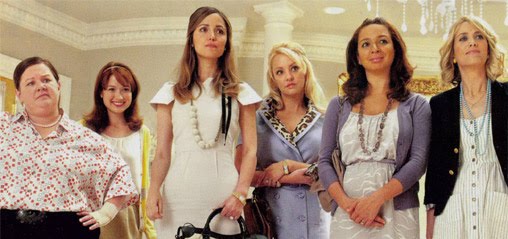
The great thing about “Bridesmaids” is that, despite its nearly all female cast, it can connect to a variety of crowds. Kristen Wiig stars in that role she’s become known for: that awkward girl who moves her body too much and never says the right thing. Her character, Annie, has been assigned to the task of being maid of honor at her best friend’s (Maya Rudolph) wedding. Any attempts Annie makes at planning the wedding are sabotaged by Helen (Rose Byrne), a bridesmaid who is a little too good at planning fancy events. This turns into a jealousy fest that doesn’t spur a bride war, but rather a way for a lot of people to realize how screwed up they all are.
Everytime “Bridesmaids” headed down the usual rom-com path, it always took another turn that managed to prove me wrong. That’s because the film isn’t a rom-com, it’s a usual Apatow film that replaces men with women. While the film was advertised as the female “Hangover,” I would say the story is closer to “Forgetting Sarah Marshall” or “Knocked Up,” minus the weed. That is to say, Wiig is just as much of a sorry slacker as Jason Segel and Seth Rogen were in those movies. However, Wiig’s Annie proves to be even more pathetic than either of them ever were, even at their lowest points.
I think what helps the comedy mixture work best is the fact that the female writers (Wiig and Annie Mumolo) are paired with a male director (Feig). This team works well in other ways. Both the writers and the director know how to make awkwardness funny, and the director is also especially good at stepping aside and letting good writing and acting speak for itself.
Let’s discuss the writing: it is the main factor of why “Bridesmaids” has clicked so much with audiences. Unlike most mainstream comedy seen today, none of the jokes, dialogue, or situations feel forced. Most of them feel like they could have been improvised. Even the visual gags feel real. One visual gag I kept thinking about involves Wiig getting stuck on top of a gate after a morning walk of shame gone awry. Perhaps it is the character’s reaction that truly makes it work; it just feels like the way anyone would act in that situation. Feig is great at getting “real reactions” out of people (just watch “Freaks and Geeks” already, please).
That scene is just one of many examples of Wiig’s fantastic performance in the film. It is not surprising that a backlash has been forming against her recently. Unfortunately, the backlash makes some sense: she was basically pulling the same shtick in every single one of her performances. Here, she is playing that same uncomfortable, twitchy faced oddball she always plays. However, in “Bridesmaids,” she actually feels like a real person.
Wiig has matured as an actress, giving us a multi-faced character who changes throughout the course of the film. It might be fun to watch Wiig play with her hair and do her whole Penelope routine, but a little change every once in a while is never a bad thing.
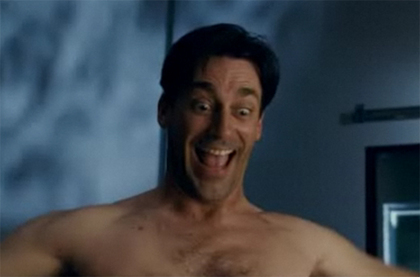
Some of the other acting highlights of the film include Jon Hamm, who shows as always that he can play comedic sleaze as well as he can play dramatic sleaze. A few newcomers make a big impact on the film. Irish comedian Chris O’Dowd is perfectly deadpan and very sweet as Annie’s love interest.
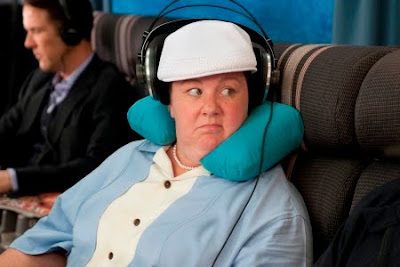
The most notable scene stealer, however, is Melissa McCarthy as the slobbish bridesmaid with a heart of gold. McCarthy delivers hilarious (and very weird) dialogue at a pace that you have to try and keep up with. She establishes this with the very first lines she delivers. She is also the most riotous and disgusting part of the movie’s soon to be famous, ultimate gross-out scene. Oh yeah, about that scene; I will try and keep it mostly secret, but what I will say is that it will one day end up in the pantheon of comedy’s funniest poop/puke scenes. The fact that it is able to combine both and make it not just shocking, but actually funny, is an accomplishment worth celebrating.
The only real problem with “Bridesmaids” is one that is common with Apatow helmed comedies: running time. Sure, the story flows smoothly and all the jokes are funny, but some jokes run on just a little too long. Some of the improvised bits definitely could have been cut down and been saved for a future blooper reel. Also, the ending seems a bit too formulaic. However, a little twist in the end credits puts an end to that.
Despite this, “Bridesmaids” is a special movie that, after over two hours, won me over. “Bridesmaids” is a testament to the fact that female comedy should be left to female writers because men don’t know anything about women, and women don’t know anything about men; that’s just life.
Most importantly though, “Bridesmaids” shows that the difference between a good and a truly memorable comedy is to have likable characters who have flaws and, in the end, are able to redeem themselves. That’s not just great comedy, that’s great writing.
I predict in the near future that this image of Jon Hamm will become a meme. Make it happen, internet.

Movie Review: Roger & Me

I will admit that when I first started watching “Roger & Me,” I had no intention of writing a review of it. After all, it is a film I’m watching for a class in order to write an essay about it. However, maybe somewhere around the bunny murder scene, I felt there was just no way I couldn’t review it.


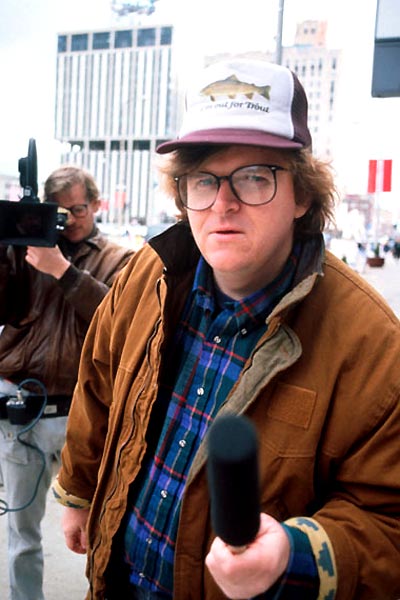
“Roger & Me” is the first film Michael Moore ever made. It’s also his most personal, and it might just be his best. It’s before he became extremely fixated at his own image and was focused more on actually trying to commit an act of social justice through film.

“Roger & Me” focuses on Moore’s hometown of Flint, Michigan. The town was once the prosperous center of America’s auto industry until General Motors CEO Roger Smith decided to shut down Flint’s plant and move all of those jobs overseas. The town soon became one of the poorest in America and suffered from problems such as homelessness, eviction, and violent crime. Moore’s main goal was to track Smith town and have him spend a day with Flint’s laid off auto workers. Of course, Smith doesn’t budge, and the film because something much more interesting: a documentary about trying to get an interview, and a look at the dangerous effects of globalization.

Michael Moore is one of the most polarizing filmmakers working today. Many have accused him of twisting reality in order to make his point in “Bowling for Columbine” and “Fahrenheit 9/11.” Some accusations are true, and others are highly politicized. The great thing about “Roger & Me” is that Moore never really takes any overt political standpoint. He is simply telling a human story from the perspective of someone who has actually been effected by the issue at hand. As someone who grew up in Flint, Moore must’ve realized he had an obligation to tell this story and tell it right. He certainly did just that.

The story of “Roger & Me” doesn’t get old thanks to Moore’s entertaining and energetic approach to such depressing subject matter. Moore’s emerging sarcastic voice is present here, as well as his pop culture prowess. Moore is always making connections and finding interesting new ways to make his enemies look ridiculous.

All joking aside, Moore crafts a vision of American poverty that’s something like a modern version of “The Grapes of Wrath.” The images of the now abandoned downtown Flint are a haunting vision of the American Dream gone wrong. Even more disturbing are scenes of a sheriff evicting people from their homes on Christmas and a woman who has to make her living off killing rabbits. Moore has no shame in showing us what she does in graphic detail.

“Roger & Me” remains startlingly relevant to this day. Two decades later, the film’s message on how globalization endangers American jobs still sticks. With Detroit’s continued problems due to the decline of car manufacturing in the city, it makes you wonder why people didn’t actually pay attention to the fall of Flint.

Had Moore gotten his interview with Roger Smith, the film would’ve been powerful, yet not as strong. It’s funny how Moore was able to get more accomplished by not completing his goal. But seriously, what could Smith had said that would’ve made GM look any better or worse? By not getting this interview, Moore made the entire company look both heartless and out of touch. With “Roger & Me,” Moore shows that the most powerful documentaries are the ones that let the subjects embarrass themselves.

Movie Review: Your Highness

Wait just a minute. Am I watching the latest comedy by David Gordon Green, or a new installment of “Lord of the Rings”? No, this is just “Your Highness,” the latest film from the budding comedic mind of David Gordon Green and his usual comedic team. Seeing as this is his latest stoner comedy, and he is also the director of “Pineapple Express,” I have just one question: where is the weed? More on that in a bit.

I could explain the whole story of “Your Highness,” but you’ll enjoy it better if you just think about the concept, and not every little plot detail. “Your Highness” takes place in some medieval kingdom where everyone’s accents are a little bit British, and a little bit Elvish. The king has two sons: the strong, noble Fabious (James Franco), and the constantly lazy, always stoned Thadeous (Danny McBride), who has yet to enter into the real world. Then one day, Thadeous is called on a mission to save his brother’s bride (Zooey Deschanel), and on their mission, they also meet Natalie Portman.
Maybe this sounds weird for a film that has a joke about a minotaur erection, but “Your Highness” could have had Shakespearian potential to it. Now, I am not saying it could have been as intelligent or witty as anything Shakespeare ever wrote, but I just believe the people behind it could have made a satire that is a little more, well, sophisticated. Seriously, after a while, a certain amount of gay jokes can become tiresome.
By saying this, I hope I’m not just sounding like some humorless, stuck-up film critic because honestly, a lot of this movie is very funny. People often dismiss jokes concerning bodily functions as dumb humor. Yet, if you do something funny with a gross joke, rather than just let it sit there, it becomes legitimately funny.
However, the problem with “Your Highness” is that those are really the only jokes the movie has. I expected much more from the team that made the smartest stoner comedy I’ve ever seen: “Pineapple Express.” In “Pineapple Express,” humor was found in the action, characters, and the concept itself. This is such a funny and original concept and yet, not enough of the ridiculousness of it was put to good use. While McBride is an excellent comedic actor, he just might not be as strong of a writer as Seth Rogen and Evan Goldberg are.
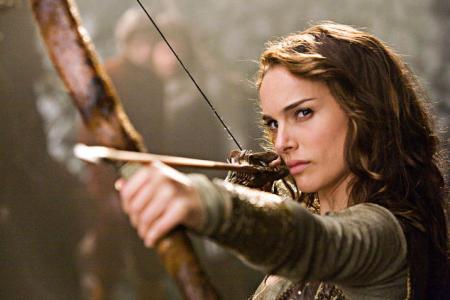
All of the actors in the film do their best, yet none of them can really reach their full potentials because of the writing. James Franco plays the role pretty much exactly as you’d expect him to. While McBride does great work in supporting roles, he is becoming a much better comedic leading man. His role here is pretty similar to his role as Kenny Powers in “Eastbound and Down”: a cocky, spoiled burnout with a lot of bad habits. Meanwhile, Natalie Portman, while a great screen presence as always, could have had a bit more comedy in her role. They basically wrote her as the straight-faced woman warrior, when I wish her performance was a little more like this.

The main problem with “Your Highness” is that it’s too timid to create humor in the unexpected. A lot of it seems forced, and not enough of it seems loose and free flowing. Therefore, it doesn’t feel like a true stoner comedy. When you’re trying to mix humor with dragons and knights, you shouldn’t be afraid to embrace the weirdness of your subject. Just think about the ending of “Role Models,” or the entirety of “Paul.” “Your Highness” never finds that proper balance between paying tribute and making fun of the subject it satirizes.


Also, the idea of this being a stoner comedy is more of a marketing ploy than an actual truth. That illegal plant that makes you giggle a lot is barely a presence in the film.

Am I maybe not getting “Your Highness”? Could another viewing change my opinion of the film? It took a while for critics and the general public to fully understand “Pineapple Express.” However, when I watched “Pineapple Express” for the first time, I realized there was just too much hidden in it for it to be fully appreciated after just one viewing. Unfortunately, I don’t feel that same attachment with “Your Highness.”

Movie Review: Paul

Comedies that have been made since, let’s say the 90s, have been strongly derived from science fiction. It seems odd to think that the people who were raised on “Star Wars” and “Star Trek” went on to make “Clerks” and “Knocked Up.” I never really connected the dots until I watched “Paul.” Sci-fi, in either the best or worst sense, can also be comedy.

“Paul” is one of those satires that’s a little mocking, yet very loving, at the same time. Only someone so in love with sci-fi and comic book culture could ever make fun of it in this way. “Paul” is one of those movies that was much better than it had any right to be, or at least much better then I ever thought it would be.
“Paul” begins in a place where the new heroes of the 21st century seem to dwell: Comic-Con. Best friends Graeme (Simon Pegg) and Clive (Nick Frost) come all the way from England to experience the convention. On the way back, they stop off at some alien landing sites and come across Paul (Seth Rogen), a foul-mouthed, weed smoking alien who just wants to go back home. Now, the duo must help Paul safely meet his ship, while avoiding some very sinister FBI agents (including an intentionally robotic Jason Bateman, along with the much more ridiculous Bill Hader and Joe Lo Truglio). Along the way they also pick up a Jesus freak (Kristen Wiig) and flee her psychotic father (John Carroll Lynch).
“Paul” might not land my 10 best list for the year, but I will say that it’s probably the best put together comedy I’ve seen so far this year (though the competition is pretty slim). Though this shouldn’t be surprising, based on the people involved. Pegg and Frost have already gracefully mocked zombie movies with “Shaun of the Dead” and action movies with “Hot Fuzz.” In both cases, they wrote movies that both mocked the genres while becoming entries into them. “Paul” is no exception. These people have obviously partaken in enough sci-fi to know how to make fun of it correctly.
“Paul” has such a sprawling cast of comedic talent, and each actor contributes exactly the way they should be. Pegg and Frost have been practicing British bromance for close to a decade now, and they really know how to do it right. Though this time, their relationship had a much difference balance. It was a little less of one actually trying to get things done, and the other being a total idiot. This time, their friendship was basically played up as a romance, with hilarious effect.
The best comedic minds in Britain blend with America’s funniest comedians in “Paul.” I guess someone who can make characters as awkward as Wiig can was destined to one day play a half blind hard-core Christian; I guess she fulfilled her destiny. Rogen meanwhile is good as ever, even in alien form. At times, Paul never seemed very alien, because no one bothered to make his character any different from the real Seth Rogen. This actually turns out to be a good thing, as Paul becomes a likable, almost human character. He’s like E.T., if only E.T. could speak fluent English and chain smoke.
“Paul” nailed all of its sci-fi and pop culture references, from the never-ending mothership to the meeting spot at Devil’s Tower. The film is directed by Greg Motolla, who impresses more and more with the range of comedies he can direct. He can go from gross out (“Superbad”), to a little dramatic (“Adventureland”), to one that has an FX alien as a main character.
What Motolla does best is make sappy ideas seem very sweet. Think about the power of the friendship in “Superbad.” That’s why I really wish “Paul” had a little more emphasis on the friendship between Graeme and Clive, because very little development and change occurs in it throughout the film. This is too bad, as this was always a strong and hilarious aspect in the other films Pegg and Frost made together. Nothing against Motolla, but perhaps frequent collaborator Edgar Wright would’ve been a good directorial choice here.
Then again, how do you fit a fully developed buddy comedy into a movie about a half naked alien? If Motolla, Pegg, and Frost could’ve pulled that off, they’d forever be comic geniuses. Maybe they didn’t get there, but they still made a perfectly acceptable, unstoppably hilarious satire. They have certainly followed this rule of good satire quite well: if you want to make a good satire (especially of pop culture), you must be both familiar, and a little in love, with the content you are making fun of.
Most Anticipated Movies of 2011 - Paul

Birdemic: The Movie That Could Make You Hate Movies

I’m that kind of guy who enjoys watching terrible movies. They can have the ability to both help you appreciate good movies, and entertain in a way that few good movies ever could. Mostly, it will be because they are just plain laughably awful.
But tonight I witnessed the bad movie to end all bad movies. This was not just ordinary horrible movie. This was not an example of someone putting something together quickly with terrible results. No, this was the work of a master, someone with good intentions who failed so miserably. This was “Birdemic: Shock and Terror.”
Few words can describe what I witnessed for that 90 minute duration time. The first thought I had though, once the film ended, was this: I want to smash this television set with a baseball bat. Yes, I still had a great time watching “Birdemic.” Yes, at parts I laughed so hard I could barely breath. But it just left such a bad aftertaste. Right now, I could be writing my review of the masterful “Animal Kingdom,” but I feel I am committing a good act of public service by writing about “Birdemic” first.
For starters, here is a brief premise of “Birdemic”: a successful, young software salesman meets the girl of his dreams, and then all the birds in the world get angry about how humans treat the environment (I’m not joking) and start killing everyone.
The entire film is shot with a camera that seems to have even worse quality then the average phone. Meanwhile, the transitions and horrible sound quality make it seem like this film was edited on a version of iMovie from the 90s.
Now, director James Nguyen definitely went into this project with the best intentions. However, good intentions don’t make a good movie. And if you want to make a good parable on the evils of global warming, you shouldn’t include long monologues which are the equivalent of science class lectures. You also shouldn’t include a plot about birds who get angry over environmental issues. If you want something about Angry Birds that actually makes sense, you might as well just play this game.
Not every great filmmaker needed film school (Quentin Tarantino), but they all at least tried to understand what a good movie was before they made one themselves. Nguyen meanwhile directs as if he’s never watched a film in his life. This is literally the worst edited film I’ve ever seen. Most of its running time consists of people driving nowhere, with some snippets of plot in between. Having a little bit of downtime in a film is never a bad thing. Having that downtime take over your entire film, on the other hand, is absolutely unbearable. Oh, and did I mention the birds poop fireballs? That’s the only way to explain the film’s subpar (that’s the nicest way to describe them) special effects.
Now, here is the movie’s absolute worst offense. When I think of bad movies, I obviously think of “The Room.” Somehow, “Birdemic” did the impossible and manages to be even worse than “The Room.” “Birdemic” makes “The Room” look like it actually had a sensible plot and sense of direction. Most of the green screens used in “The Room” looked more realistic than the actual backdrops seen in “Birdemic.” Tommy Wiseau, you have finally met your match.
I haven’t seen every bad movie ever made. I haven’t seen “Troll 2″ or “Plan 9 from Outer Space,” and I have yet to finish “Freddy Got Fingered.” However, I can safely say this: “Birdemic” is the worst made movie I have ever seen. Still, I advise you to see it. Even though it may intensify your urge to break your TV and yell at inanimate objects, just so you can truly understand the limit of awfulness, and how to cross it.
Get a preview of the awfulness here.

Movie Review: Animal Kingdom

No matter how smart and evolved the human species becomes, we tend to forget one thing: we are all animals. All it took for me to realize that was a little reality check from our friends down under in a deeply disturbing little gem called “Animal Kingdom.”

While most popular films about the criminal underworld depict the rise and fall of a certain criminal (or group of criminals), “Animal Kingdom” only focuses on the fall. In fact, this crime family never seemed to have much of a rise anyway.
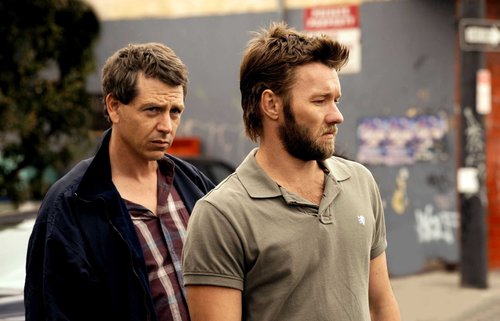
“Animal Kingdom” begins in a small apartment where young Aussie Joshua “J” Cody (James Frecheville) sits near his dead mother, who has just overdosed. J is handed over to live with his grandmother (Jacki Weaver). She presides over J’s uncles, all of whom exist in the criminal underworld, each with a varying degree of insanity. After his uncles are involved in a standoff that ends with multiple dead cops, the family sinks even lower, and are threatened by a suspicious detective (Guy Pearce). After the detective offers J a way out of this troubled life, J faces two options: loyalty or self-preservation. Let the puzzle come together.

“Animal Kingdom” is a great example of a 21st century crime film. It certainly has many Americanized elements to it, yet filmmakers in Hollywood could definitely learn something from director David Michod. Everything he puts in the film helps to create such an unsettling atmosphere of constant fear and paranoia. His gloomy lighting choices and never-ending long shots are absolutely uncanny.

Then there is the way Michod handles violence. Every bullet wound is extremely quick, unexpected, and unsettling. A lot of films today show violence in a manner that is so quick, that you can barely comprehend it. However, in the typical action film, this is usually done to accommodate the modern ADD state of mind. However, Michod uses this fast pace so the viewer becomes more accustomed to the violence and therefore, more accustomed to the idea that this is a world where violence is no unusual thing; it can occur literally at any second.

Not to mention, the film also pulls off a very early in the film twist in which a main character is killed off. Like “Psycho” and “Children of Men” before it, this creates a sense that in this story, none of the characters are safe, no matter what the conventions of film tell us.


The entirety of “Animal Kingdom” certainly lives up to the metaphor presented in its title. What this film presents to us is that humankind is an animal kingdom: the strong succeed, the weak die off, and eventually, everyone finds their place. The film carries many haunting symbolic images to match this metaphor, such as flies swarming around a dead body which lies face down in an open field.
The film’s ensemble of Australia’s finest contribute to the animalistic mood. Weaver, as the over protective matriarch, got an Oscar nomination for a very good reason. She makes it impossible to tell whether her character is simply a good mother trying to protect her family, or a woman with very bad intentions. No matter what, she is always able to hide some sort of lingering darkness under a nice granny smile.

Meanwhile, the relatively new Frecheville gives a very quiet performance, yet it is one that shows a lot of inner pain and confusion. Meanwhile, Pearce continues to impress in another small, yet very important role. Here, he showed a rare ability to seamlessly deliver long, deep monologues. The most memorable is his speech about the animal kingdom and how humans fit into it (briefly mentioned above).

What I liked best about “Animal Kingdom” was something it did, something that American movies rarely do: it never glorifies crime. For every American crime movie that shows the consequences of being a criminal, they also have to show so much good coming out of it. However, “Animal Kingdom” removes all the glitz and glamour. It may be easy, it may have some positive outcomes, but in the end, there is no glory in crime. The criminal world (at least in Australia), is a little, well, animalistic. In the end, everyone is simply just trying to do what they can to survive.

If You Liked This Movie, You’ll Also Like: Goodfellas, Pulp Fiction, Reservoir Dogs, Trainspotting, The Proposition

Movie Review: Cedar Rapids

When done right, two genres can somehow fit together quite well. Even if one of them is a little immature, and the other tries to be sophisticated.

This is what the minds behind “Cedar Rapids” try to do. Whether or not it succeeds depends on how much you think laughs cover up for cliches.
If I could think of two words to describe “Cedar Rapids,” they would both begin with “Q”: quaint and quirky. Maybe it’s a little too quaint, and a little too quirky. “Cedar Rapids” begins in a very small Wisconsin town. Insurance salesman Tim Lippe (Ed Helms) has inhabited this town his whole life, and has yet to go very far. He’s also sleeping with his former teacher (Sigourney Weaver).
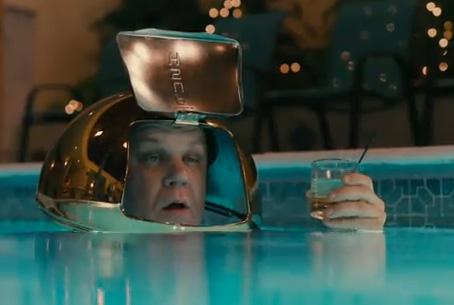
One day, Tim gets the opportunity of a lifetime, or at least, the opportunity of a lifetime for someone like him. He gets asked to speak at an insurance convention in Cedar Rapids, Iowa. Things in the outside world are not as comfortable as they are in his small town. He’s forced to room with the misguided, insane, and slightly brain dead Dean Ziegler (John C. Reilly), and Ronald Wilkes (Isiah Whitlock Jr.), a man who needs to cut loose and have a little fun.
On his trip, Tim also befriends a prostitute (Alia Shawkat), and a woman who could just be the love of his life (Anne Heche). And he has to deal with some unexpected corruption in the insurance industry.
“Cedar Rapids” seems to be following a new trend of making raunchy, edgy stories on an independent budget, something similar to last summer’s “Cyrus.” Like “Cyrus,” the result of “Cedar Rapids” is pretty hilarious with a lot of problems. What I ask for in a modern independent film, especially one that comes from Fox Searchlight, is some originality.
Its plot and style are very similar to that of last year’s “Up in the Air,” except it takes that film’s amazing twist and doesn’t make it surprising at all. That’s what more comedies could use today: surprise.
The film also seemed to be aspiring to be “The 40-Year-Old Virgin.” It has that same character who’s too good of a guy, yet he needs to grow up. However, “Cedar Rapids” doesn’t reach that film’s subtlety, hilarity, nor its surprising insightfulness. The real problem with “Cedar Rapids” is that it thinks its much deeper than it actually is.
The real strength of “Cedar Rapids” lies in its characters. Mainly, Ed Helms as Tim Lippe. As Lippe, Helms brings humanity, joy, and even some knowledge to such a strange role. This former “Daily Show” correspondent fills in the awkward leading man role perfectly.
The rest of the supporting characters also fill out the movie quite well. Reilly is hilarious as always, playing someone who has the potential to either be a serial killer or simply someone with a minor degree of down syndrome. Whitlock basically steals the entire movie when he pulls out a little impression from “The Wire.”
“Cedar Rapids” aspires to be one of those comedies where setting is the driving point of the story, and the whole thing would be a sort of geographical satire. It doesn’t quite reach that point and instead it gets caught up in a few over-the-top (yet very funny) gags in addition to a lot of gay innuendos. Instead, character becomes a driving point of the story. Maybe with just a little more focus this could have been a unpredictable, inspiring, and insightful independent comedy rather than just, well, a pretty funny one.

Movie Review: Blue Valentine

If there ever was such an honor, “Blue Valentine” would win the award for most depressing film of 2010. This honor is not meant to put down any of the achievements of the film, but rather a heads up that this is not a film about the world’s happiest marriage.

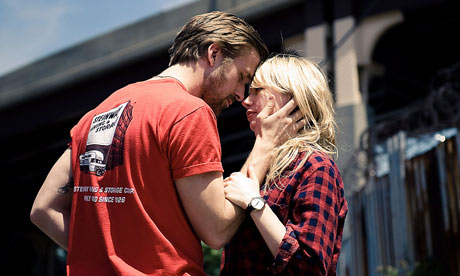
“Blue Valentine” has two settings and two time periods: rural Pennsylvania and New York City, past and present. In present day, married couple Dean (Ryan Gosling) and Cindy (Michelle Williams) are on the verge of a breakdown. Cindy no longer feels any affection for her husband, and Dean remains in an aloof, child-like state. The marriage between Dean and Cindy is the ultimate portrait of disappointment.
In flashbacks, the story behind Cindy and Dean’s love is revealed, as the audience slowly finds out that at one point, there really was love to be had in this marriage.
The story of a couple falling in love and becoming bored and suppressed with age is a story that has been portrayed on the silver screen over and over again. “Blue Valentine” does manage to be saved from being one big cliche. Unlike other films about broken marriages like “American Beauty,” “Blue Valentine” is as much about the joy of love as it is about the pain. Most films about marriage portray how a marriage can fall apart. Few also show how they are built.
The flashbacks in “Blue Valentine” are certainly the most effective part of the film. Not only do they build backstory, they also build emotion. The contrast between the clear, digitally shot present day and the shaky hand-held filming of the flashbacks show misery becoming clearer and clearer. The flashbacks are marked by youthful innocence, and the present day is marked by sad awareness in older age.
“Blue Valentine” would not be the same without its two outstanding lead performances. The two actors play the parts perfectly in both old age and youth. Despite his image, Gosling is not afraid to get dirty in order to play his role perfectly. Throughout the film, he looks less like Ryan Gosling and more like Nicolas Cage in “Raising Arizona.” With his scruffy looked and muffled voice, he is almost unrecognizable.
His female counterpart, Michelle Williams, gives one of the best female performances of the year. She seems to have a thing for playing alienated wives (see: “Brokeback Mountain”), yet here she does it better than she ever has. There is one scene where she pulls off a rare feat and manages to act with her eyes when the rest of her body isn’t shown. In those eyes we see so much sheltered pain getting ready to come out. In those eyes we see, there is no love for her husband to be found.
“Blue Valentine” can loosely be described as a he said-she said type of story. Here is where the film’s major problem lies: it tries to make us choose who to be sympathetic for. At first, it all seems to be the wife’s fault. Then, it suddenly all becomes the husband’s fault. In the end, it strangely doesn’t acknowledge the problems on both sides and it makes us feel inclined toward only one character. The film could have used a smoother transition, or maybe more of a reconciling.
What drove me to this film, and what might drive many more of you, is the controversy surrounding the film. “Blue Valentine” originally carried a deadly NC-17 rating. After protest, that rating was brought down to an R. The NC-17 came mainly from the sex scenes which are graphic, but not pornographic. They are used not to give the audience some unholy pleasure but rather to show the different stages and feelings of the marriage.
Perhaps its rating was also raised because the MPAA felt that younger viewers would be too disturbed by this film to want to see it anyway. What is to be afraid of? Reality? Anyone who is mature enough to want to buy a ticket for “Blue Valentine” is mature enough to view it.

Movie Review: The Prestige

Only Christopher Nolan could turn something dumb into something smart, and something smart into something artistic. There have been a lot of movies made about magicians, but none quite like this. “The Prestige” makes magic seem real, and it portrays the ways to obtain it as truly genius.

“The Prestige” follows the same vain as films such as “Sunset Boulevard” and “American Beauty” and uses a narrator who speaks from beyond the grave. Robert Angier (Hugh Jackman), an American magician, begins the film by being murdered by rival British magician Alfred Borden (Christian Bale).
From there on, the film flashes between many different points in time. All of the jealousy and obsession between the rivals is revealed to show how it all leads up to the film’s deadly conclusion. If you think I’ve given away the whole plot just because I revealed the ending, you don’t even know the half of it.
“The Prestige” is the maximum potential greatness that “Inception” could’ve been if it had a stronger screenplay. While “The Prestige” might not have had the budget or effects of “Inception,” it is an underrated gem that outshines it simply for its story.
Writing is a small factor that matters much more than most people realize. “The Prestige” has just about as many twists and complicated layers as “Inception,” yet it handles them in a much clearer way. “Inception” was like a puzzle where you were given the pieces, but had no clue what they were supposed to create. “The Prestige” is like a puzzle where you know what it wants to create, you just have to figure out how to piece it together. This is not meant to speak ill of “Inception,” simply to try and understand why “The Prestige” fell so under the radar.
Like the characters in every single one of his films, Nolan is something of an obsessive. That helps give way to his strikingly accurate image of England in the 1800s. He also obsessively strives to make magic and the world of magicians not just performance, but art. Nolan puts the magic back into magic, which was taken away intentionally by Gob Bluth in “Arrested Development” and unintentionally by “The Illusionist.”
In the world of “The Prestige,” magic doesn’t just involve a straight face; it requires the magician to be intelligent, innovative, and artful. Magic tricks should actually be magical. Although in this world, some of it could actually be real.
As for the acting, Jackman shows he is not quite as world class as some of his co-stars, but he is certainly trying his best. Bale meanwhile, is as wildly spot-on as always. Even in moments that seem genuine, he is always projecting a dark underside that is just waiting to be revealed at every moment. That is what truly makes Bale such a great actor: his unpredictability.
Nolan favorite Michael Caine also starts in “The Prestige” and for the first time in years, he plays a large, incredibly vital part of a story. While he usually plays the nice old mentor who helps the hero out, in “The Prestige,” his role is less good and much more ambiguous. None of the characters in the movie would function without him. Also, for the sake of getting my hits up on Google, I thought I’d mention that Scarlett Johansson is also in this movie.
“The Prestige” reminded me of the recent “Black Swan,” mainly in its final twist. Like “Black Swan,” it pulled off an ending that could’ve been guessed and still makes it both shocking and exciting. Even if an end twist is obvious, it can always be good as long as the filmmaker isn’t pretentious about it.
Some might call Nolan a modern day Spielberg for his ability to convert smart ideas in huge blockbusters. “The Prestige,” meanwhile, is Nolan at his most Hitchcockian. Everything about it from the perils of obsession to the way the twists and thrills are laid out would make the British master of suspense proud.
“The Prestige” takes a genre that was stretched to its end and makes it fresh and captivating again. “The Prestige” is the best kind of psychological thriller: it actually makes you use your brain to enjoy it.
If You Liked This Movie, You’ll Also Like: Black Swan, Fight Club, Inception, Memento, Moon, There Will Be Blood, Vertigo