Category Archives: Movie Review

Movie Review: Cowboys & Aliens

A lot of unusual things happen to the unassuming western folk of “Cowboys & Aliens.” Mainly, aliens land on earth. Yet, nobody seems to react to it. In fact, these people don’t react to anything at all. Is this a movie, or an assembly of cardboard cutouts?

“Cowboys & Aliens” has a cast of cutouts that includes some of Hollywood’s best action stars being reduced of their charms and talents. Daniel Craig plays a cutout named Jake Lonergan, a wanted man who wakes up one morning with a mysterious metal band around his arm and blurry memories that might involve aliens.
As he tries to piece this puzzle together, he wanders into town and captures the attention of the townspeople by standing up to the local rough-and-tumble outlaw, Percy Dolarhyde (Paul Dano), who thinks he owns everything. Among the other people in town include the timid doctor (Sam Rockwell), and the token hot lady (Olivia Wilde). After Percy’s father Woodrow (Harrison Ford) rides into town, a series of “flying machines” begin attacking and what is deemed by the priest as “demons” is most certainly an extraterrestrial attack. Now, everyone must unite and fight for the future of humanity.
Where exactly did “Cowboys & Aliens” go wrong? In too many places to even keep count. With Jon Favreau at the helm, his direction feels more like it did in the second “Iron Man” as opposed to the original. That is, it feels like he started directing an action sequence and then halfway through it, gave up. As a director, Favreau hasn’t yet gotten to the stage where he can phone it in, and still pull it off. No, that takes many more years of experience.
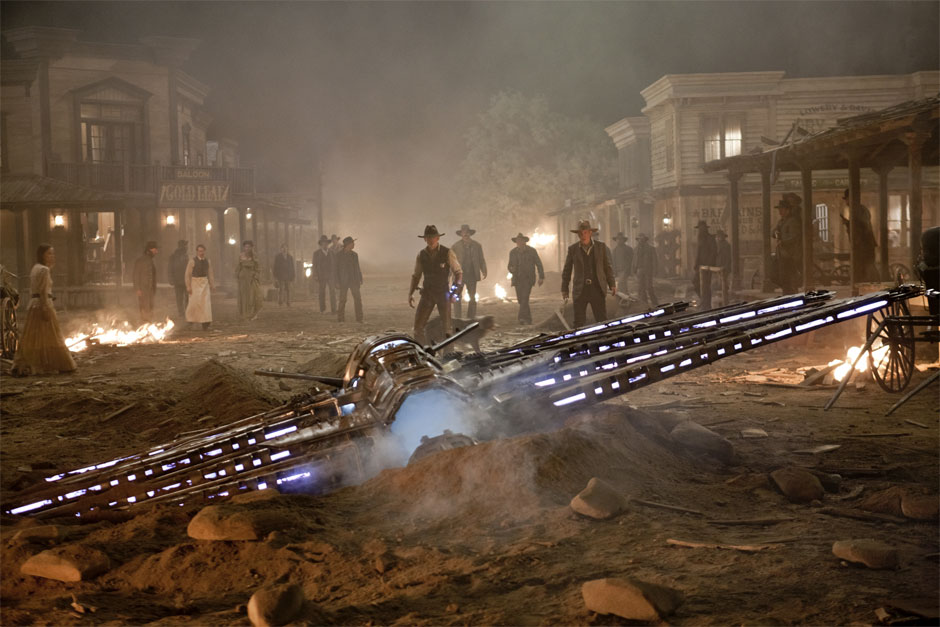
“Cowboys & Aliens” was penned by “Lost”co-creator Damon Lindelof. It contains all of the intrigue of “Lost” without an of the wonder. If you are trying to put us into a time where the idea of life outside of earth is as foreign as the idea of cell phones, you must also put the audience into that sense of wonderment. Instead, all anyone can feel the whole time is, oh they are being attacked by evil aliens from space. Where is the film’s extra hook to really surprise us; where is the film’s polar bear in the jungle? How can we expect to take an alien species seriously when their spaceship looks like Squidward’s house?
The cutouts of “Cowboys & Aliens” consist mainly of a series of western archetypes. There is the young outlaw who’s seen too little, the old outlaw who’s seen too much, the knowledgeable doctor who can’t defend himself, the old coot with no teeth, and the guy who has to march down the town’s streets and yell about how he gets free drinks because he owns this town. None of the characters turn into anything above those stereotypes. I don’t blame this on the actors as much as I do on the writers.
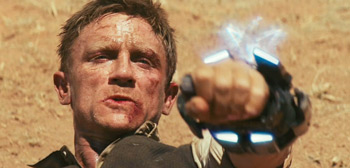
The actors do the best they can, which is really all an actor can do with weak material. Craig, who has deservedly become the new face of James Bond, seems to struggle with his American accent. It doesn’t even come close to sounding like a grisled outlaw, it sounds more like an English guy trying to sound American. Besides the Bond movies, he should just stick to playing badass Jews from now on.
Harrison Ford, meanwhile, was the person I was most excited to see and yet, he doesn’t bring any of the typical Ford charm to his performance. Ford has played Cowboys before, in varying forms (Han Solo; Indiana Jones), yet Woodrow carries no outlaw spirit. He seems less angry about the aliens he has to fight and more angry that he is involved in this movie. He never even seems too concerned about the missing son that he is fighting the whole movie to get back. Shocking, as Ford is usually a master at yelling about missing family members.
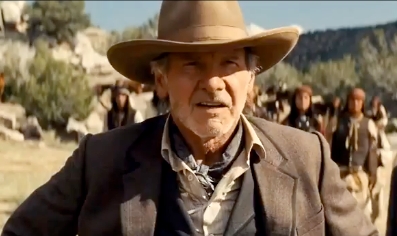
I will say this, though: the closest the film ever comes to an actual human interaction is the scene in which Ford gives a young boy his knife. It is never very well explained, but these two characters are the only ones in the film that ever seem to have any chemistry. The fact that nothing is ever done with this represents all of the film’s underutilized potential.
“Cowboys & Aliens” strives to combine two genres that have been combined many times over, with much better results. In fact, the sci-fi western has been considered a genre for decades already, ever since “Star Wars” first came out in 1977. “Cowboys & Aliens” tries to fall under this genre, but it never makes these two very different genres seamlessly blend. The point of “Star Wars” was that if it took place in the Old West, it basically could have been “The Searchers.” I don’t even know what “Cowboys & Aliens” could have been. All I know is that it really made me want to keep watching “Firefly,” the TV series that did exactly what “Cowboys & Aliens” wanted to do, but in a much more exciting and coherent fashion.
The worst part of “Cowboys & Aliens” is that it isn’t very fun. I appreciate that Favreau wanted to tackle this story in a serious manner, but he takes the idea of straight-faced a step too far. Even Leone’s great western opuses had a sense of humor about themselves.
As for the sci-fi part of the film, the aliens feel less like an enemy, and more like a plot device. The aliens in the film look like those from “District 9,” but with way less personality. The reason why the aliens are here at this very moment remains totally unexplained. Even though “Super 8″ somewhat failed in that respect, at least they tried to make us understand its creature.
Amongst the seriousness, the makers of “Cowboys & Aliens” forgot that this is a summer blockbuster, and blockbusters can be both smart and serious while providing entertainment. This isn’t entertainment, this starring blankly at a bunch of preposterous characters and situations. Westerns are supposed to be slow, not boring.
Movie Review: I Heart Huckabees

Like any David O. Russell movie, “I Heart Huckabees” begins with a character talking faster than they can think. Or in the case of Albert Markovski (Jason Schwartzman), he’s thinking faster than any normal human being should ever think. Then again, that’s just the kind of behavior we should expect from any character played by Jason Schwartzman at this point.


“I Heart Huckabees” is what would happen if “Being John Malkovich” crossed paths with “The Royal Tenenbaums.” Most descriptions of this film (even the negative ones) will describe it as “quirky.” This is an overused and condescending term to describe odd character-driven films. Yes, this film is full of strange moments and eccentric characters, but to call it quirky would be like calling it cute. Frankly, there is nothing cute about existentialism.


Albert is an environmental activist currently fighting the development of a major department store, Huckabees, on open marshland. While Albert feels that his work isn’t appreciated, a strange coincidence triggers an internal crisis. In order to solve his coincidence, he turns to existential detectives Bernard and Vivian Jaffe (Dustin Hoffman and Lily Tomlin). Quite fittingly, their office lies at the end of a long, blank, confusing maze of a hallway. The detectives study human motives as opposed to actual crimes, and they go through a process of psychology and stalking their clients.

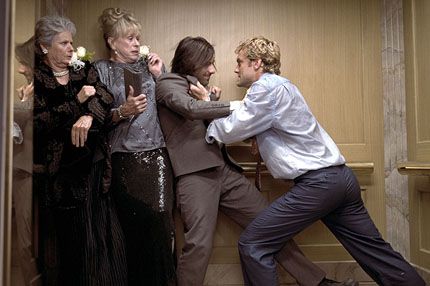
Albert is brought further down an existential rabbit hole after he meets Tommy Corn (Mark Wahlberg), who is able to disprove the Jaffe philosophy. Corn is inspired by another existentialist, Caterine Vauban (Isabella Huppert). While the Jaffes follow the belief that everything in the universe is connected, Vauban believes the opposite. The Jaffes and Vauban soon partake in a philosophical tug-of-war for Albert’s psyche. After Albert’s company teams up with the vacuous Huckabees boss, Brad Stand (Jude Law), the existential problems become a little too public, and it prompts Brad to hire the Jaffes to explore his own problem. Lost yet? Just hang in there, please.


“I Heart Huckabees” is ambitious in all of the existential ground that it covers. Some think “Huckabees” gets lost at times sniffing Sartre’s existential farts. The film definitely has a few loose ends and some factors that don’t quite add up. For example, if the detectives follow Albert around, and he can see them spying on him, then how can they know that everything they see is the candid truth?


Then again, one could argue that the film is as flawed as the sprawling theory that it sets out to explore. And with the passage of time, the film has taken on a new meaning. It also represents the time following the War in Iraq that was ruled by “existential threat.” I am sure that David O. Russell didn’t intend for this to happen, but it is funny what the passage of time can do. The best example of this would be the scene in which Tommy argues about the significance of oil with a nice Christian family, and unravels all of their lives comforts in such a flawlessly deadpan matter. That is what existentialism does: it takes apart the meaning of existence, and reduces it to its most simplistic form. For this scene alone, “Huckabees” is a film that was just one slight step ahead of its time.
The sum of “I Heart Huckabees” can be viewed in two ways: whether it works as a philosophical whole, and whether it works as a film. Let’s just say it works out in both ways. The film’s loose ends are somewhat smoothed by its undeniably curious nature, its wit, and its chaotic and totally free form.


The characters’ enlightened meltdowns are all understandable and abide by the idea that one can only see their flaws once they are fully laid out in front of them. That is why it is understandable when the Huckabees model (Naomi Watts) tries to hide her beauty when she realizes that she is totally replaceable, and when a story Brad repeatedly tells ends up making him physically ill. That scene represents the one of the best moments in Jude Law’s acting career.


As for the rest of the ensemble, Tomlin plays into the film’s free structure and brings out her improvisational past. While Hoffman, under that mop of gray hair, plays one of the strangest neurotic messes he has ever played. Wahlberg, meanwhile, shows why he has become a coveted actor. His character doesn’t seem like someone who would ever transform into a brilliant philosopher, but he fits the role with the sort of subtle comedy chops that I never thought he was capable of. And then Schwartzman is just playing what I assume is a heightened version of himself, which he has gotten better and better at playing.


“I Heart Huckabees” may lose a lot of people early on. However, there is a sense of genuine and convincing connections that exist between the characters that becomes more apparent upon a second viewing. Also, its rebellious spirit, including its putdown of corporations and most mainstream American ideas isn’t exactly daring but it is definitely is refreshing. With “Three Kings” before it and “The Fighter” after it, “I Heart Huckabees” shows what a versatile filmmaker David O. Russell truly is. He deserves an extra accolade for turning a philosophy by some of the world’s darkest thinkers into slapstick comedy.


There is one exchange at the very end of “I Heart Huckabees” that stands out (don’t worry, this quote barely gives anything away). When discussing a protest involving chaining themselves to a bulldozer, Tommy asks, “Should I bring my own chains?” Albert ambiguously and succinctly replies, “We always do.” Once you’ve seen the whole movie you’ll understand that he wasn’t just talking about the protest.

Harry Potter: From an (In)different Perspective

WARNING: This article contains a brief, but pretty major spoiler for “Harry Potter and the Deathly Hallows: Part 2,” If you care that much, I suggest you stop reading now.

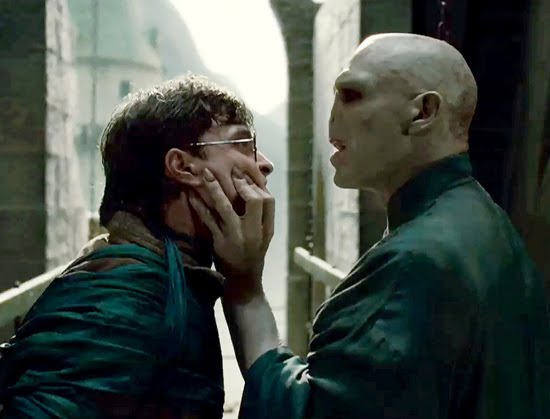
When “Harry Potter and the Deathly Hallows: Part Two” concluded, a saga that had lasted over a decade had ended. Some people in the audience cried, others cheered, and pretty much everyone clapped wildly. For these people, it was a truly emotional moment.
Me? I made a fart sound with my mouth.
Maybe my reaction was a little bit immature. However, it summed up why I could just never get into this series. No matter how eye popping or imaginative “Harry Potter” could be, it just never clicked with me, whether in novel or film form.
My indifference to “Harry Potter” was never too personal. I read the first two books, and thoroughly enjoyed them. I saw the first two movies, enjoyed those, too. The series started to lose me around the fourth film, though I have always appreciated the increasingly dark tone of the series. Looking back on it, the “Harry Potter” series did many good things. Most importantly, J.K. Rowling inspired children not only to read, but to enjoy reading, and to want to read, and to finish a book that was over 800 pages in one sitting. Even Dr. Seuss and Roald Dahl would have had trouble pulling that off.
I never made it to the seventh book, and after giving up on movie number four, I only saw the second half of the seventh film (longest second act, ever). Harry’s original story, as a misfit who doesn’t understand his potential power is easily relatable to any young teen trying to figure out who they are. I could relate to this (no, I am not a wizard and no, my parents never forced me to live in a closet under the stairs). Yet, no real emotional connection ever forged between me and the young witches and wizards of Rowling’s universe.
When I was younger, I became attached to certain sagas and passed over all others. The world of “Harry Potter” never appealed to me. I tried “The Matrix” for one film and while I love “Star Wars” I could never call myself a fanboy. Rather than obsessing over Potter, I spent most of elementary and middle school as a “Lord of the Rings” geek. Later on, it was the two part universe of “Kill Bill” that somehow got the best of me and made me embark on my never-ending journey to watch every movie I could find at the public library.
“Harry Potter” has always felt strangely cartoonish to me. Even in its most serious moments, I never got a grasp in my mind that this world of magic could actually exist, that Hogwarts was a place I could put myself into. As far as the movies ago, I was never a fan of its mentality of making a gripping and dark action scene and then trying to end it with a light-hearted moment. That one little one liner would always devalue some of the previous scene’s seriousness. That’s just taking the idea of comic relief too far. Maybe it’s just an English thing.
At this point you are probably wondering: where the hell is my review? I just spent $10.50 and two and a half hours of my life on this movie, so shouldn’t I have some clear, formulated opinion? Well, here it is: “Harry Potter and the Deathly Hollows: Part 2″ is a highly entertaining summer blockbuster. Its special effects are dazzling and show the very best Hollywood has to offer in the latest CGI. This film shows how much the series has changed since its humble roots. However, if this is your first “Harry Potter” film, or your first “Harry Potter” film in quite some time, then you will not find yourself enjoying it so much. I would offer another big blockbuster for you to see but unfortunately, the only other ones currently out are sequels. So instead, I’ll request you go watch the pristine images and dinosaurs in “The Tree of Life.” That’s what you get for not liking “Harry Potter” more, you resentful jerk.
Anyway, there are some things I really do like about “Harry Potter.” I really like what the series did with Snape. I also admire the film’s special effects, which are the moviemaking equivalent of magic. The CGI felt organic, not forced. But because this film took place in the middle of a story that I was never involved in, I don’t feel I can properly review this film to the highest degree. Therefore, I leave you with these last two paragraphs.
All in all, not feeling an emotional connection with Harry and his friends doesn’t mean you’re missing a piece of your heart. Those tears that people felt once future Harry, Ron, and Hermione sent their kids away to Hogwarts is the exact way I felt after watching Andy give away all of his toys last year in “Toy Story 3.”
When some people walked out of “Harry Potter and the Deathly Hallows: Part 2,” a piece of their childhood ended along with the franchise. Everyone my age grew up alongside the “Potter” kids. Their awkward changes once they hit puberty only rivaled our own.
For me, once the screen faded to black, I just continued living from where my life had left off right before the film. However, I did feel an immense sting of disappointment that I didn’t stick around for the trailer for “The Dark Knight Rises” that played following the credits.

Movie Review: Horrible Bosses

Twelve years ago, Mike Judge mastered the cubicle comedy with “Office Space.” His workers just wanted freedom. In this summer’s “Horrible Bosses,” all the workers want to do is have their bosses killed. It’s funny how things change like that.

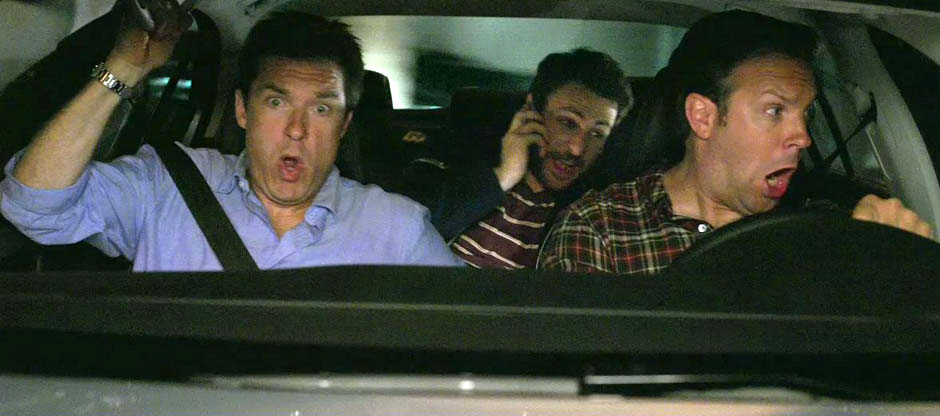
“Horrible Bosses” follows the lives of three men who are troubled at work: Nick (Jason Bateman), Kurt (Jason Sudekis), and Dale (Charlie Day). Nick goes by the life theory that good things only come when you work too hard and take orders excessively. His psychotic, manipulative boss Dave Harkin (Kevin Spacey), takes advantage of him and eventually takes over the job that would have been Nick’s.
Of the three of them, Kurt is happiest at his job as an accountant at a small chemical company until his boss’s son Bobby Pellitt (Collin Farrell) takes over the company. Bobby is a Scarface wannabe who has no regard for the company he works for. At one point, he tells Kurt to “trim the fat” from the company (by that, he means, fire all the fat people).
Then there is Dale, who’s only purpose in the world is to be the perfect husband. Though he does need some money to support himself, so naturally he becomes a dental hygienist. Unfortunately, his incredibly inappropriate boss, Julia (Jennifer Aniston), is sexually harassing him and prepares a blackmail plan to get him to have sex with her.
The three men constantly reconvene at Applebee’s and discuss their problems until one day they realize that they must kill their bosses in order to achieve happiness. So, they hire a criminal (Jamie Foxx) to help them out. As accordance to the law of comedy, things don’t work out quite as planned.
“Horrible Bosses” is a great summer blockbuster comedy and it succeeds where many other in this field have failed in both being funny and being entertaining. Films like this usually have to deal with following a stringent plot structure and arrive at a certain plot point (think of “The Hangover” movies). While “Horrible Bosses” must not veer from its murder attempt plot line, it also doesn’t hesitate to let everyone involved enjoy themselves a little. What can be picked up from the hilarious outtakes seen in the credits is that improvisation is not out of the “Horrible Bosses” formula.
I’ve always believed that comedy consists of a good mix of good acting, and even better writing. Writing makes a good comedy smart and plausible, and good acting makes the characters and every bit of dialogue spring to life. Yes, “Horrible Bosses” can be described as a dirty comedy in every sense of the word. However, the dirtiness seems more of showing a way people behave and think rather than a way to simply be shocking. A lot of the dirty humor is simply conversational, such as the scene in which the guys argue about who would be most likely to get raped in prison.
It is safe to say that “Horrible Bosses” has one of the best comedic ensembles assembled in many years. All three of the main stars have each developed a certain character and personality through their roles. Bateman plays the vulnerable workaholic straight man that he created in “Arrested Development.” Luckily, that persona never died once that show was cancelled. Day is basically playing the same version of his character in “It’s Always Sunny in Philadelphia”: a loveably inept idiot who shouldn’t be around, seeing as he screws everything up, but having him there makes the story all the better. Then there is Sudeikis, who can now be named a movie star. Here, he continues the horny everyman character he created in this past February’s underrated “Hall Pass.”
The villains are all perfectly cast as well, with Farrell giving the best (or maybe, the most believable) performance out of all of them. Spacey goes a little too over-the-top for comfort at times, but it definitely seems like he was enjoying himself. Aniston, usually the good girl, is surprisingly the dirtiest character in the whole film. Now, that is good shock humor: making an actor go totally outside their comfort zone, and then making them really good at it.
“Horrible Bosses” consistently works. It’s not perfect (I’m still not used to computers as being a main plot point a movie), but it does everything it can for laughs without debasing itself. Like any good comedy, it has a great sense of recall. As opposed to dropping side characters it introduces early on, it brings them back and ties them into the story in very neat ways. Also, it is not as predictable as, say, “The Hangover: Part II.” I think I can now forgive director Seth Gordon for having previously made “Four Christmases.”
The one thing I keep going back to in “Horrible Bosses,” is the strength of its characters. In good comedy, it is forgivable to have an implausible plot as long as the characters feel real. After all, humor usually comes from sticking ordinary people into a heightened reality. Because there’s nothing funnier than watching three white guys from the suburbs walk into a bar in downtown Los Angeles.

Movie Review: Terri

So little does Terri (Jacob Wysocki) care about everything that he wears his pajamas everywhere. Even in school.

“Terri” is the under the radar gem of the summer. It is sweet without being saccharine, funny without being unrealistic, and insightful without being preachy. Most of all, it earns every minute of its slow-paced running time.
Our titular anti-hero, Terri, is an overweight outcast in his small town high school. He lives with his mentally unstable uncle (Creed Bratton), who feeds his nephew toast and beans for basically every meal.
Terri’s demeanor at school worsens every day, and his principal, Mr. Fitzgerald (John C. Reilly) takes notice. Fitzgerald begins to meet with him frequently, and makes a real effort to turn Terri’s life around.
That last paragraph might have sounded like the premise for a Hallmark movie; but that would be looking at “Terri” incorrectly. It doesn’t look to solve all its problems by a few exchanged sentences and a lot of tears, but rather it goes deep into all of the problems the characters experience.
What also enriches the experience is the film’s ability to cover each character’s perspective and its ability to speak truly. Chad (Bridger Zedina), at first seems like nothing more than one of those people Fitzgerald describes as a “bad heart.” But then, writer and director Azazel Jacobs remarkably finds a way to keep him in the film, and his insecurities that are revealed turn him into more than a caricature. The same goes for Heather (Olivia Croicchia), whom Terri helps save from nearly getting kicked out of school. While “Terri” advertises itself as being mainly about the relationship between Terri and Fitzgerald, it is really about Terri’s relations with everyone in his life.
“Terri” is one of the rare films that can be described as a comedy relying on honesty. This is the kind of film that finds malted milk balls and long, awkward silences to be hilarious. A lot of this can be attributed to the sharp, realistic dialogue by Patrick DeWitt as well as Jacobs’s painfully sincere direction.
“Terri” benefits from having a mainly unknown cast. Most of its actors will breakout into bigger roles over the next few years. The most famous actor in the cast, Reilly, has jumped back and fourth over the years between drama (“Magnolia”) and comedy (“Step Brothers”). In “Terri,” he balances the two out perfectly. One of his funniest skills has to do with his voice, and how he can raise it to a level so loud and ridiculous that it could never be taken seriously. He also acts exactly as a corny high school principal who gives his students sunglasses would act.
And then, there are those moments where Reilly makes Fitzgerald more than that inspirational principal. It might just be the way he reacts to an important hug in the film that shows that he really cares. There are few characters I say this about in modern film, but Reilly makes Fitzgerald, well, inspirational. His lessons to Terri feel believable and actually make sense. It makes you wonder why Fitzgerald isn’t off doing bigger and better things. But then again, inspiring teenagers isn’t so bad.
To put it simply, “Terri” believes that everyone has their problems and justifications for bad behavior. To make that point a little deeper, “Terri” also believes that the only way to fight through those problems is to connect with other people, rather than distance yourself from them. “Terri” is a film that requires patience, but like its main character, the more you wait, the more you realize there is something truly great there.

Movie Review: Bad Teacher

It’s always a bad sign when the first point you have to make about a movie is that you have nothing interesting to say about it. It is also bad when the second thought you have about a movie is this: why does it even exist?

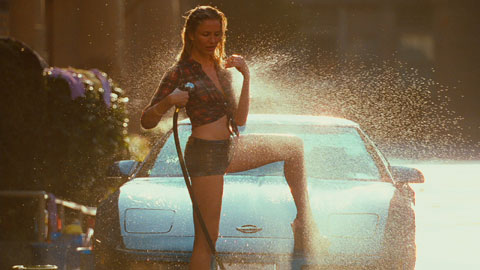
“Bad Teacher” doesn’t make the case for worst film of 2009, but it doesn’t really go much above mediocre. The “hero” of “Bad Teacher,” Elizabeth Halsey (Cameron Diaz), certainly could make the case for the worst teacher in America. Rather than actually teach her students, she shows them films like “Stand and Deliver” and she frequently smokes pot in the school parking lot.
Also, she uses men for their money, and couldn’t care less whether or not her students are learning. She instead aspires to scam the school out of enough money to pay for a new surgery she wants to get in order to impress a new teacher, Scott Delacorte (Justin Timberlake). A chirpy, overachieving teacher (Lucy Punch) tries to sabotage Ms. Halsey’s plans.
“Bad Teacher” is a movie in which nothing deserving happens, neither to the characters nor the audience. Comedies are fueled off characters who do bad things, but it is not enough to just be a bad person. In “Bridesmaids,” Kristen Wiig might say some terrible words to a young girl, but at least she wanted to open a bakery. Elizabeth Halsey, meanwhile, only does actions to serve herself. Once she has the chance for redemption, it barely feels earned.
Yet, the bright side of “Bad Teacher” lies most in its undervalued supporting cast. I would have preferred to see a movie about the chipper Ms. Squirrel, played by Lucy Punch. She gives off more personality and is funnier in one scene than Diaz is during the entire movie. Jason Segel steals many scenes as the school’s gym teacher. Timberlake, meanwhile, is surprisingly bland for an actor who is usually so energetic.
The reasons that Diaz’s teacher is so easily hatable isn’t just because of her lack of interest in her job as well as her ability to use people; that was intended. The other reason is that Diaz doesn’t make her character even worth giving a chance. Nefarious characters are meant to be looked down upon but they don’t necessarily have to be totally despicable. Characters doing bad things can often be ground to even more humor. Yet, Halsey is given so little charm or charisma that her crimes aren’t even entertaining to watch. Each one is just an excuse for her to get to her ultimate goal. The moment her character decides to turn around is basically a ripoff of a scene from “Billy Madison.” And stealing from “Billy Madison” is unacceptable.
I believe that most comedies (the high concept ones, mainly) run on karma, and characters becoming liked because they change. “Bad Teacher” follows neither of these as it punishes rewarding characters and doesn’t really change the bad ones. In its attempt to be dark and edgy, “Bad Teacher” fails as a possible black comedy. It is impossible to ever be funny or edgy when anything in your movie that could possibly be funny or edgy is revealed in the trailer.

Movie Review: Days of Heaven

Watching a Terrence Malick film is like taking a stroll through nature. Or in the case of “Days of Heaven,” harvesting it, burning it, and possibly getting killed by it.

“Days of Heaven,” Malick’s second feature, is yet another example of how he brings the natural world to life through film. “Days of Heaven” achieves this on an even grander scale than his previous feature, “Badlands.”
Like his other films, “Days of Heaven” moves at a slow and steady pace, with many often baffling moments. “Days of Heaven” begins in a place that can be described as the opposite of heaven, a steel-mill in early 20th century Chicago. The factory looks more like a third world country than the American Dream. After Bill (Richard Gere), a hard-working but hot-tempered worker at the mill accidentally kills his cruel boss, he flees the city with his girlfriend Abby (Brooke Adams) and his sister for the promise of a better life in the wheat fields of Texas.
No matter how beautiful the sky looks in Texas at sunset, life in the country proves to be difficult, as the wealthy, unnamed farm owner (Sam Shepard) treats his workers like slaves. Bill convinces Abby to marry their boss in order to get a claim to his fortune. Like any get-rich-quick scheme, it ends with more blood and tears than dollars and cents.
“Days of Heaven” is one cinematic story where the story barely matters as you watch it. On a first viewing, the story moves quickly and is hard to follow. That’s partly Malick’s way of telling a story and also because the story is told through the voiceover of a young girl, therefore giving the perspective of a confused child during some very dark events.
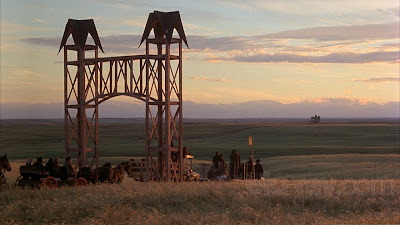
While watching “Days of Heaven,” I was convinced that I wasn’t watching a linear story, but instead a detailed tour of the Texas Panhandle. Nestor Almendros received what was probably the most deserving Best Cinematography Oscar ever for his work on this film. The film is shot mostly during the time of day that he describes as the “magic hour,” which is the period of time between sunset and nightfall. During this time, the sky is an almost magical shade of light red. Maybe it shows the false, magical hopefulness of the prosperity of living off of the land. It is also a heavenly presence in the film, something Malick brings into everything he makes.
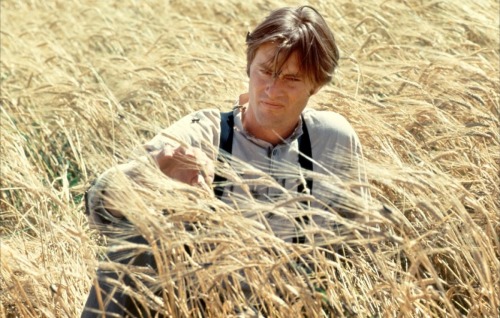
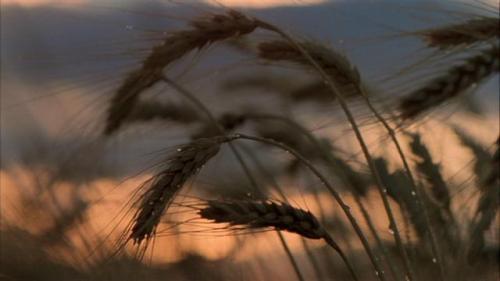
Under Almendros’s photographic skills, the monotonous colors of the prairie look so vividly alive. As the stalks of wheat sway in the wind, almost in unison, it looks almost as if the fields are instead an ocean. In this film, the landscape is not the background, but rather the life that breaths through it. Some shots seem almost too good to be true. For example, how was a flower growing able to be shot in time lapse, without today’s digital technology? That question will just have to remain a part of the magical mysteries of cinema.
It is intentional, unsurprising, and ironic that the most humane living creatures in “Days of Heaven” are the natural elements of earth and the non-human creatures that inhabit it. The ducks, horses, bison, and many other animals that wander the ranch seem more in touch with the world than the humans there.
As for the people, they are all animalistic and motivated by greed. Bill, who is supposed to be the film’s hero, has none of the qualities of the typical hero. A hero is motivated by a desire to do good and protect those other than themselves. Bill, on the other hand, is just looking out for his own well being. Even the woman he loves is just a tool to make him more powerful.
Like most of the other men Malick portrays in his films, Bill has an underlying aggressive nature, one that usually leads to violence. Unlike Kit Kruthers from “Badlands,” this violent instinct is not a sadistic one but rather one of self-defense. Bill has more in common with the ill-tempered father from “The Tree of Life.”
Malick is purposely a very secretive director. He doesn’t want his personality getting in the way of the messages of his films. If a film is an auteur’s way of expressing himself, Malick does that through “Days of Heaven.” Malick studied philosophy at Harvard, and the actions of the characters in “Days of Heaven” probably don’t represent his moral compass but more a Hobbes like view on man: humans are violent by nature and only act in their best interest.

Of all of the films ever made about the American struggle for prosperity, this is one of the finest. “Days of Heaven” is about both our dependence on the land, and our subsequent betrayal of it. That’s why when the locusts come and black out the sky, it feels partly like nature’s revenge but more like Manifest Destiny biting back.
The downfall of most films is that their characters talk too much and have nothing good to say. Unless you’re as good of a writer as Quentin Tarantino or Woody Allen, embracing silence is a key to success. In “Days of Heaven,” Malick lets the images, along with the sweeping score by Ennio Morricone, do all of the talking. This is what makes “Days of Heaven” more than just a typical Hollywood epic. When you’re trying to tell the story of a country and its inhabitants, sometimes the best way to do so is to just observe. That way you see its beauty, and its horror, exactly as it was intended to be seen.
If You Liked This Movie, You’ll Also Like: Badlands, The Tree of Life, Barry Lyndon, There Will Be Blood, 2001: A Space Odyssey, No Country for Old Men, Once Upon a Time in the West

Movie Review: The Tree of Life

Unless you love, your life will flash by.

Terrence Malick’s “The Tree of Life” is the most highly ambitious film to come out of this year, many past years, and many years in the future. It comes from what must have been years of obsessive thought about both life and film. Only someone this in love with the craft, and with nature, could make this film, and somehow make it masterful.

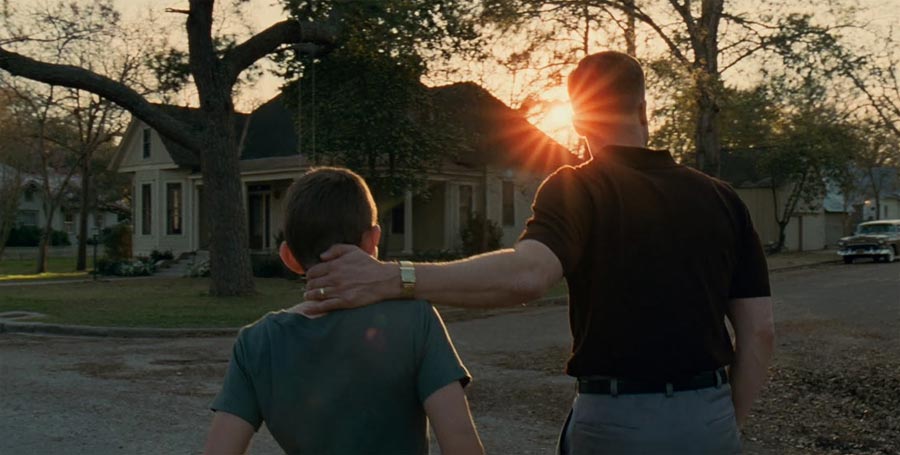
“The Tree of Life” begins in a small Texas town in the 1950s, in what must be loosely based off of Malick’s own upbringing. Brad Pitt plays the tough patriarch of a family of three boys. Pitt, who is never given a first name, continually fights his wife (Jessica Chastain) over the best way to raise their family.

Throughout the film, they explore loss of innocence and the possible meaning of life. Usually, trying to find the meaning of life is a cheap storytelling technique. But if you’re as good of a filmmaker as Malick is, the answer doesn’t come in one sentence. The film takes us from Texas to the cosmos to the creation of the life, and back again. Somewhere in between, an older version of one of the sons (Sean Penn), comes back to explore it all. The sum of “The Tree of Life” is nearly impossible to explain. After one viewing, any interpretation could be right.

Malick’s latest is a reminder of his films from the past: it takes its precious time, and it is very quiet. “The Tree of Life” is reminiscent of a brief time when films told entire stories through images. Malick’s story, which covers basically the entirety of existence in just two and a half hours, manages to be the cinematic sequel to “2001: A Space Odyssey.” Like “2001,” “The Tree of Life” is nothing short of a cinematic opera.

Malick, while echoing Kubrick, also does something that few filmmakers have done this well: capture the flawed beauty of nature. Light shining on a bed, tall grass being ruffled by human hands, and flies buzzing around a lake at dusk have never looked this stunning. He captures both the sights and sounds of the natural world to a perfectionist degree. This is naturalistic filmmaking at its finest. Through a camera lens, he encapsulates Thoreauvian philosophy.

As a critic, it is important to try and avoid overanalyzing. However, for a film like “The Tree of Life,” overanalyzing is crucial. Through his film, Malick is trying to find more than just the meaning of life, because life doesn’t have just one meaning. “The Tree of Life” is about what is out there, and what brings us all together.

Some might call Malick’s film a religious one. While religion seems to be a big factor, I would say that the film straddles the line between spirituality and atheism. It asks these essential questions: when it comes to dealing with the biggest questions in life, who (or what) do we turn to? Do we look to nature, the possibility of God, or our friends and family? No choice we make is a decent or right one, unless it is done out of some form of love.

“The Tree of Life” is not a film that offers easy answers. Within a half hour, many people in the audience had walked out, something I haven’t witnessed since “A Serious Man.” After “The Tree of Life” ended, one woman remarked that the film was reminiscent of a bunch of Windows screen savers. A friend of mine compared it to the greatest “South Park” episode ever.

While both of these interpretations are funny, they do not do Malick’s film justice. The cinematography is the result of years of careful work, not stealing. Meanwhile, overanalyzing is the act of finding meaning in the meaningless. Malick surely had some deeper purpose in trying to discover how life exists and thrives.

“The Tree of Life” is hard to be in love with the first time around, but I feel a need to recommend it. I can’t get over the brilliant way in which Malick speeds up, and then slows down, the story at just the right moments. Many films made nowadays try to think up and balance big ideas, but few are ever this meditative.

Movie Review: Midnight in Paris

“Midnight in Paris,” Woody Allen’s fantastic new film, begins with an overly long, yet beautifully crafted montage of Paris. The introduction gives off the impression that Allen doesn’t even want to make a movie, he just wants to sit back and see what the streets of Paris have to offer. And that is exactly what he does.

For over a decade, the Woody Allen we once knew has seemed pretty lost. He tried to find himself by leaving New York and exploring Europe. Even with the successes that has brought (“Match Point,” “Vicky Cristina Barcelona”), he just hasn’t been able to equal the success of his early days. However, “Midnight in Paris” shows that everyone’s favorite neurotic Jew has not only rediscovered his voice, but figured out how to turn it into perfect comedic cinema.
“Midnight in Paris” details hack screenwriter Gil (Owen Wilson) and his fiancee Inez (Rachel McAdams) as they venture through Paris. While Inez focuses on their wedding and future, Gil focuses on his first novel, and his dream of living in Paris in the 1920s. While trying to find inspiration for his work, Gil finds something totally unexpected in Paris after midnight. What he finds is a mystery that would feel almost like a crime to reveal.
I wouldn’t call “Midnight in Paris” Allen’s big comeback, because he’s had so many comebacks over the years. When you make as many films as he does, there are bound to be misses. Yet, this is his first film in a long time that feels informative, free, and most importantly, fun. Sometimes, you don’t have to sell your soul and buy a ticket for “Fast Five” in order to have fun at the movies.
“Midnight in Paris” is a mixture of everything Allen is great at. In the film, he is given a chance to mock the pretentious intellectuals of the world as he slips subtle literary references into the story. Its combined slapstick and whimsical tone made me think of “Sleeper.” Its light and fast mood also evoked the great comedies of the era Gil wished he could have lived in.
Wilson, meanwhile, is the best Allen reincarnation there could possibly be. He perfectly takes on Allen’s wisecracking, neurotic New Yorker-type personality. He delivers every line with the right amount of anxiety. The rest of the ensemble is utilized well. It would be easy for someone who is writing about themselves to only focus on the character based off of themselves, yet Allen never forgets that there are many people involved in Gil’s life. Most notably is Michael Sheen as the way-too-sophisticated-for-his-own-good Paul and Kurt Fuller as Gil’s always furious father-in-law. McAdams is also an always enjoyable screen presence even when she’s being a cold and unsupportive girlfriend.
Oh yeah, and that writing. Comedy is one of the most intelligent forms of writing, yet few ever do it right. Only Allen can be so funny and so observant. After all, the greatest observations about life are the funniest ones.
Whether he be in New York, London, Barcelona, or Paris, setting is an essential part of every Allen story. Even with such strong characters, location is always key to the story. It usually sets the mood, whether that be uptight, mysterious, or free-spirited. In “Midnight in Paris,” Paris might as well be the center of the entire universe. It exudes both light and life, it is the center of creation. Just as he knows his beloved New York so much, Allen acts as if he’d lived in Paris for centuries, nailing the culture down right.
As I continue to write this review, I am debating going deeper into the plot. It would be great for further discussion, yet I feel like I’d be ruining something. In a world where it’s usually movies never keep their best parts unspoiled, “Midnight in Paris” offers plenty of surprises that are best to see for yourself. In one short film, the excitement of many years of culture, the beauty of a city, and the over-analyzing complexities of being a writer are captured. Most importantly, this film is just so full of joy. It is the very reason why escapism was created. And that is why it is my favorite film so far this year.

Movie Review: Super 8

Steven Spielberg has always said that as a child, he would make his model train crash and film it. Decades later, somebody decided to crash a train on film, and they did it just the way Spielberg would have done it.

“Super 8,” named after the film format, is a cinephile’s paradise. It’s a tribute to the great sci-fi, monster, and buddy movies of the past. Think “E.T.” meets “Jaws” meets “Stand by Me” and “The Goonies.” Only a director this in touch with films past could make this movie. Luckily, J.J. Abrams is that guy.
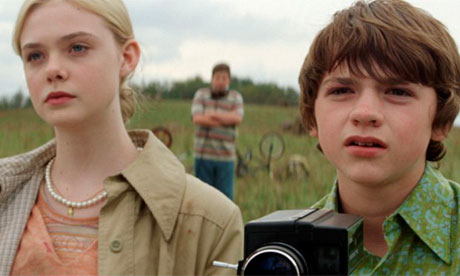
“Super 8″ is a little different than you might expect. For one, it’s not the explosion-a-minute summer blockbuster that has clogged American movie theaters for the past decade or so. It is first and foremost a story. It takes place in the late 1970s in a small Ohio town where a group of kids are trying to make a zombie film. While filming, they witness a terrible train crash. After the train crashes, a series of mysterious events sweep the town, likely prompted by something strange onboard that train.
“Super 8″ made me feel nostalgic for an era I didn’t even grow up in. Additionally, this is the first summer blockbuster I have seen in ages that actually had an enjoyable screenplay. Even “Inception” wasn’t this well written. It has snappy dialogue and endearing characters. The best part about it though, is that it has a heart. Rarely does a mainstream action movie come along that actually cares about what happens to its characters, rather than just what happens if they blown up.
The story of “Super 8″ goes into some very dark territory, exploring death’s effect on children, the effects of bad parenting, and the meaning of love and friendship at such a young age. Like Spielberg, family is an important bond between the characters of an Abrams film. The fact that this film focuses on these issues rather than just plot is something worth celebrating.
The special effects, action, and the monster itself are nothing revolutionary, but that’s not a bad thing. The train sequence is one of the best I’ve seen, just ranking somewhat below the train explosion from “Lawrence of Arabia.” Abrams films it the way he filmed the plane crash in the very first episode of “Lost”: it’s not the crash itself, but the aftermath that is so frightening and exhilarating. Watching how the characters deal with the wreckage is like an ultimate test of their will to survive.
While this film contains the many strong suits of a Spielberg film, it also contains some of his weaknesses. Like “War of the Worlds” and some other Spielberg pictures of recent years, “Super 8″ resorts to over-sentimentality in its ending. Worst of all though, its ending feels rushed, rather than earned. All of this buildup ultimately leads to something uninspiring and unoriginal. Based on how good the rest of the story was, I think Abrams was capable of something better than this. Even “Cloverfield” had a better ending.
The ending of “Super 8″ certainly has some effect on how I perceive the entire movie, yet the film as a whole is hard to hate. It is just so lovingly crafted, only someone who has ever devoted their entire life to film could ever have made a movie like this. It never treats its audience as if it is dumb; it challenges the viewer, and makes them wait for the action.
When the plot is boiled down, it is not about some awesome superhero trying to save the world from robots or aliens, it is simply about a bunch of kids trying to make a movie, and how their movie was disturbed by the presence of a monster. Sometimes, the problems of childhood are much more interesting than the issues of adults.